Keep a clear route
Start at the balcony door. Imagine carrying a full watering can outside and walking past the plants to your seat. Where can you step comfortably without turning sideways between foliage and railing? Mark that route before selecting more containers. A pot that fits only when the door is closed can become an everyday obstruction.
Measure more than the container's footprint. A flared rim, wide saucer and spreading leaves can project much further into the route. Lay paper on the floor at the actual width and allow for the plant's expected size. You should also be able to clean the floor without shifting every heavy pot each time.
Suppose a long planter fits exactly between the door and a bench. Once its foliage spreads sideways, it brushes the seating position. A shorter planter with a clear space at one end may then work better than the same long box in a narrower version. Include the direction of growth in your sketch. If a plant needs turning regularly, its new orientation must fit too. A layout that allows only one position makes later care awkward. Check access beneath the planter using the broom or cleaning tool you actually use.
Height needs a stable base
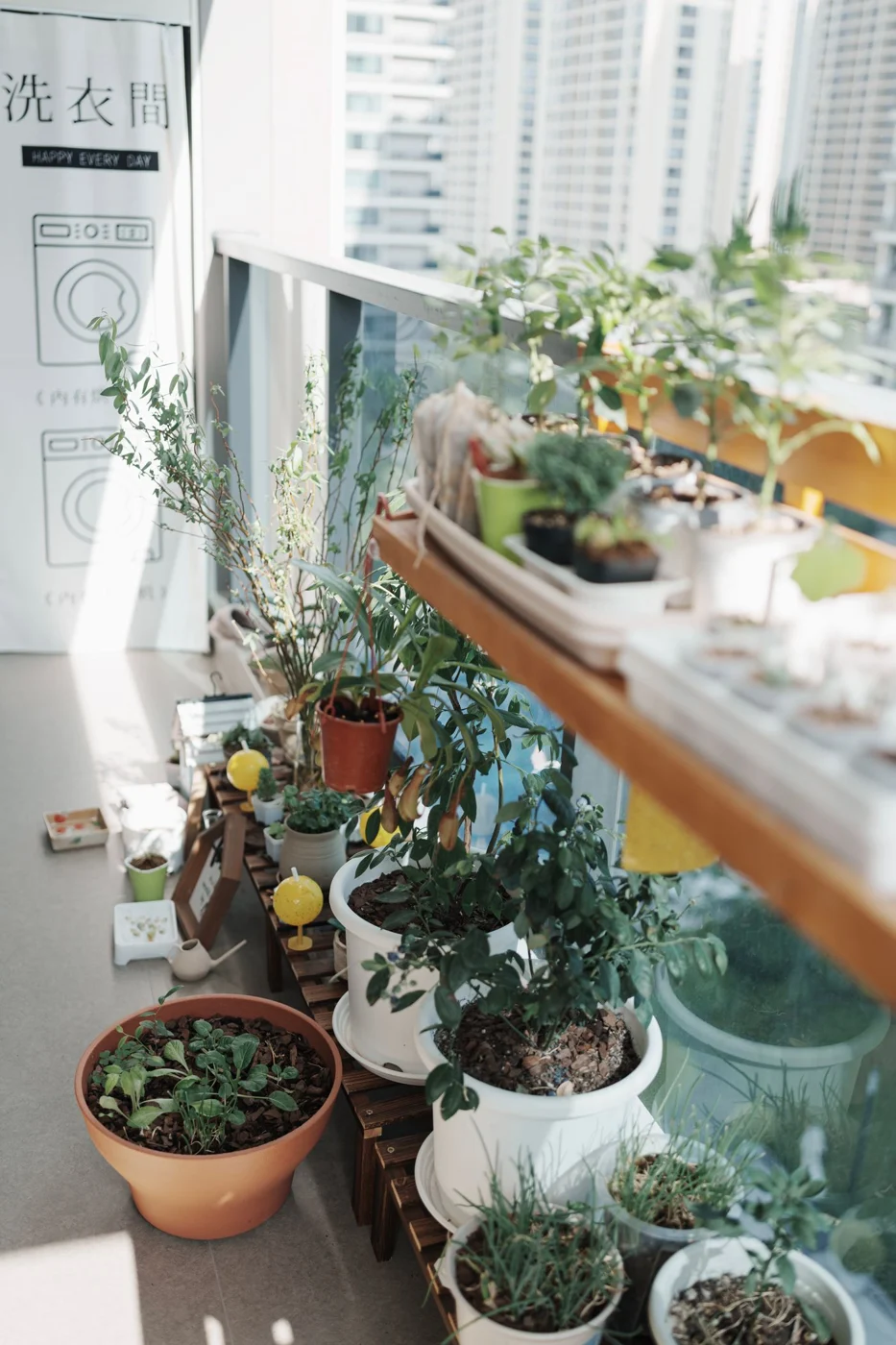
A tall, slim planter looks economical with space but may become top-heavy with a large plant. Choose its shape for the plant, position and wind exposure rather than just the narrow strip available on the floor. Do not group heavy containers without understanding the particular balcony. Ask the building manager about permitted loading or railing attachments when these are uncertain.
Railing planters are separate systems that need suitable, permitted brackets. An ordinary indoor pot does not become a secure balcony box simply by adding a hook. Avoid improvised attachments. Pots on a plant stand should match its intended use and should not rock when touched. Keep the doorway and designated exits clear.
Plan where the water goes
Consider how excess water will drain and be caught. A vessel without drainage is unsuitable as the only growing container for many plants; an open drainage hole should not drip uncontrollably onto furniture or surfaces below. Match the pot, saucer and watering routine. Empty accumulated water according to the needs of the plant.
The back pot in a row can be difficult to reach. Position smaller plants so you can see and feel the growing medium. A long watering-can spout does not replace that inspection. On a very narrow balcony, fewer accessible containers may be more enjoyable than a continuous row that is awkward to maintain every day. Leave room to set the can down while checking an individual plant, rather than balancing it among fragile stems.