Test with a book on the sofa
Put an existing lamp beside the place where you actually read. Sit down with your usual book or magazine and settle into your normal position. Someone leaning into a sofa corner needs a different arrangement from someone sitting upright near the front edge. Light should reach the open page without making the reader twist towards the lamp.
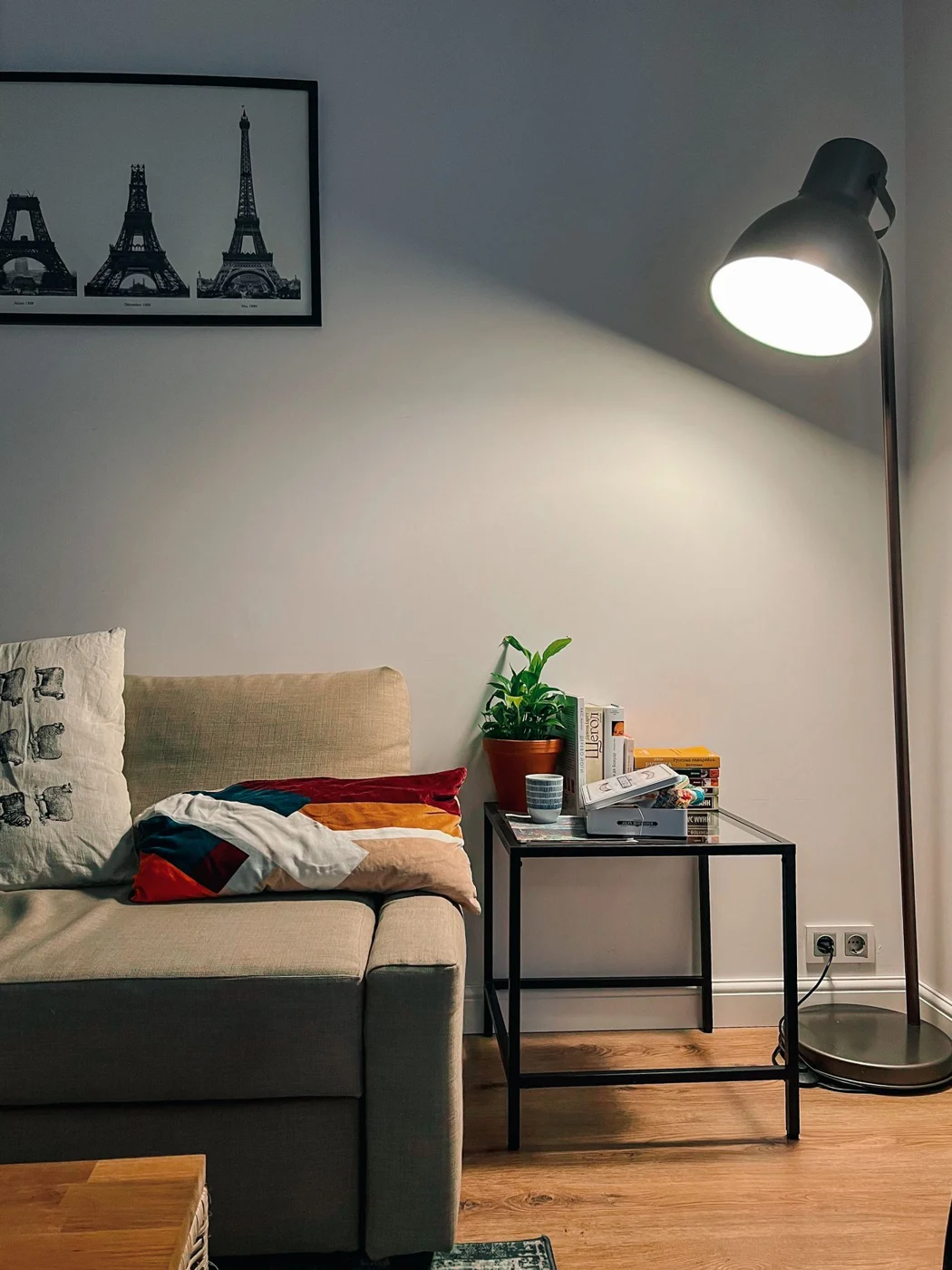
Move the lamp sideways first. A position slightly behind the shoulder can work, provided the head and shoulder do not cast a shadow across the book. An adjustable arm lets you change the beam while leaving the base in place. Check both pages: a bright right page and a dark left page can be more distracting during reading than they appear in an empty room.
When the reading position changes
If reading alternates between the left and right ends of the sofa, test both before choosing one long-reaching lamp. A long arm may reach both positions but need space above the table or behind the backrest. Its movement should not conflict with another person or shelving. Two smaller, well-positioned lamps may be simpler when the seats are far apart.
On a deep sofa, cushions also change the reading position. Test with the cushions actually used for support. An arrangement based on the empty sofa may disappoint once the person sits farther forward. Keep the successful position's measurements as a reference without treating them as a fixed rule for every posture.
Judge the shade from the seat
Look up from the book. If the bulb is directly visible, another angle or a shade with better screening may help. The lamp does not have to be exceptionally bright when its light reaches the page effectively. Check the seat opposite too. A source concealed from the reader can still shine directly into another person's eyes.
Glossy magazine pages provide a useful test. If a bright reflection crosses the words, change the direction of the light before increasing its output. More brightness will not remove a reflection. Keep some background illumination so the rest of the room does not disappear into darkness. The reading lamp and the room lighting have different jobs, and neither needs to perform both alone.
Leave room for everyday movements
Reach the switch from the seat without pulling the cable. Check whether the lamp conflicts with a cup, side table or reclining footrest. A substantial base is not helpful if it occupies the walking route or must be shifted every time the floor is cleaned. The cable also needs a route that does not cross your feet.
When comparing a new lamp, consider arm reach, base footprint and adjustment method alongside its appearance. Measure the trial position that worked. Compare a particular model with those measurements and follow its requirements for compatible bulbs. This means selecting for a real reading position rather than for the generous space around a showroom display.