Decide what needs to change
A sofa may feel too dark, its colour may no longer appeal, or its surface may need easier everyday protection. Those aims call for different textiles. Write down the problem first. A small throw changes only part of the visible area; a complete cover changes more but must suit the sofa's shape and operation.
Check the existing condition. Loose seat cushions should be positioned correctly before adding another fabric. Extra decorative cushions will not automatically make an uncomfortable seat suitable. If the original cover is removable, read the manufacturer's care and replacement options. A suitable existing arrangement may be more useful than layering several blankets over it.
Treat arms and seats separately
If one arm receives most contact, the entire sofa need not be covered. A suitable limited protection area can leave the rest of the shape visible. Check whether it slides while standing or folds beneath the arm. A narrow protector needing constant correction is unlikely to remain useful.
On a sofa with loose seat cushions, one draped fabric may change how the cushions move. Inspect after several changes of seat. If it sinks deeply into the gaps, a better-fitting form is more useful than unapproved extra clips. The textile should work with the existing construction rather than against it.
Trial a limited area
Place an existing throw over one arm or part of the seat. Look from the entrance, then sit on the sofa. Does the fabric shift with every movement? Does it cover a mechanism or hang into an extending section? A photograph will not reveal those problems, so normal use belongs in the trial.
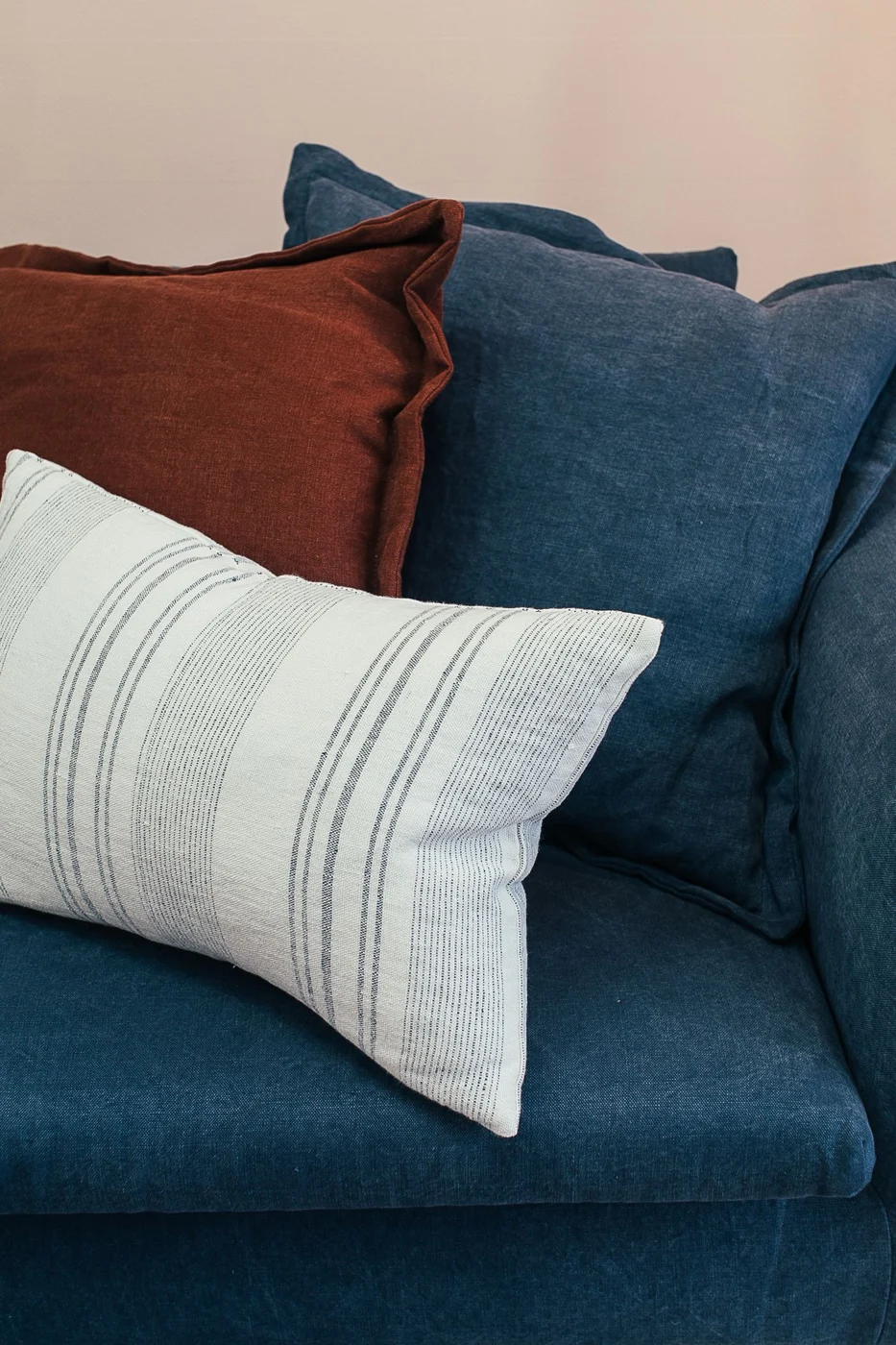
If colour is the main issue, two well-chosen cushion covers may be enough. Relate them to a rug, curtain or picture that will remain. Avoid changing every surface at once. Otherwise it becomes hard to tell whether the new textile improves the arrangement or simply adds more objects to the sofa.
Measure for a complete cover
The sofa shape, arms and separate cushions determine fit. A broad description such as three-seater says little about these details. Compare the dimensions and intended fastening method of the product. Check that all existing functions remain usable and that removing the cover for washing does not require inconvenient dismantling.
Plan for the washing period if the sofa is used daily. A large cover needs drying space and treatment according to its instructions. Store smaller alternative covers separately from their pads to avoid unnecessary storage bulk. A successful change continues to work after the first evening and does not need rearranging before every person sits down. The improved appearance should accompany ordinary use rather than depend on keeping the sofa untouched.