Plan from the socket towards the lamp
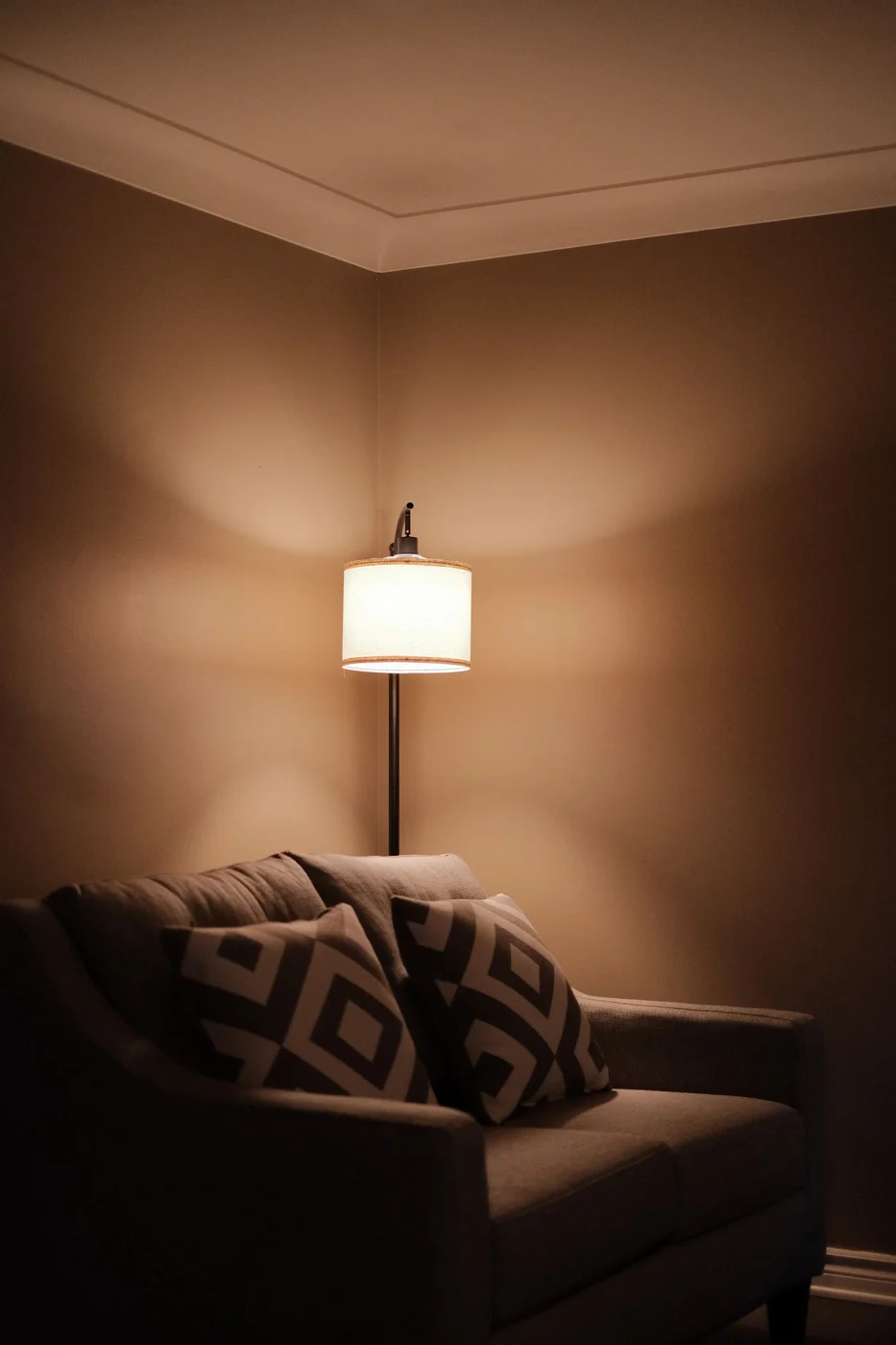
A floor lamp often goes wherever the room looks empty, only for its lead to cross the route to the sofa. Reverse that sequence. Find an accessible socket first and follow the possible cable route beside walls and furniture. Then decide which seat the lamp can serve from that position.
Do not measure the lead as a straight line alone. It needs to follow the actual route around a cupboard foot or beside a skirting board. At the same time, unnecessary slack should not collect loosely on the floor. Avoid stretching the cable tight between the socket and lamp. A small movement of the base should not immediately pull on the connection.
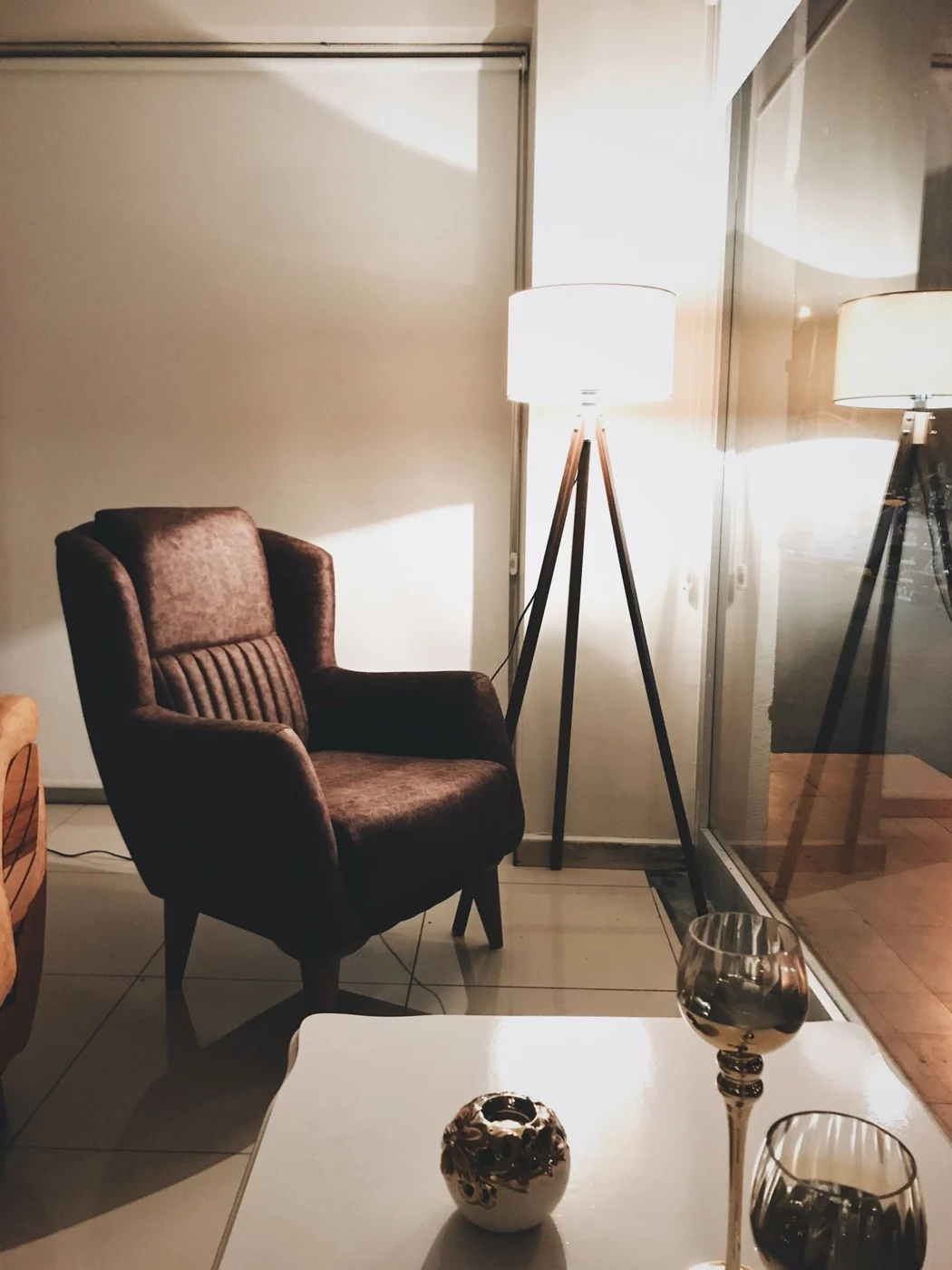
A lamp behind an armchair
For an armchair that regularly turns towards conversation, include that rotation in the cable trial. Keep the lamp base clear of the backrest's movement. Check whether pushing the chair back traps the lead beneath a leg. Routing that is invisible while everything stands still can be particularly unsuitable beside a moving chair.
If the lamp needs a long detour to reach a socket, compare another seat orientation. A small turn may preserve the layout while bringing the light closer to its connection and still reaching the reading position. That adjustment can avoid additional cabling and make cleaning easier.
Treat the base as furniture
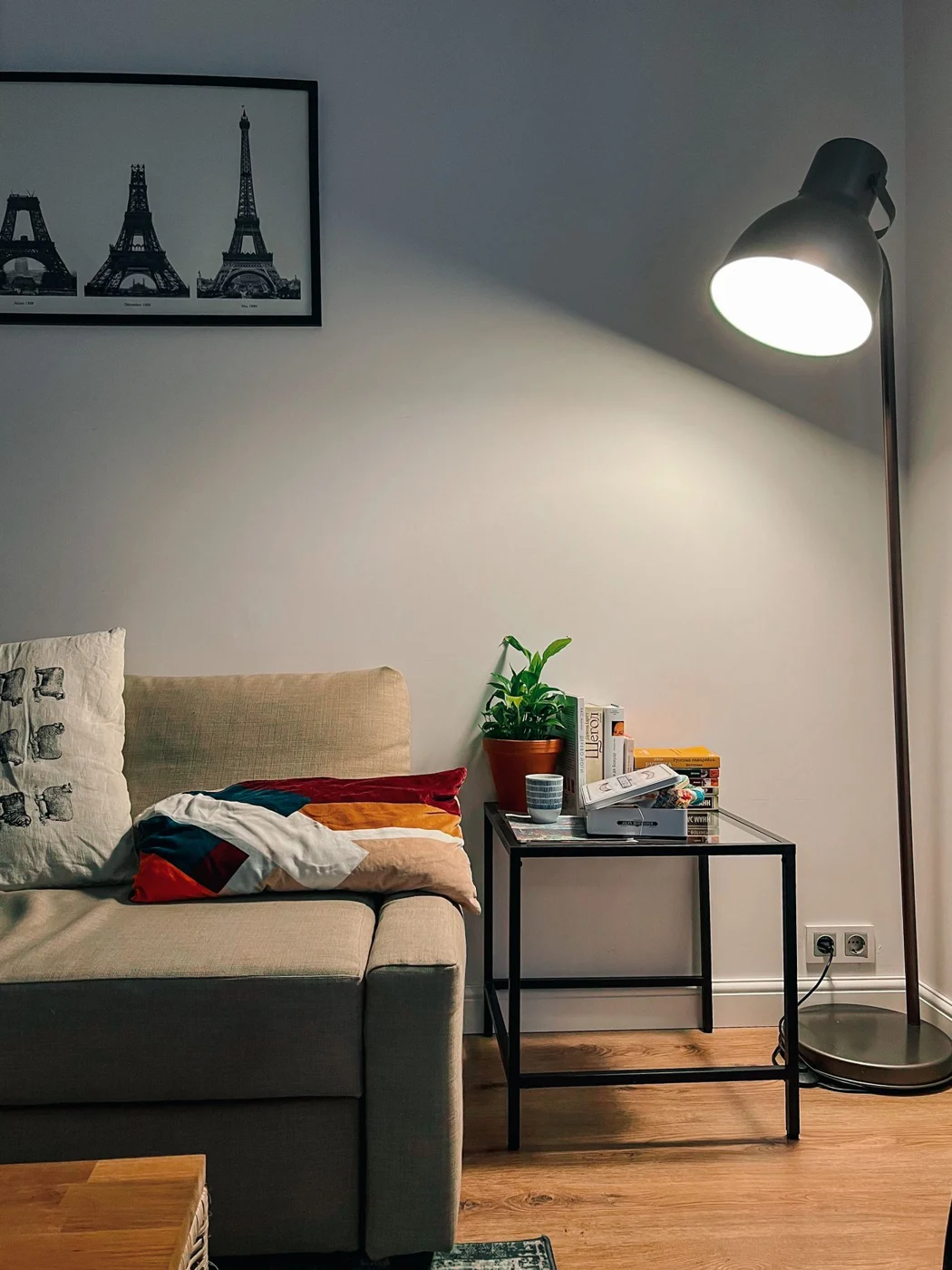
The base occupies floor area even when the shade is high above it. Mark its footprint with paper before buying. Walk past the sofa, open a drawer and move an armchair. A broad arched lamp can appear to sit outside the seating group while its substantial base blocks the most frequently used entrance to that group.
A foot switch needs a deliberate operating position. Hidden under the sofa it becomes difficult to reach; in the middle of the route it becomes an obstacle. Try the intended position while wearing your usual indoor footwear. A switch on the lamp body may be more suitable where the floor is already crowded with furniture and other objects.
Avoid hiding a routing problem
Pushing a lead underneath a rug does not provide a useful solution. It remains subject to pressure and becomes harder to inspect. Use cable-management products only as intended and keep connections accessible. Power supplies and plugs should not be trapped under heavy furniture simply to remove them from view.
If there is no sensible cable route, reconsider the type of light or its position. A table lamp on an existing sideboard may illuminate the same wall. Recheck the routing after any substantial furniture move. A route that was previously out of the way can end up directly beneath people's feet when an armchair shifts and changes the way everyone crosses the room.