Find and identify the label
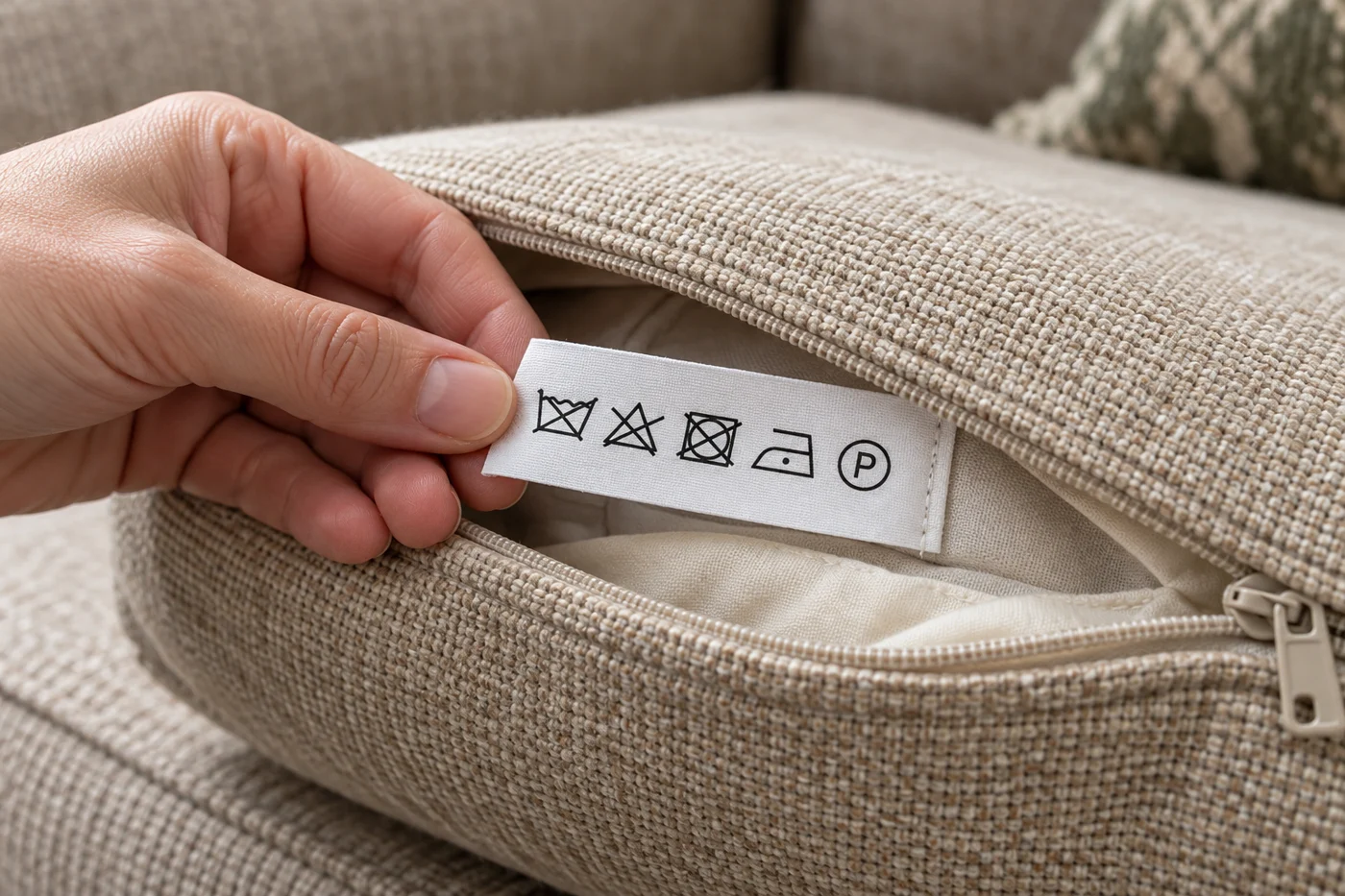
Locate product information before a stain occurs. Labels may be beneath a cushion, on a cover or in the supplied documents. Photograph legible details without tipping the furniture unsafely. Record which part the label belongs to. With several similar cushions, otherwise you may later use instructions intended for a different fabric.
Fibre composition alone is not a complete care instruction. Two covers with similar fibres may need different treatment because of construction, dyeing or finishing. A zip is initially just a fastening. It does not automatically permit removal and machine washing. Some covers are accessible only for assembly or professional replacement.
Read the symbols together
Care symbols address different processes, including washing, bleaching, drying, ironing and professional cleaning. Read the entire sequence and additional written instructions. An allowed wash temperature does not establish whether tumble drying is permitted afterwards. Equally, a professional-cleaning symbol is not an invitation to apply an arbitrary solvent at home.
If symbols are faded or unclear, consult a reliable explanation such as GINETEX and compare it with the product document. Do not guess from a similar-looking sign. Keep the full instructions so restrictions are retained rather than photographing only an isolated washing symbol.
Turn the label into a workable sequence
Suppose the instructions allow a particular cover to be washed but prohibit tumble drying. The washing permission answers only the first part of the plan. Before removing the cover, you also need somewhere suitable for the prescribed drying method. If that space is unavailable, choosing another day makes more sense than improvising a shortcut. Check whether the permission applies only to the outer cover: it does not establish that the cushioning beneath can be washed.
For furniture with several covered components, keep a simple correspondence: a photograph of the component, its own label and the relevant manufacturer instruction together. A symbol on a loose cushion then cannot accidentally become the care instruction for the whole chair. If documents seem to disagree, compare the article number and fabric version first. Ask the manufacturer about that specific discrepancy rather than asking broadly whether the chair can be washed.
Distinguish dust from a stain
Routine care should remove loose dirt before it becomes embedded. The appropriate nozzle, brush and suction depend on the fabric and manufacturer guidance. Check attachments for sharp edges and residue. A tool for robust carpets is not automatically appropriate for a delicate upholstery textile.
After a fresh spill, identify the substance first. Avoid forceful rubbing or combining several cleaners. The instructions may specify a treatment; seek advice if suitability remains unclear. Inappropriate wetting can turn a small spot into a larger ring. Filling beneath the fabric may also absorb moisture even when the problem appeared limited to the surface.
Organise removable components
If the instructions permit removal, photograph the position and orientation of each part first. Identify matching covers in a way that does not affect the fabric or its care. Keep any removed fittings organised. This is particularly useful with mirrored seat cushions or several similar back cushions.
Allow enough time when the furniture cannot be fully used. Do not simply pull a damp cover over dry filling to hurry the process unless the particular instructions explicitly require that. Drying and refitting guidance differs between products and belongs in the preparation, not in troubleshooting after washing.
Know when to ask a professional
With unknown fabric, widespread soiling, delicate construction or unsuccessful previous attempts, accurate information is more useful than further experiments. Provide photographs of the furniture, label and mark, together with a list of products already used. This helps a specialist assess whether on-site treatment or removing components is appropriate. Keep the resulting advice with the product details. If several household members clean the furniture, make those instructions easy to find so each person does not begin with a different assumption.