Choose useful precision
Cables may be enough for one small container. In a home with many devices, camera accessories or a model-specific association may be more useful. A broad category recreates searching, while an excessively detailed one becomes wrong after minor changes. Choose precision by the contents rather than label size.
Use words already familiar in the household. An invented technical term does not improve organisation if others do not understand it. Clear pictures may supplement words for children or multilingual users. They do not replace important product markings.
Label from the viewing direction
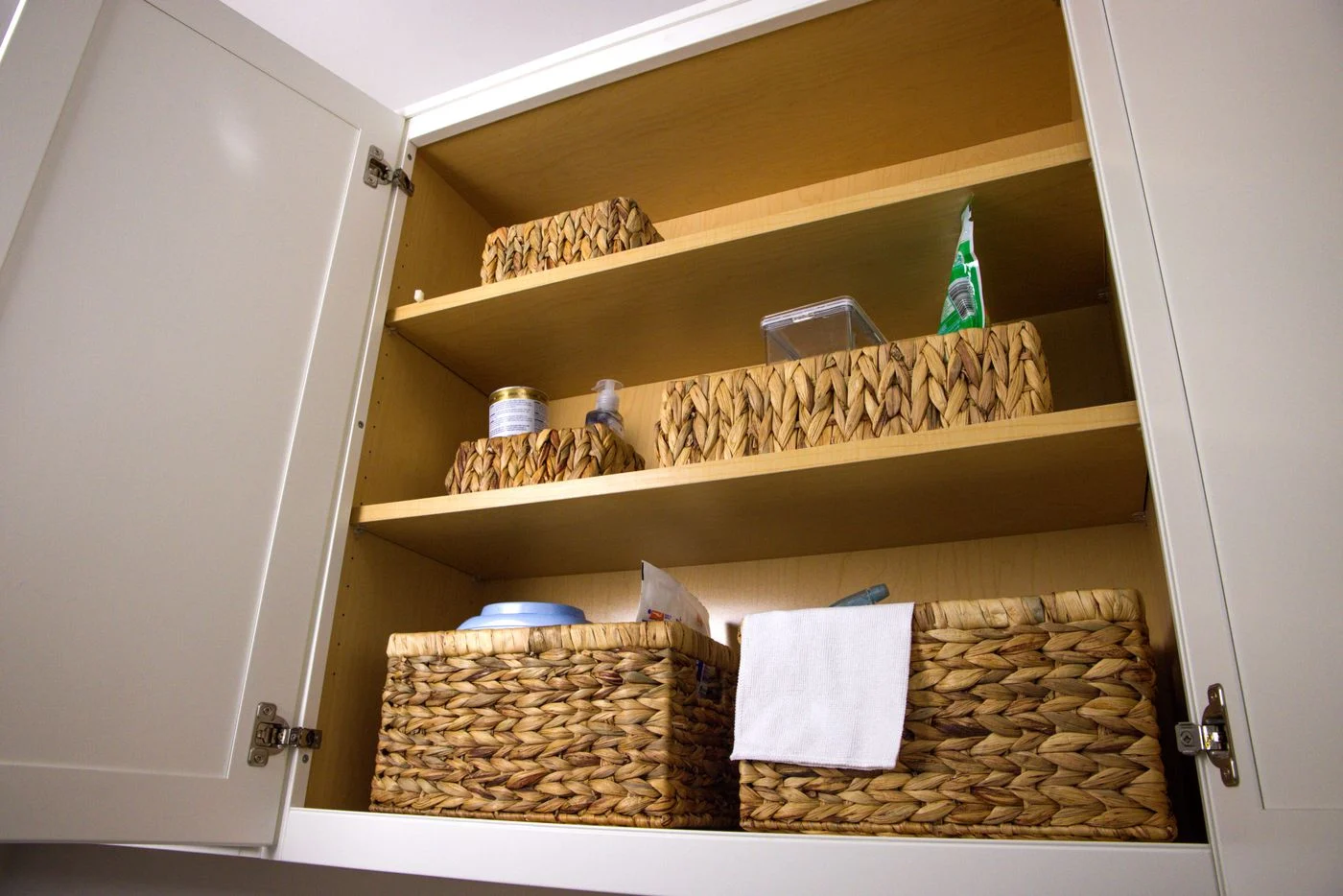
Check how the container sits. A lid label is visible in a low drawer but hard to see on a high shelf, where identification belongs on the front. If a box is used in different orientations, two labelled sides may make sense.
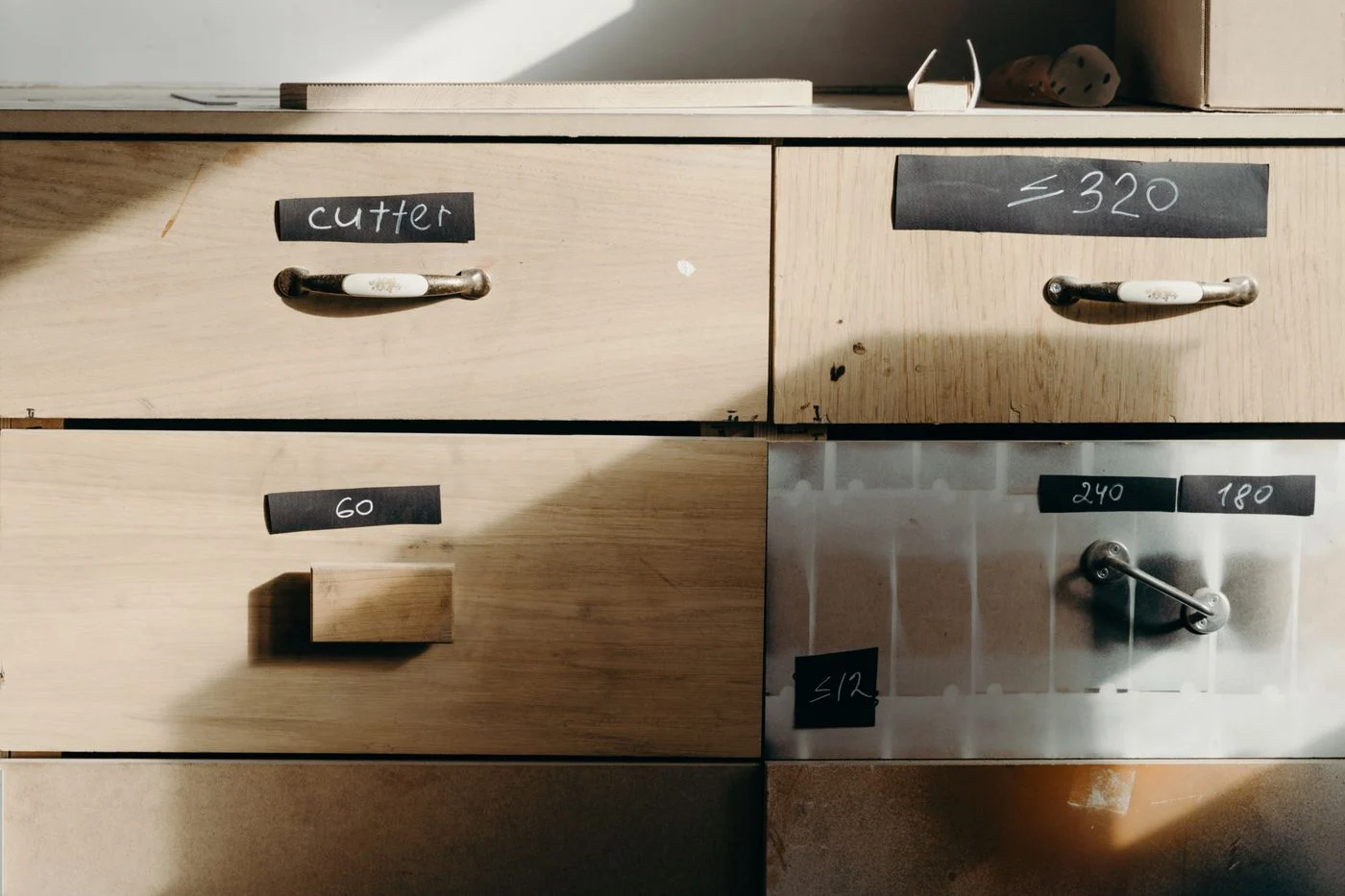
Test lettering size and contrast from the usual distance. A decorative label readable close up may still be ineffective inside the cupboard. Handwriting is sufficient when clear and durable. Elaborate printed templates are not a requirement for usable storage.
Allow contents to change
Use easily replaceable labels for changing contents. With adhesive labels, check suitability for the surface and whether removal can avoid damage. Do not experiment with strong adhesive on delicate furniture. A sleeve or attached tag may offer an alternative.
Update the label when the container's role changes. An old name creates false confidence and makes returning things harder. Empty boxes can remain unlabelled until a specific use is decided.
Do not label everything
Obvious contents in a visible open compartment may need no extra text. Use labels where similar containers, occasional access or several users complicate identification. Too many notices compete and eventually become ignored.
Personal labels should not cover or replace product names, warnings or care information. Household labelling explains where something belongs; it does not change the contents' properties. A few reliable notices can support everyday organisation more effectively than a fully labelled but confusingly divided wall.