Record the existing arrangement
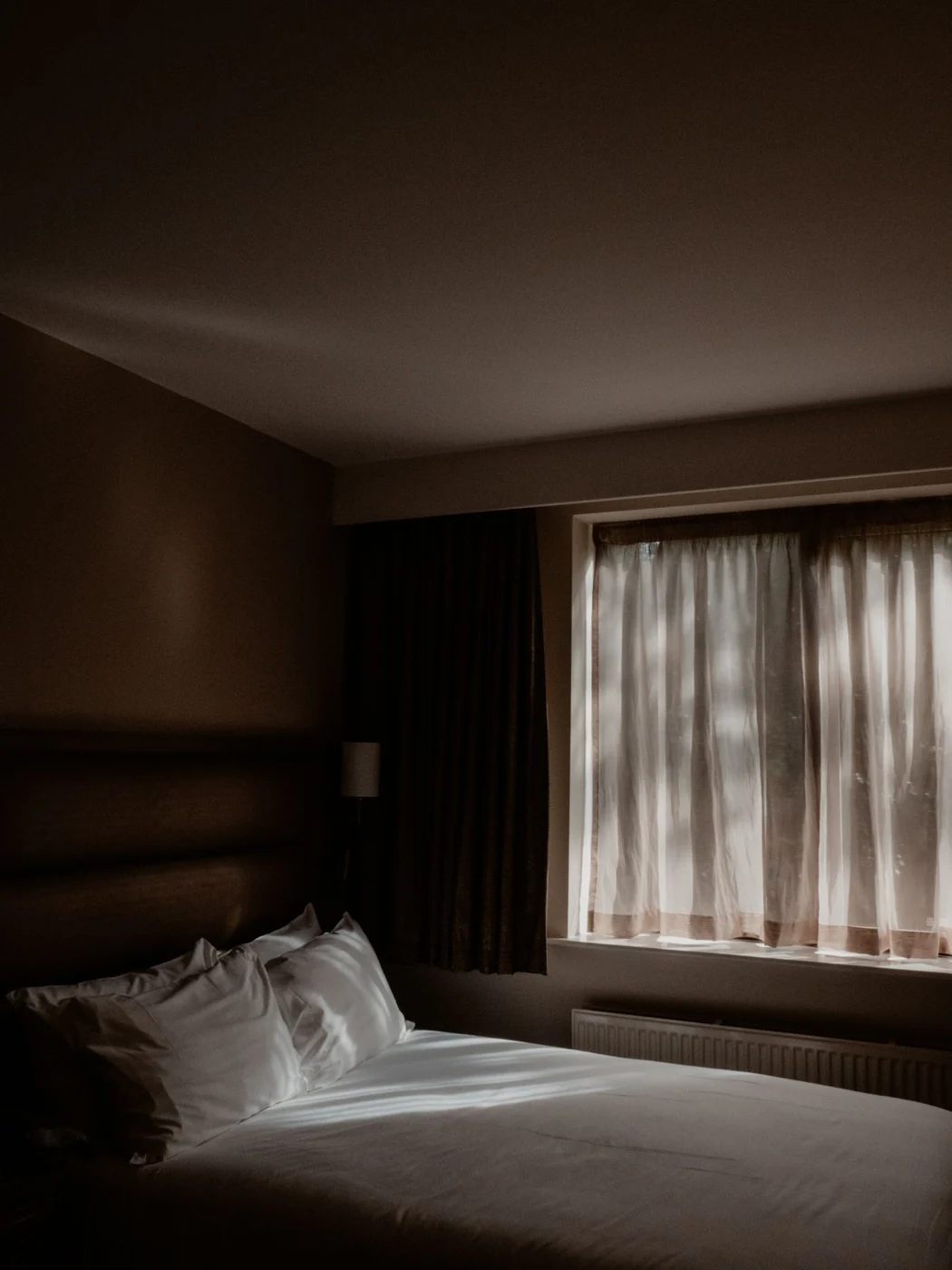
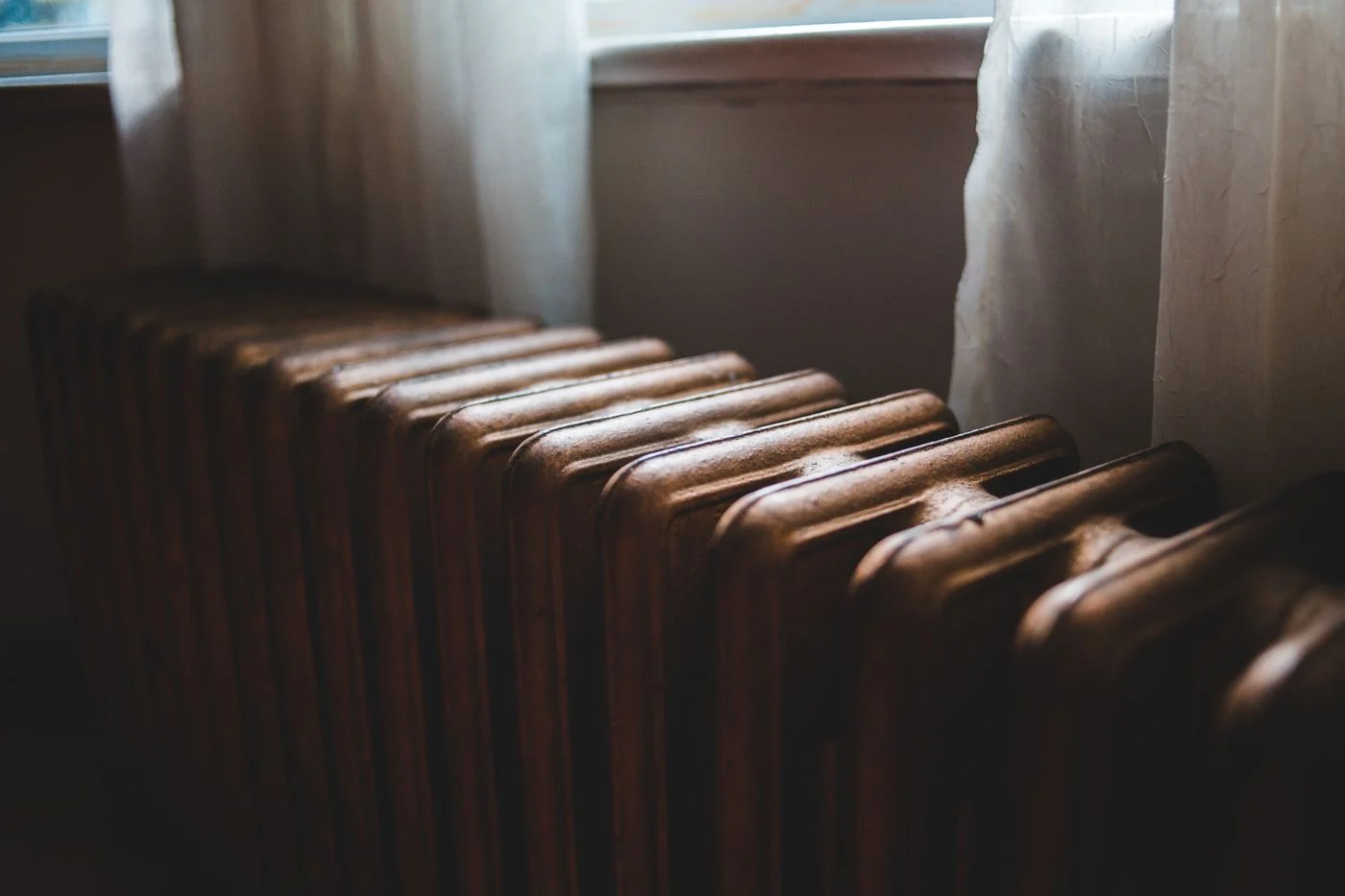
A radiator below a window changes curtain planning. Measure more than the distance from pole to floor: include the radiator, its controls and the windowsill. Photograph the arrangement with the window open and closed. This helps identify where fabric would fall when the window is opened or the curtains are drawn.
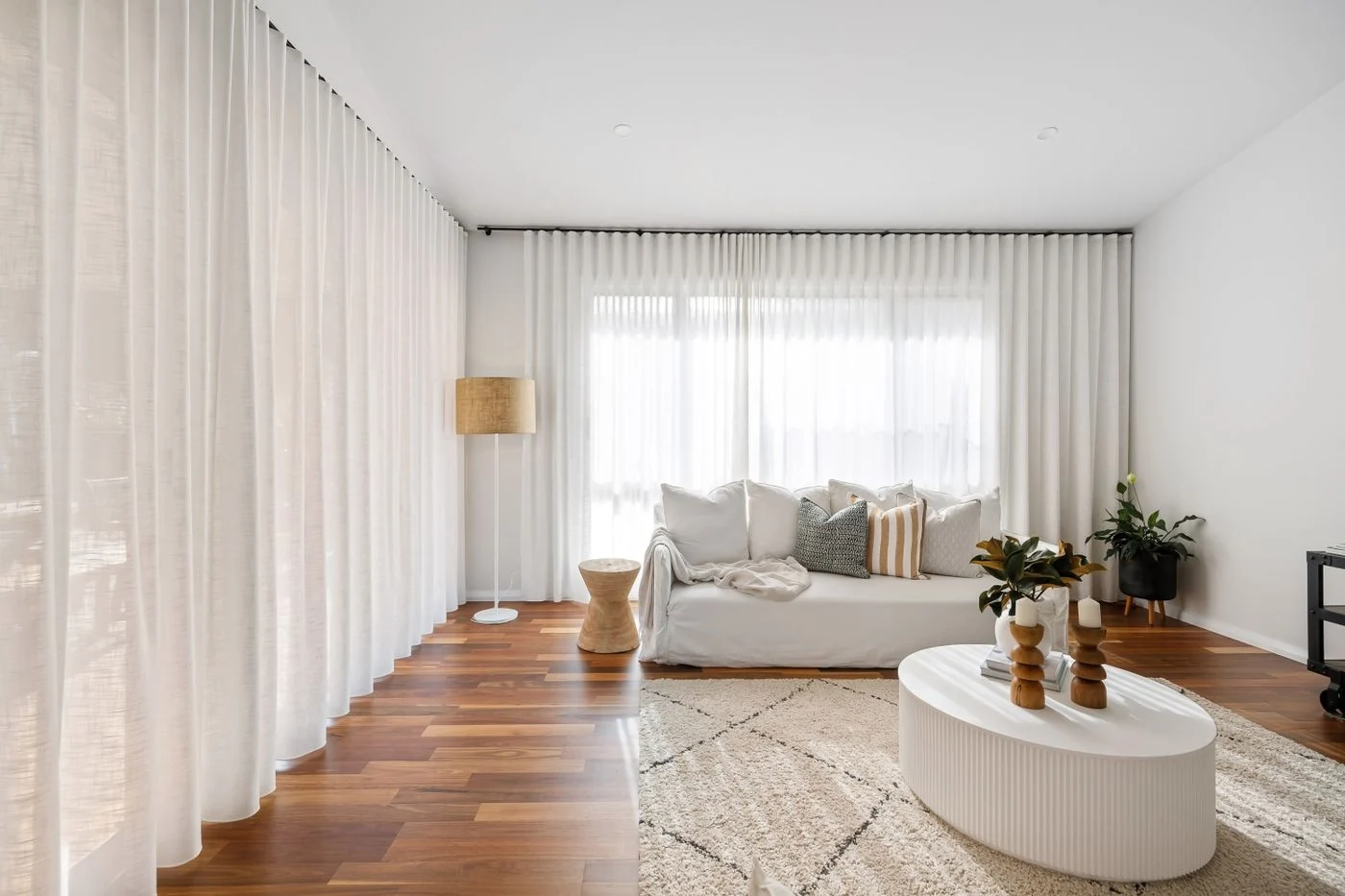
A floor-length curtain can hang in front of a radiator and separate the warmed area from the rest of the room. The appropriate solution nevertheless depends on the heater and its installation. Follow the manufacturer's required clearances and leave air openings and controls unobstructed. Electric heaters have their own requirements; a decorating rule is not a substitute for those instructions.
When there is little space at the sides
With a narrow window between cupboards, long side panels may remain in front of the radiator even when open. Measure more than the clear centre. Push both panels fully aside and inspect the resulting fabric stacks. Tiebacks also require space; gathering fabric does not make it disappear.
If the sides are too tight, a shorter covering or one closer to the window may work better. Compare the required darkness with the heater's clear airflow and operating area. Another strip of fabric over the centre does not solve a conflict at the side. The plan should include both fully open and fully closed conditions.
For alterations, provide photographs and a sketch showing radiator, pole and handle. Record the appliance's required clearances too. This communicates the actual condition the curtain must meet, rather than only an attractive finishing height. Temporary stitching remains useful until that complete arrangement has been tested.
Compare three different approaches
A shorter curtain may finish above the radiator if the arrangement provides enough room. It should not merely fit while the window remains closed. Check whether moving air carries the fabric towards the heater. Temporarily pinning up an existing curtain reveals this movement more clearly than a drawing or a measurement alone.
A second approach places the working window covering closer to the glass, with decorative side panels remaining outside the radiator area. The handle and opening movement still need to work. Other forms of privacy covering provide a third option where they suit the window. Decide whether the priority is privacy, darkness or a textile feature; these are separate requirements and not every solution satisfies all three equally.
Keep the controls accessible
It should not be necessary to move a curtain every time you need to check a radiator setting. Access is also required for cleaning and maintenance. Avoid placing extra furniture or a heavy fabric-holding arrangement in front of the heater simply to keep the curtain in a particular position.
Only shorten the curtain after the final mounting is in place and the fabric's care instructions have been considered. Some fabrics change dimensions after washing. A temporary hem allows a trial over several days before the final cut. Pay particular attention to evening use with the curtains closed: that is when an arrangement that looked convincing during daylight has to function in its usual working position.