Identify the sound that bothers you
An empty room with hard surfaces sounds different from a furnished one. Before adding textiles, separate two questions: does your own voice linger within the room, or is noise entering from another home? A rug or curtain can change the surfaces inside your room. It is not a reliable solution to neighbour noise transmitted through walls or floors.
Listen during the activity that actually causes difficulty. Conversation at a dining table, a video call and music from a speaker are different situations. Begin at the normal volume and avoid changing several things together. Otherwise it becomes difficult to tell which adjustment made a difference or whether the source was simply quieter.
Record a simple comparison sequence
Choose a short spoken passage and the same position for the trial. Listen with curtains open, then closed. Repeat with a second person remaining in one seat. This reduces incidental differences but is still not a standardised measurement. Use the result to inform a decision about the room, not as a proven performance rating for the fabric.
Where a product has test data, read the conditions too. Manufacturers may publish different results for flat and folded fabric. The gap behind it can also form part of the described arrangement. Compare the intended installation with those conditions before expecting a particular effect. A test figure does not automatically describe a reduction in neighbour noise.
This distinction also helps with a limited budget. Do not buy an acoustic curtain solely because the name seems to match the problem. Tell the supplier whether the concern is reverberation within the room, speech clarity or sound arriving from elsewhere. That allows the intended function of the product to be checked against the actual task.
Start where fabric already has a purpose
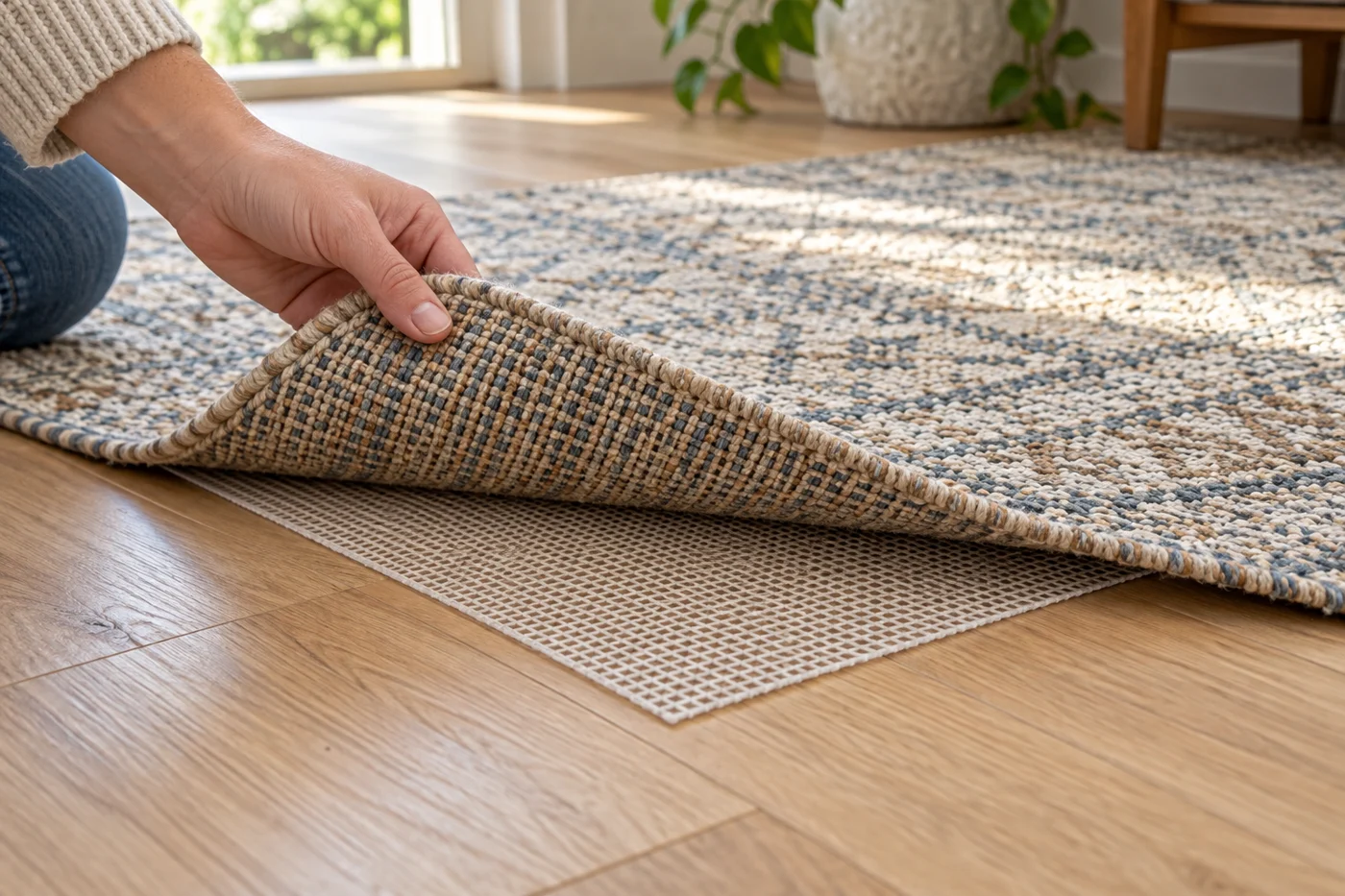
If a rug is planned for the seats or curtains are needed for privacy, those additions also change the amount of exposed hard surface. Still choose them for their main function. An enormous rug that obstructs doors does not become useful merely because it covers more floor. A heavy curtain must remain manageable as a window covering.
Try existing textiles before ordering specialised products. Put a suitable rug in the proposed location or close the existing curtains. Repeat the conversation from the same position. This comparison does not produce an acoustic measurement, but it can show whether the change feels relevant to the way the room is used.
Do not infer performance from appearance
Thick fabric is not automatically proven to absorb a particular amount of sound. For products with acoustic specifications, consider the measured property and the tested installation. A flat panel against a wall may be arranged differently from folded fabric with space behind it. Do not transfer an advertised figure to your room without considering those conditions.
If speech remains difficult to understand despite furnishing changes, a professional assessment may be useful. Record the room shape, surfaces and the activity causing trouble. For noise from adjoining homes, the transmission path needs identifying first. Buying additional cushions without knowing the type of problem uses space and money without establishing a suitable solution.