Two jobs at one window
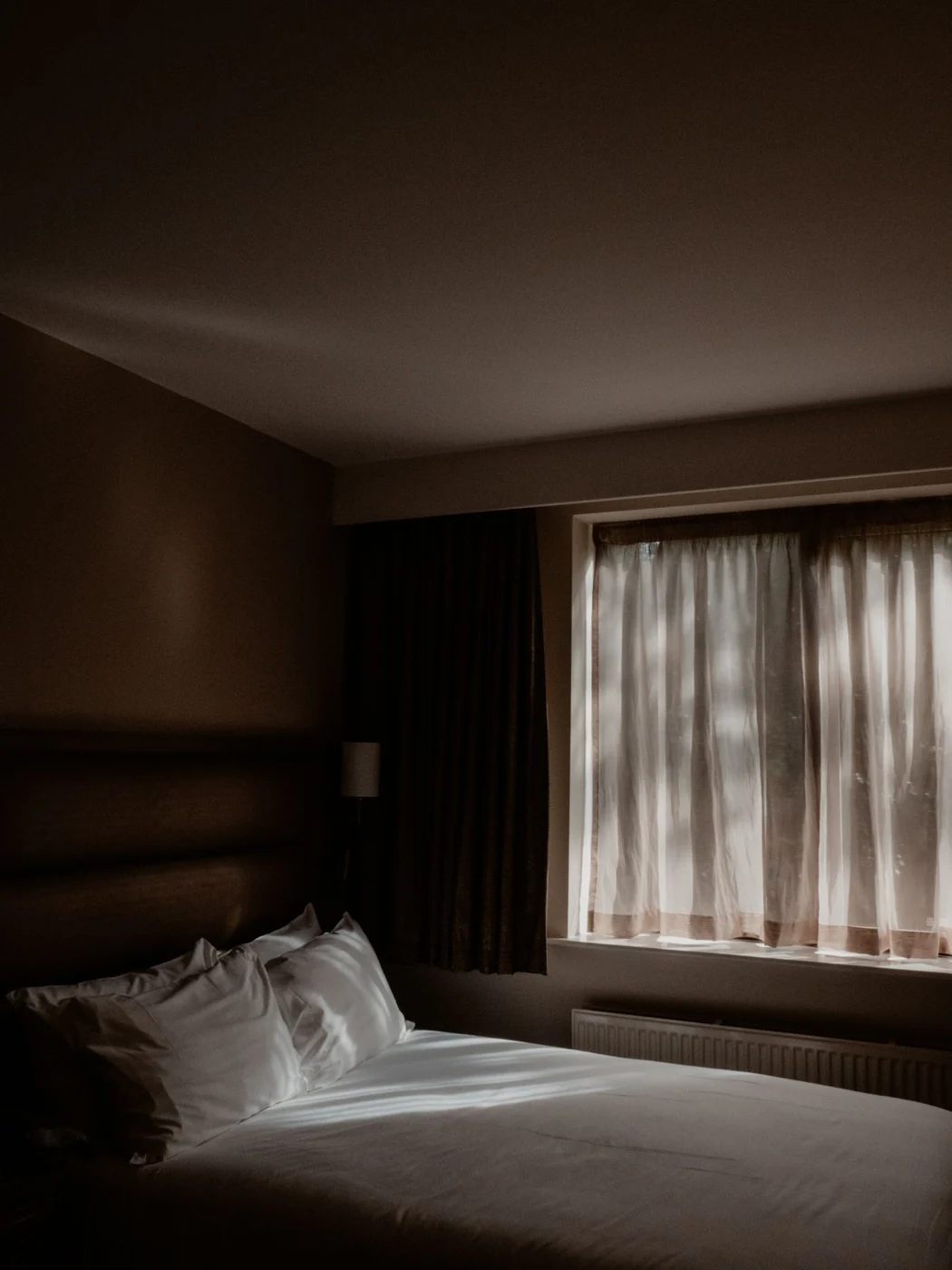
A sheer curtain changes the view through a window and can soften direct views into the room during daylight. A denser fabric has a different job when the interior becomes brighter than the outside in the evening. Do not assume a light fabric provides the same privacy at every hour. Check the effect with the room lights on from an appropriate outside viewpoint.
Decide which layer will move most frequently. If the sheer stays closed during the day and the heavier panel is used only at night, each should slide without catching the other. A suitable double track may provide this separation. Track spacing, brackets and permitted loads depend on the system and the combined weight of the fabrics.
Allow for the stacks of fabric when both layers are open. Two layers need more room beside the glass than one. If they cover a large part of a small window, they unnecessarily reduce daylight. Gather existing fabric as a trial and measure its real stack width. Thin fabric is not automatically compact when a large quantity is gathered together.
Using only one layer temporarily
Daily operation at a strongly sunlit window may differ from a sheltered north-facing one. Test whether one layer should remain fully open during certain hours. A sheer need not always cover the glass if it leaves the room too dim. Two layers provide options, not an obligation to keep both across the window constantly.
Try the movements one-handed, as during a quick morning opening. If both fabrics drag together, spacing or guidance may be unsuitable. Where hooks or rings can be confused, mark their allocation before removing the curtains for washing. This preserves the working separation afterwards.
Across a large window, the combined fabric weight can be substantial. Match fabric quantity, supports and fixing, using the intended system components. Do not add another layer to existing brackets simply because a spare hook remains. The complete mounting needs to suit the proposed arrangement.
Test together and care for separately
Hang samples one behind the other at the window instead of judging them side by side on a table. A cream sheer changes the appearance of a white outer layer. Patterns may overlap or create distracting lines. Examine the arrangement both open and closed, because both conditions are part of its everyday use.
Check handles, radiators and the movement required for airing the room. The rear layer should not become trapped whenever the window opens. The front layer should not obstruct access to the rear one. At a balcony door, an easy passage matters more than achieving perfectly symmetrical folds on both sides.
Keep the care instructions for each layer separately. Different materials may require different washing methods and change dimensions by different amounts. If several windows have similar panels, add a discreet identification mark to each. After washing, the arrangement can then be restored without comparing every length again. If operating the layers already feels awkward during the trial, another form of privacy covering may simplify the arrangement more effectively than adding further fabric.