Compare the finished fabrics
Linen and cotton name fibres, not uniform types of curtain. Either can be loosely or densely constructed, appear smooth or have a clearly visible texture. A heavy cotton and a light linen therefore do not answer the same question. Compare samples intended for similar functions, such as two light-filtering fabrics or two denser curtain materials.
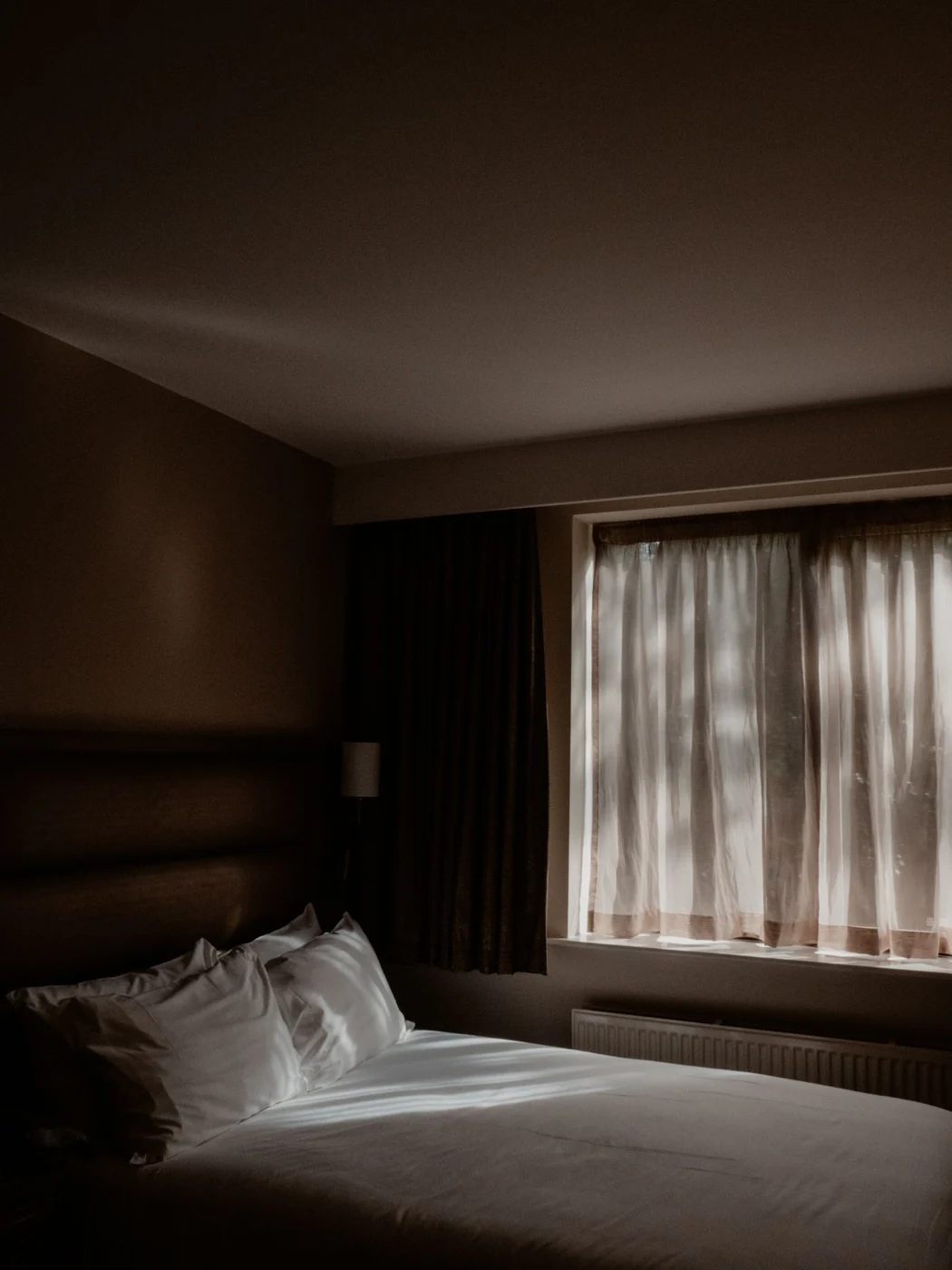
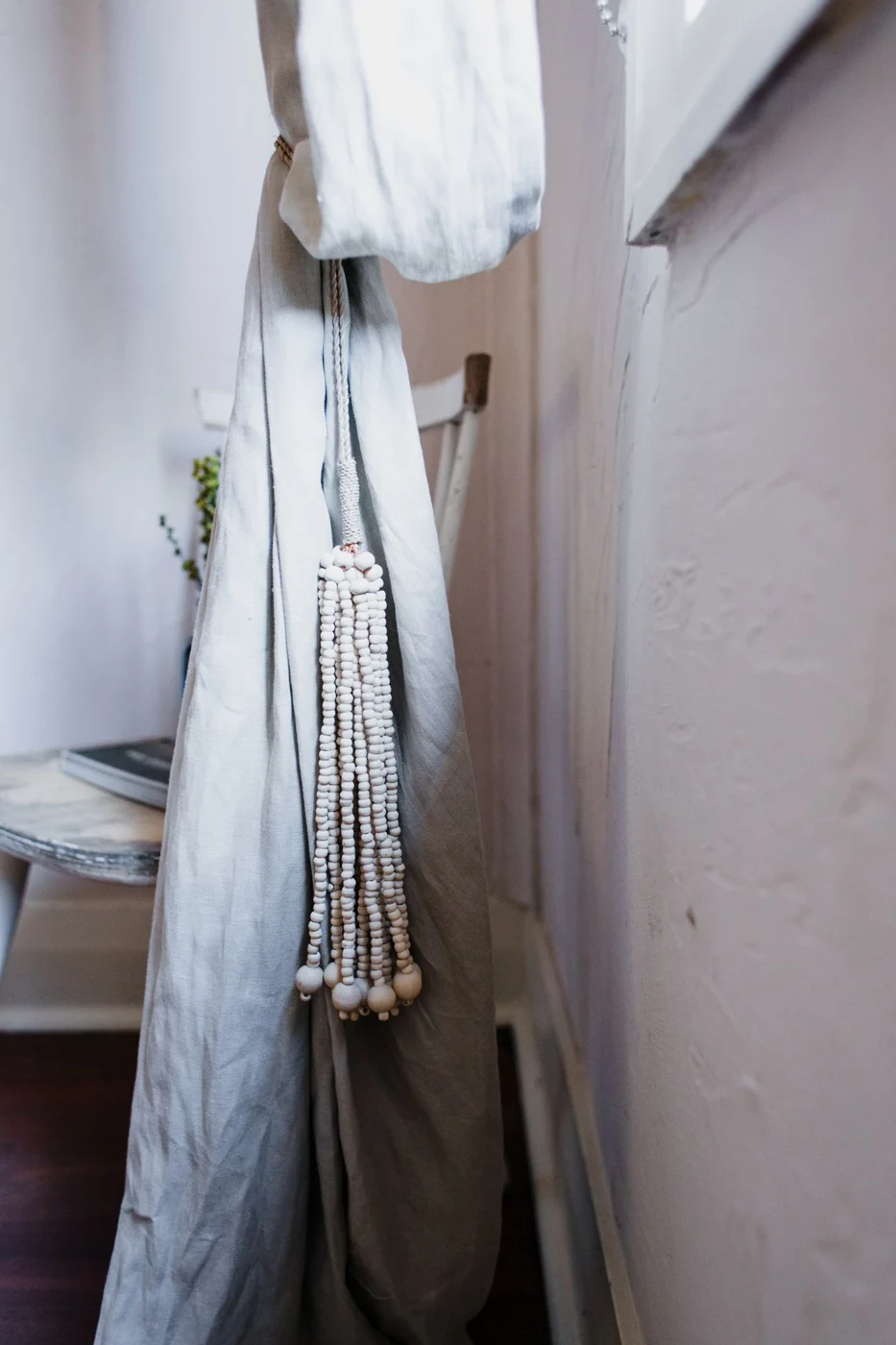
Hold the samples at the window and then against a wall. At the window, observe how light passes through; against the wall, colour and texture become easier to judge. Gather each sample into loose folds. A flat piece on a table does not show the volume of the finished curtain or how its pattern will disappear into the folds.
Light fabric across a broad window
Across a broad window, even a light fabric becomes a large surface. Assess the planned quantity rather than one fold alone. An irregular texture can be appealing close up yet much more prominent over several metres. A quiet colour may balance that effect, but not necessarily. View a larger sample from the sofa's distance.
Side stacking matters too. A denser cloth may occupy more room beside the glass, although fabric quantity and mounting also influence this. Compare candidates at the same intended width and similar gathering. Otherwise the apparent material difference may mainly reflect different amounts of fabric.
When ordering several panels, keep colour, finish and care requirements consistent. Retain the product details and compare delivered pieces before shortening them. Small variations may become more obvious at the window than in the packaging. Only after that check should the final length alteration begin.
Include creasing in the choice
A lively, irregular surface may be exactly what you want. If you expect a very smooth curtain, compare its appearance and care requirements particularly carefully. Fibre alone guarantees neither lasting smoothness nor a particular drape. Ask for a larger sample or inspect a hanging example where possible, instead of deciding from a small square.
Think about how you will rehang the fabric after cleaning. A curtain needing extensive ironing will not suit every routine. Drying a long panel also requires space. Across several windows, this work becomes more substantial than it appears while handling one small sample in a shop.
Do not guess dimensional changes
Follow the specific care instructions and any information about shrinkage. Do not apply a general percentage to every linen or cotton curtain. Blends, pretreatment and construction can differ. Shorten the product according to its intended procedure rather than an assumption about the fibre from which it is made.
If you already have curtains, compare the new sample directly beside them. Similar natural shades can appear quite different against daylight. Inspect the hem and hanging arrangement too: a suitable fabric with an unsuitable attachment will not fall as expected. Choose the complete product for the required privacy and care routine. The fibre name is useful information, but it is not a complete buying decision by itself.