Plan two complete setups, not two desktops
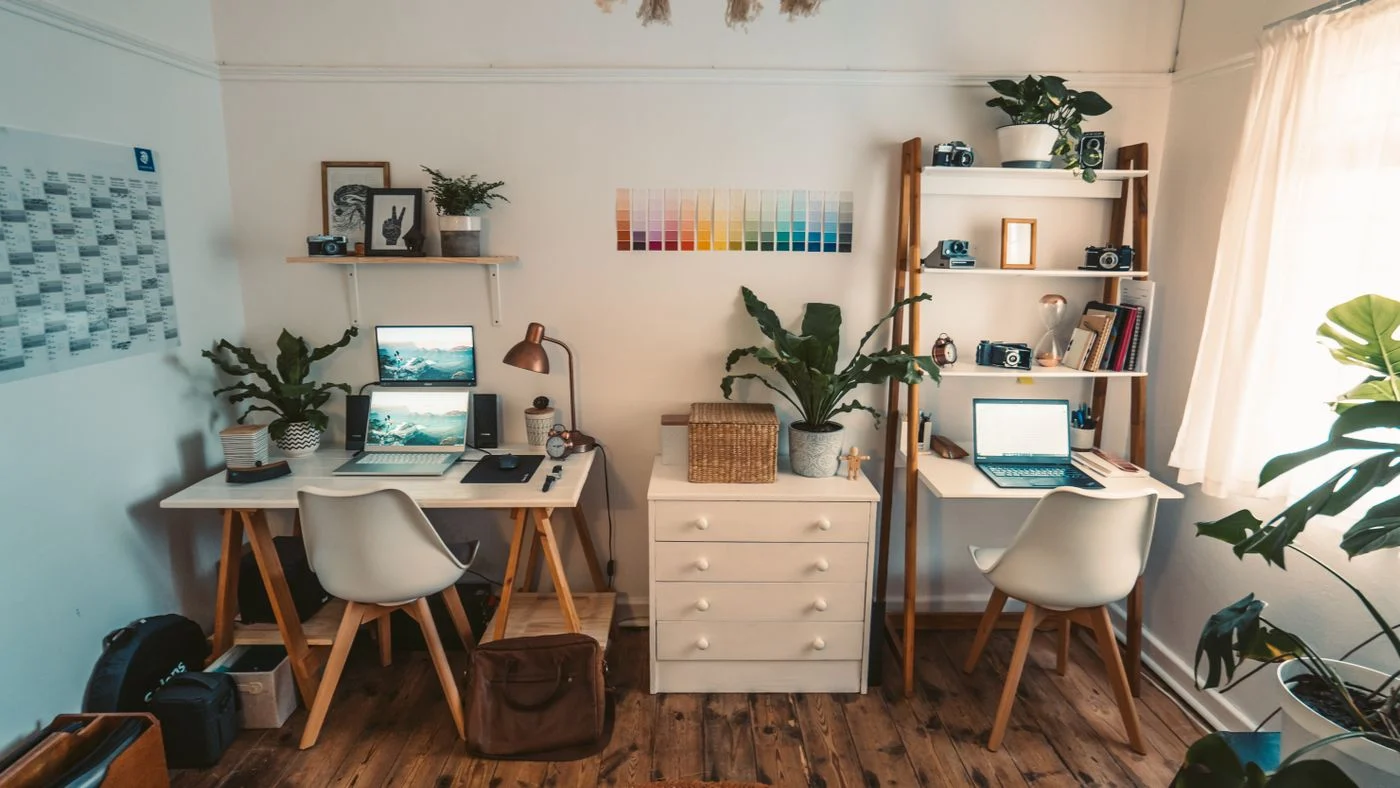
Begin with each person's equipment. A screen-based setup with paperwork needs a different surface from a laptop used briefly. Lay out both separately and record what is needed at the same time. Only then compare side-by-side, face-to-face and separate table positions.
A long shared table can save space, but length alone does not decide suitability. Legs and drawers must work with two seats. Check whether each person can reach their materials without entering the other's area. An imaginary dividing line helps only if it remains understandable during actual use, not merely when the table is empty.
Look at moving chairs
Mark pulled-back chairs as well as furniture edges. Have both people stand and leave the room together. With opposing desks, less room may remain between chairs than expected. With side-by-side positions, the route to the door may pass directly behind one person.
Do not permanently assign the poorer position to someone simply because they work slightly less often. Try other layouts before accepting that compromise. Two smaller separate surfaces sometimes create better circulation than one large shared top. Assess complete use, including standing and fetching materials, rather than only the moment when both people are seated.
Test light for each person
A window can sit beside one workstation while reflecting directly in the other's screen. Test both displays during normal working hours. Shared shading changes conditions for both people. Establish a setting that works in direct sun and consider whether local lamps need to supplement a darker area.
Aim task lights at the relevant activity. One lamp between two screens does not automatically serve both well. It may cast one person's hand shadow or shine directly into the other's eyes. Check sightlines from both seats rather than judging only how evenly the tabletop appears illuminated.
Calls need an agreement
Two people cannot perform every activity simultaneously in one room without interference. Plan recurring calls and meetings together. Headphones do not prevent a person's own voice being audible in the room. A small desktop panel also does not promise acoustic separation between conversations.
If simultaneous calls are frequent, consider another temporary place for speaking. For rare overlaps, a simple scheduling agreement may be enough. Make it specific: who needs quiet, when, and how will changes be communicated? An indefinite request for consideration is less useful than an understandable routine that both people can follow.
When the second user is occasional
A permanent main workstation and an occasional second position need not have identical equipment. The second place still requires a complete suitable surface for its task. A spare corner of the main desk is enough only if both people can sit and use their materials simultaneously. Test the overlap with real activities.
For occasional use, accessible storage for the second keyboard, papers and other necessary items may help. Setting up should not interrupt work at the main position. If the first person's display must constantly move, the separation is not yet working.
Agree how the room is left after shared work. The occasional position should not become permanent overflow storage if it is needed again tomorrow. Equally, the main user need not clear everything daily. Clearly allocated surfaces support that distinction without forcing the two places to look identical.
Separate shared and personal material
A printer or supply store can be accessible to both without standing between their keyboards. Personal papers need clearly allocated storage. Give each person a return point so active work does not become mixed during tidying. Different containers or discreet labels may be sufficient; an elaborate system is not required.
Plan power and cables for both setups. One person should not need to disconnect equipment so the other can work. Check an appropriate supply arrangement and route leads outside chair movement. Preserve access for cleaning and maintenance instead of making every connection unreachable behind the shared surface.
Trial a working week together
Use the arrangement for several days before purchasing additional cabinets or partitions. Each person can record difficulties separately before comparing observations. A small shift may solve one issue, while another requires a fundamentally different division of the room. Treat both experiences as evidence.
Leave room for later adjustment. Two working methods rarely change at exactly the same time. A useful shared room therefore allows one place to evolve without rebuilding the other completely. Symmetrical furniture is less important than having two work areas that are genuinely usable throughout an ordinary day.