Find out why the rug moves
A rug may shift because it is light, because the floor is smooth or because people repeatedly push against one corner while walking. Place it where you want it and observe when it changes position. Does the whole rug slide, or does only one edge curl? Those problems do not necessarily need the same remedy.
Check for dust and small particles underneath. Clean the floor according to its care instructions and let it dry fully before replacing the rug. An underlay on a dirty or damp surface can conceal the problem without creating more reliable contact. Inspect the back of the rug at the same time, rather than assuming all movement begins with the floor.
A small rug beside a door
Beside a door, a small rug often receives sideways force as someone turns or removes a shoe. Test that exact movement. If it still shifts with a suitable underlay, a larger continuous area or another location may work better. Extra grip does not solve every unsuitable shape.
Check whether the opening door catches a corner. The rug should not lie flat only while the door is closed. Suitable height and placement matter more here than perfect decorative centring on the frame. Keep the passage clear and inspect the combination again after the first days of use.
Match the underlay to both materials
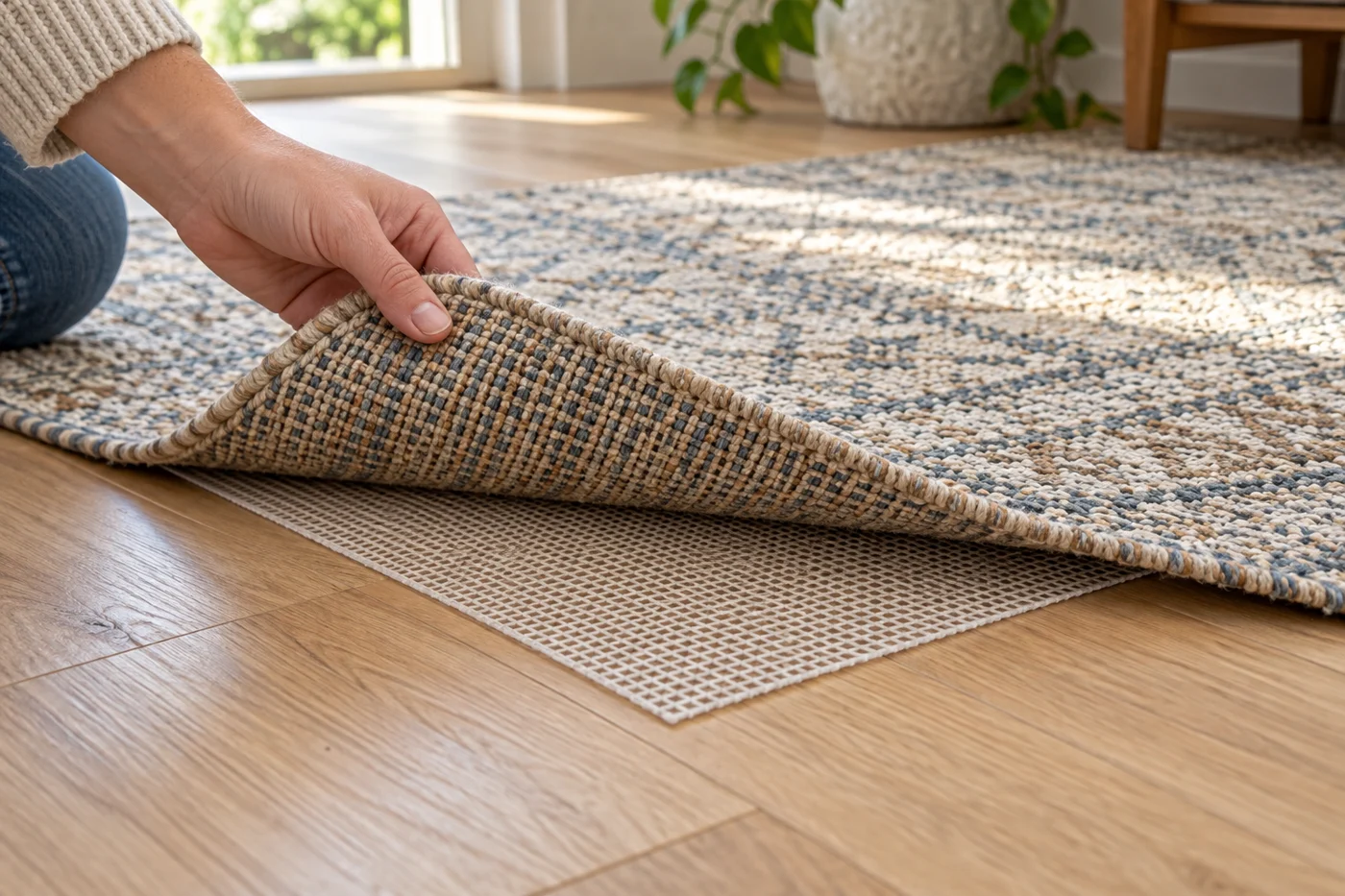
The underlay specification needs to suit both the flooring and the rug. Compatibility deserves particular attention with coated, oiled or sensitive finishes. A general description such as non-slip does not establish suitability for every surface. With underfloor heating, consider the requirements of the floor, rug and underlay together rather than relying on only one product label.
Trim only products designed to be cut. The underlay should stay within the rug outline instead of creating an additional exposed edge. Spread it flat and remove folds. An uneven underlay can make a small rug rock underfoot even when the material itself grips well. Thickness is therefore part of the decision, alongside friction.
Inspect again after use
Walk across the rug several times in the usual directions. Move a chair standing on it and open adjacent doors. Then inspect the edges. If a corner rises again, address its cause separately; adding more underlay beneath the centre is not a reliable solution for a distorted edge.
Avoid improvised adhesive tape unless its compatibility with the flooring and rug is established. Residue or changes to the finish can outweigh the small improvement in grip. Lift both rug and underlay during routine cleaning and inspect the contact surfaces. If an otherwise suitable combination still moves constantly, another rug or location makes more sense than adding successive layers underneath it.