Find the recurring positions
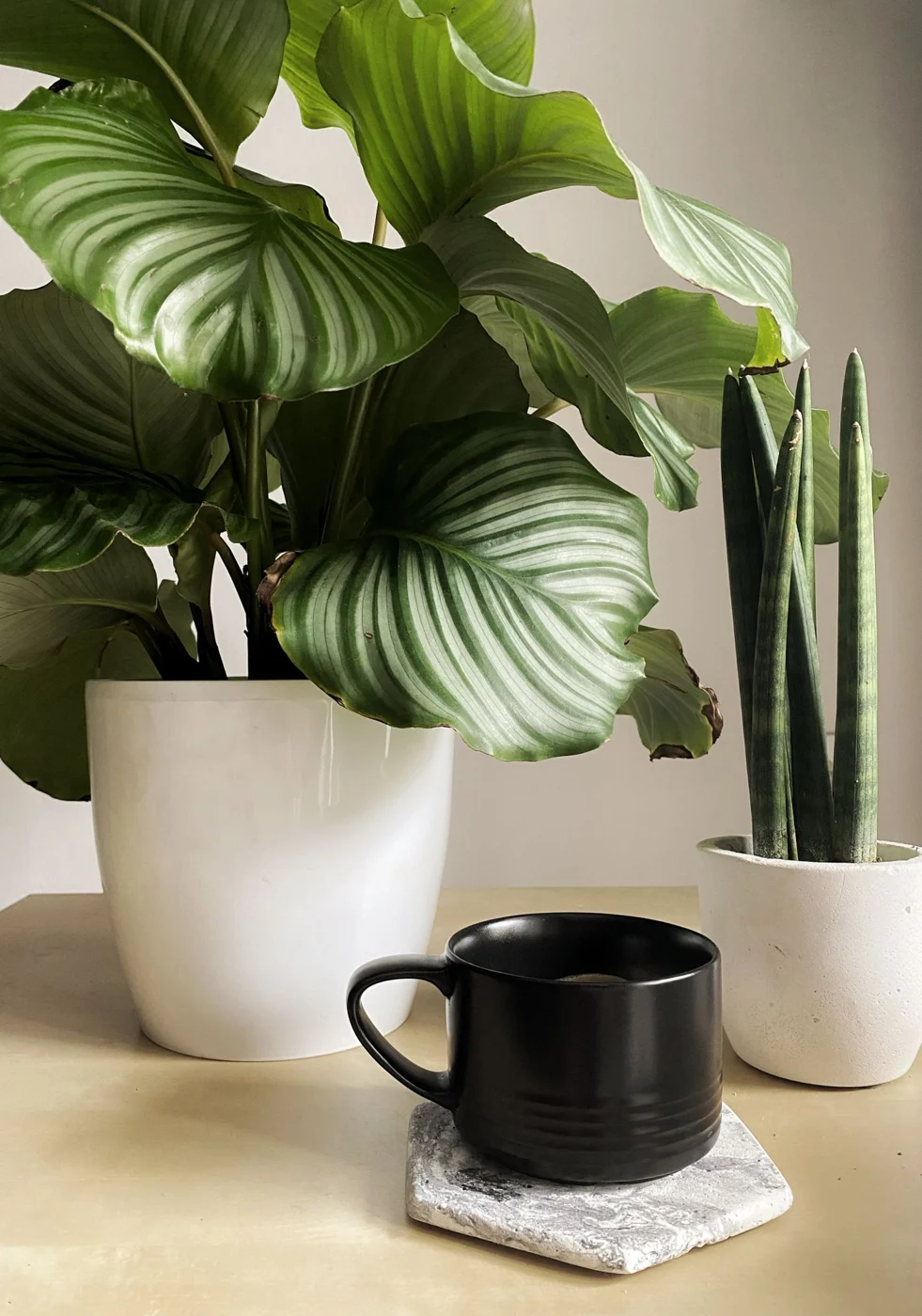
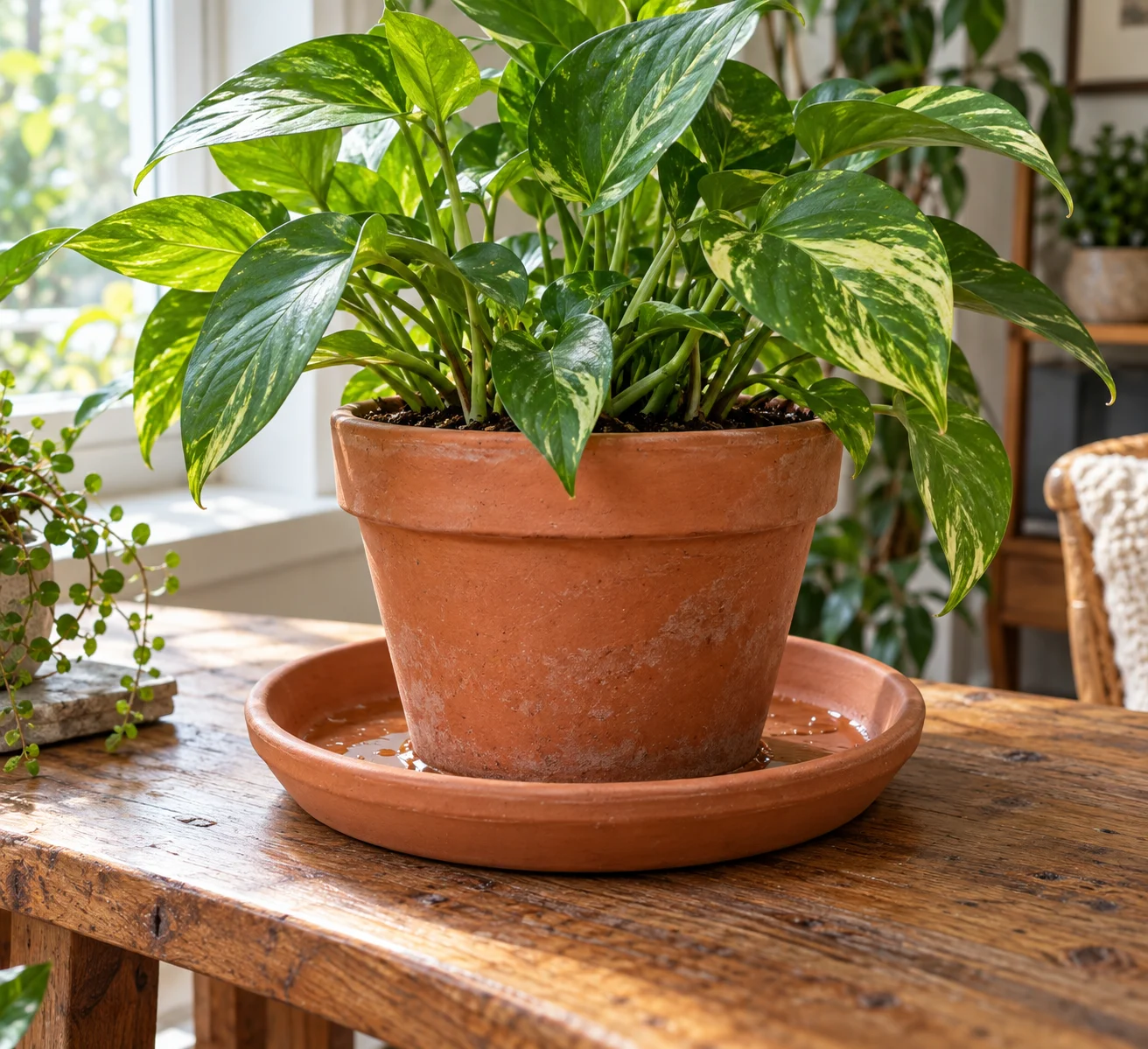
Notice where liquid reaches furniture in daily use. It might be cold drinks on the dining table, a vase on a chest or a water bottle at the desk. Lift these objects after use. Their visible exterior can be dry while a damp ring forms underneath. A suitable protective surface must therefore be clean and dry as well as present.
Check the furniture's material and care instructions. Lacquered tables, oiled tops and delicate veneers do not automatically receive the same treatment. Damage along an edge may also provide a route for water. Choose protection for the particular surface rather than assuming that a decorative tray is watertight.
Choose protective layers deliberately
An absorbent coaster may take up moisture but then needs to dry away from the furniture. A watertight layer contains water yet can trap it against the top if liquid enters from the side. Inspect both types from underneath regularly. Choose a size that fits the actual base of the vessel.
For vases, establish a suitable filling location. Do not top up water over a sensitive chest when the vase can safely be carried to an appropriate surface. Dry its exterior before returning it. Large, heavy vessels need a different care plan; lifting should not become an unsafe effort.
At a workspace, one designated drinks position simplifies checking. Instead of moving the bottle among paper stacks each day, give it an accessible suitable support away from equipment. Lift and dry that support when tidying. On a chest, one vase may similarly be easier to inspect than a tightly grouped collection. This is not a rule about decoration but about access: something that can be lifted conveniently is more likely to receive regular attention.
Separate fresh moisture from old marks
Remove fresh liquid promptly with a suitable soft cloth. Then assess the surface following the manufacturer's guidance. A remaining pale or dark ring is different from water still lying on top. Do not immediately apply heat, abrasives or mixtures of kitchen ingredients. Without identifying the finish, those attempts can cause permanent changes.
When marks recur, alter the activity causing them. A different vase position or an accessible dry coaster is often easier to manage than repeated stain treatment. Share known sensitive locations with the household so one person's careful protection is not undone by another returning the same wet object. Keep the surface visible long enough after a spill to check its condition rather than covering the area immediately with decoration.