Consider the complete construction
Check whether you are dealing with plain glass, a special coating or a mirror. Manufacturer guidance can differ. On a table, the frame, bonded areas and supports are part of the cleaning situation too. A product suitable for the glass may not be suitable to leave on adjacent wood or metal.
Inspect edges and corners for damage before applying force. Damaged glass needs an appropriate assessment. Do not try to make a chip disappear by cleaning it. Remove a heavy top only where the construction permits it and handling is safe. Routine cleaning is not a reason to loosen unidentified fittings.
On a table with a supported glass top, particles may be visible around the supports. Do not lever them out from beneath the glass with a metal object. First establish whether and how the top may be removed according to its instructions. Bonded or otherwise fixed constructions remain in place. A photograph of the affected area helps with an enquiry. This distinction prevents an ordinary cleaning task accidentally becoming the dismantling of a supporting connection.
Start with a clean tool
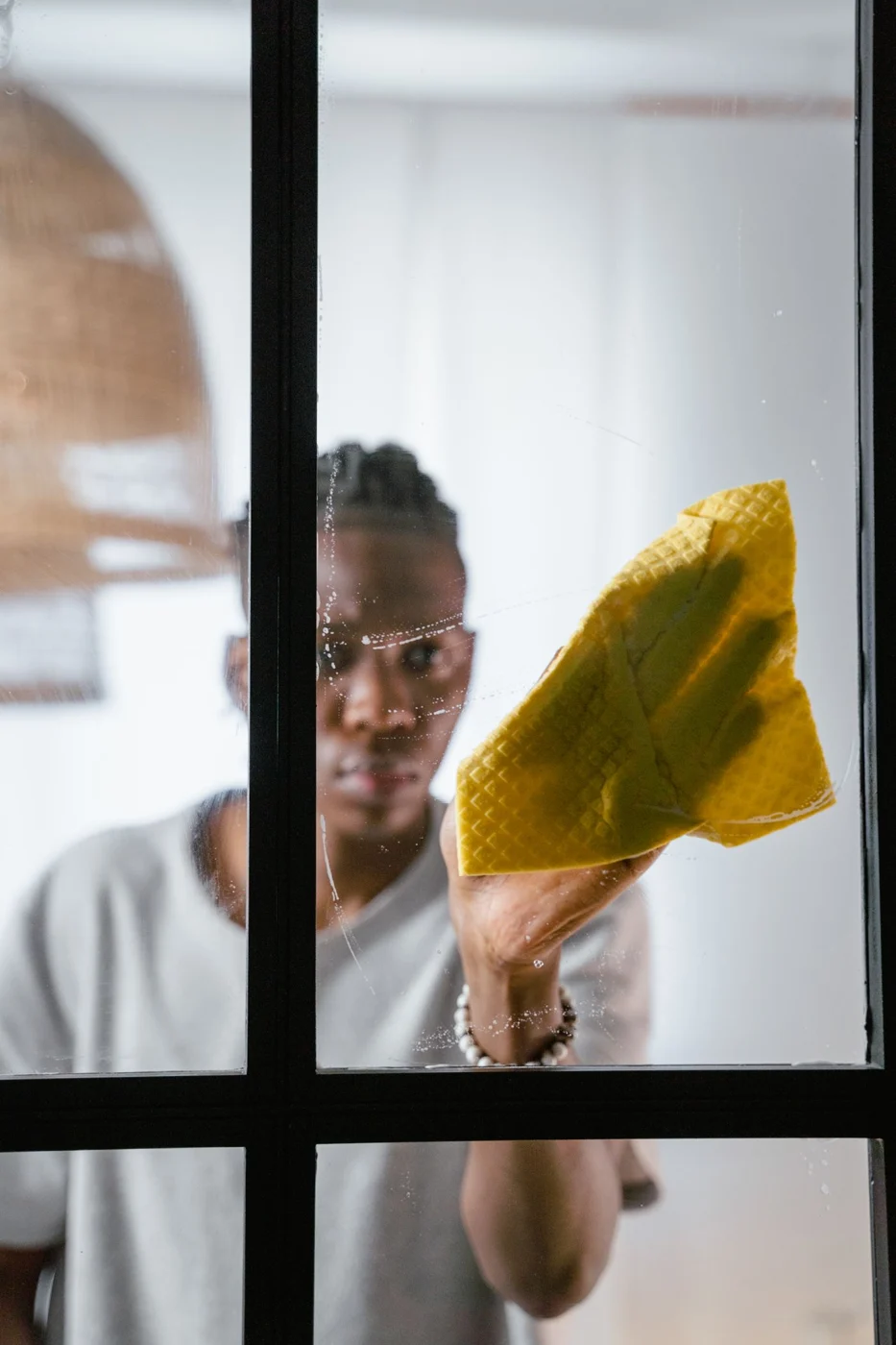
Remove loose crumbs and dust gently rather than pressing them across the glass. Then use a clean cloth suitable for the surface. Check it for hard residue. A workshop rag or used kitchen sponge may contain particles you do not want on glass. Abrasive tools are not a shortcut for dried deposits.
Use an approved cleaner in the instructed quantity. Controlled application to the tool may protect neighbouring materials from spray, where the product permits that method. Work in manageable areas so liquid does not run unnoticed into joints. Assess the result in side light rather than only from your normal view above the table.
Do not fight streaks with pressure
If streaks remain, check the cloth, dosage and drying process first. More force does not necessarily remove residue. Change a dirty cloth and follow the intended method. Ask about an unknown deposit or special coating instead of scraping with a blade. A technique permitted on another glass product may not apply here.
Return objects only when their undersides are clean too. Vases, bowls and ornaments can bring dirt or moisture back onto the surface. Protective supports should suit the construction and intended use. Store the cleaning cloth where it cannot collect coarse particles before its next use. This small separation between glass-care tools and general cleaning tools is often easier to maintain than repeatedly inspecting a shared pile of rags.