Consider more than diameter
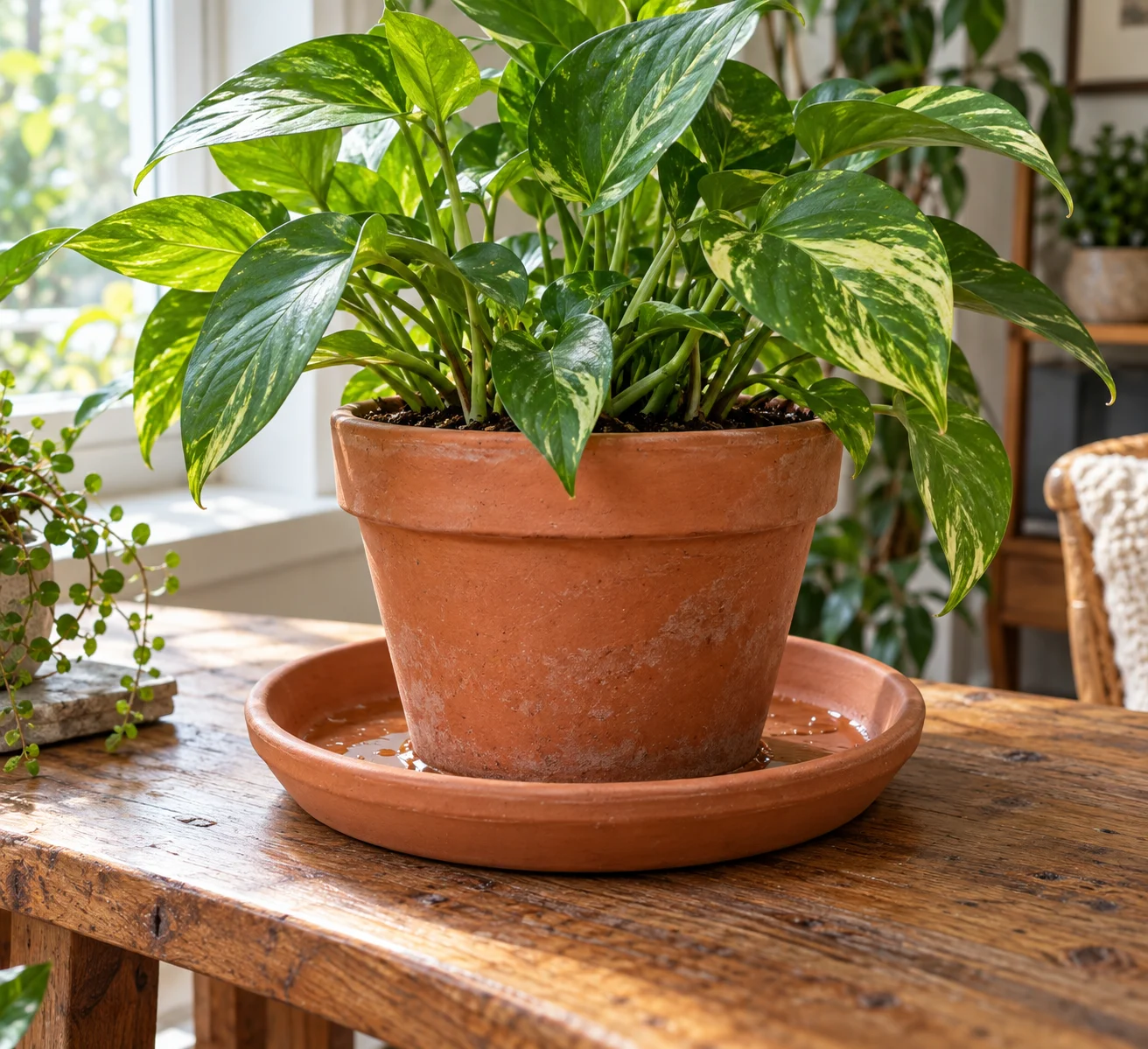
A saucer should accommodate the pot base and the water released during the intended care routine. A very shallow rim can overflow quickly, while a close-fitting edge makes emptying awkward. Test the real pot and saucer together rather than comparing two nominal sizes alone.
Check material and condition. Not every decorative container is reliably watertight. Cracks, unglazed areas or damaged coatings can make it unsuitable on a sensitive surface. Any extra protective layer must also suit the furniture or floor and should not trap unnoticed moisture for long periods.
Remove surplus water
After watering, excess water needs a controlled route out of the saucer. Do not automatically leave the plant standing in it unless the particular growing method specifically calls for that arrangement. The needs of the plant determine care. An ordinary saucer is not a self-regulating irrigation system.
With small pots, watering elsewhere can make inspection easier. For large containers, the process must work without risky lifting. Include access when choosing the location. A pot behind a sofa may look attractive but be difficult to maintain if its saucer can be reached only with a fully extended arm.
Check the surface beneath too
Carefully lift the saucer during routine care and inspect underneath. Moisture can collect even without an obvious overflow. Clean spilled water in a way appropriate to the surface and let everything dry before replacing the arrangement. A saucer does not make timber furniture or a wooden floor waterproof.
Outside, rain adds to irrigation water. Check whether a full saucer creates persistent waterlogging and whether the plant or season calls for a different arrangement. Provide controlled drainage that does not affect areas below. The useful solution combines plant care with protection of the supporting surface rather than merely adding an attractive rim beneath the pot. Recheck after moving the plant, since a new surface may need a different form of protection.