Measure the real containers
Record width, depth and height including lids and handles. Check whether apparently identical boxes truly have the same outer dimensions. Small differences matter in a tightly planned row. Quoted internal volume is not a substitute for measurement.
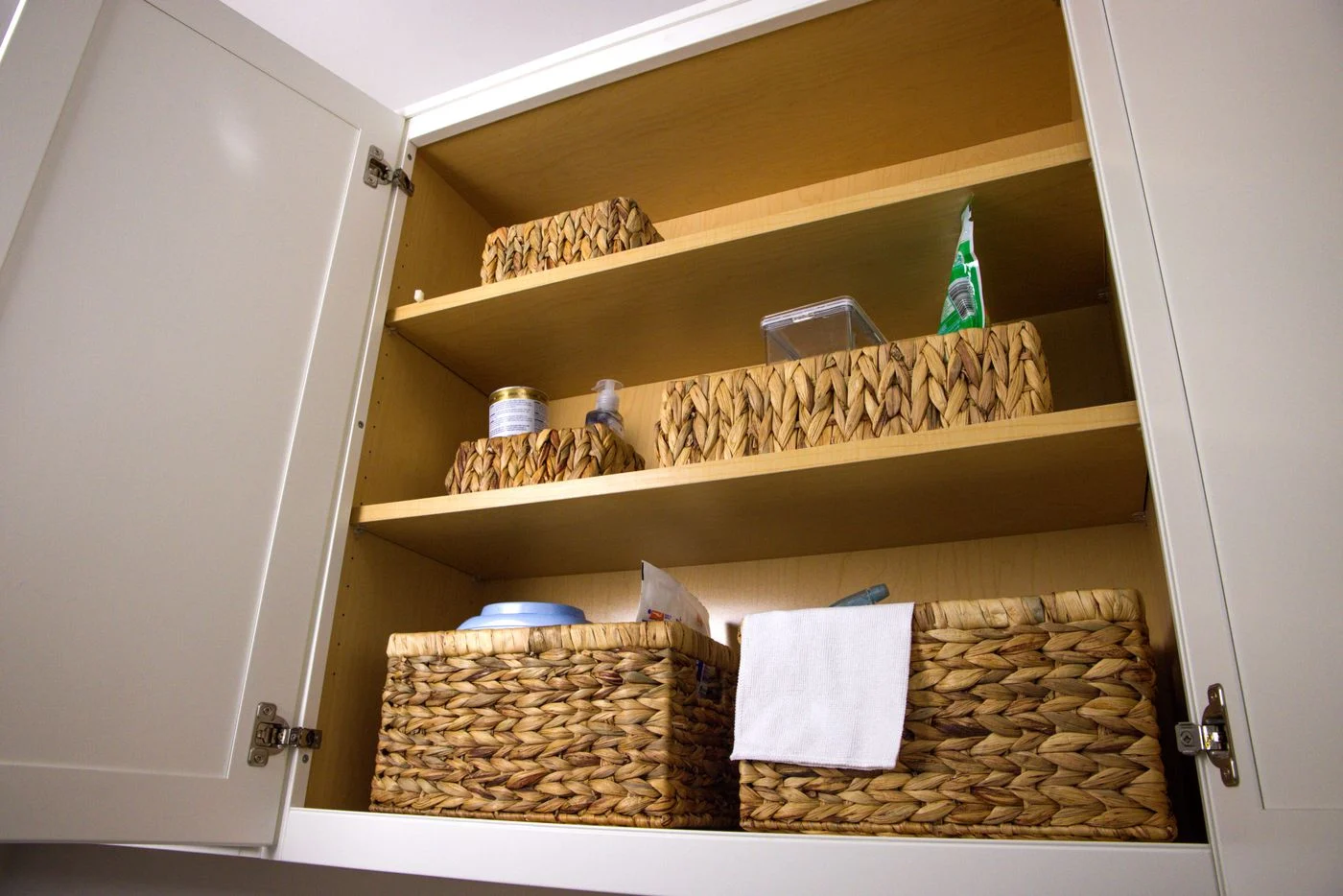
Arrange the intended row on the floor. Add room for hands and easy withdrawal. If every box fits only under pressure against its neighbours, ordinary use becomes awkward. Lids need either opening clearance within the shelf or a free surface outside where the box can be opened.
Choose shelf heights by contents
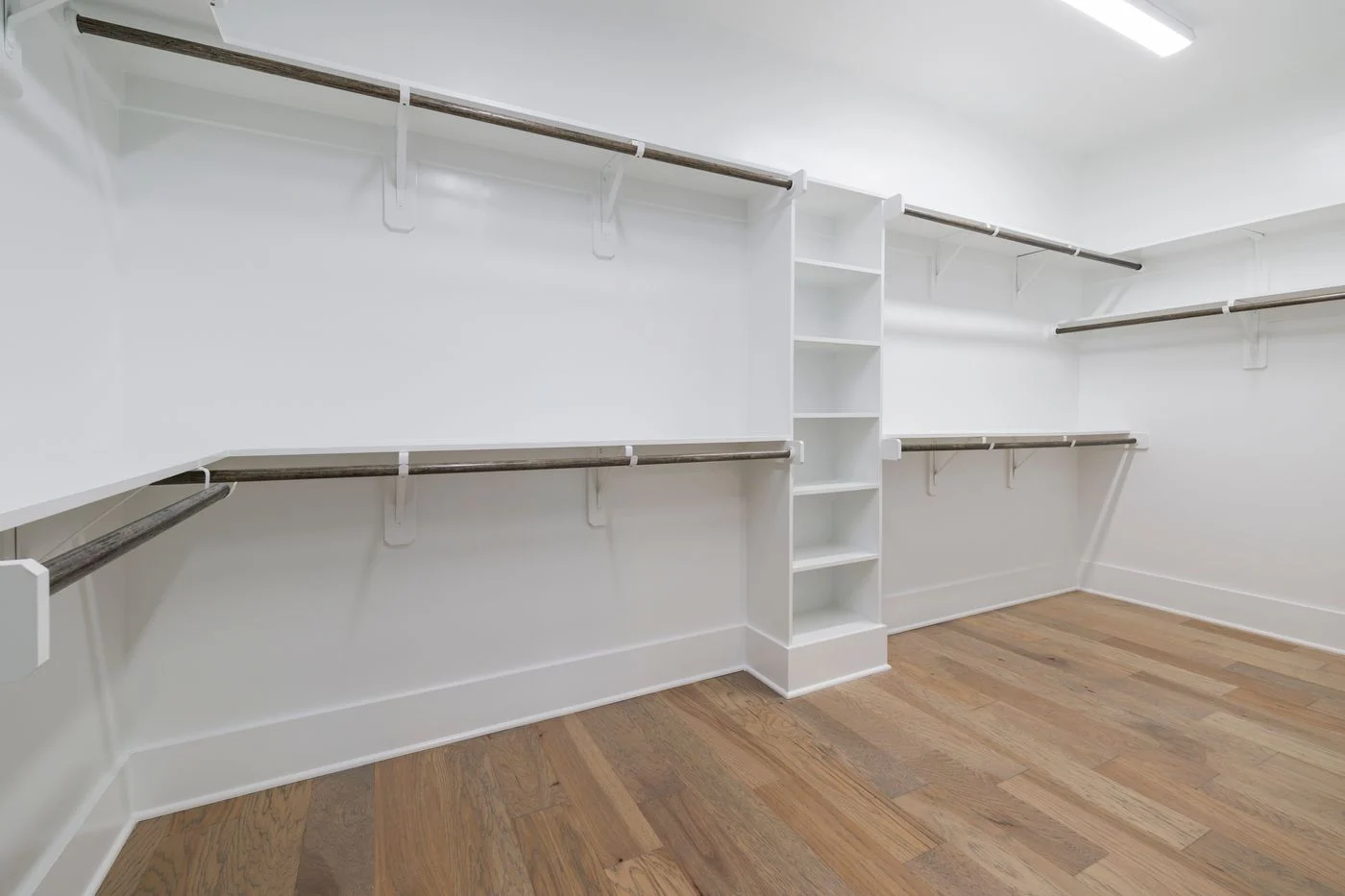
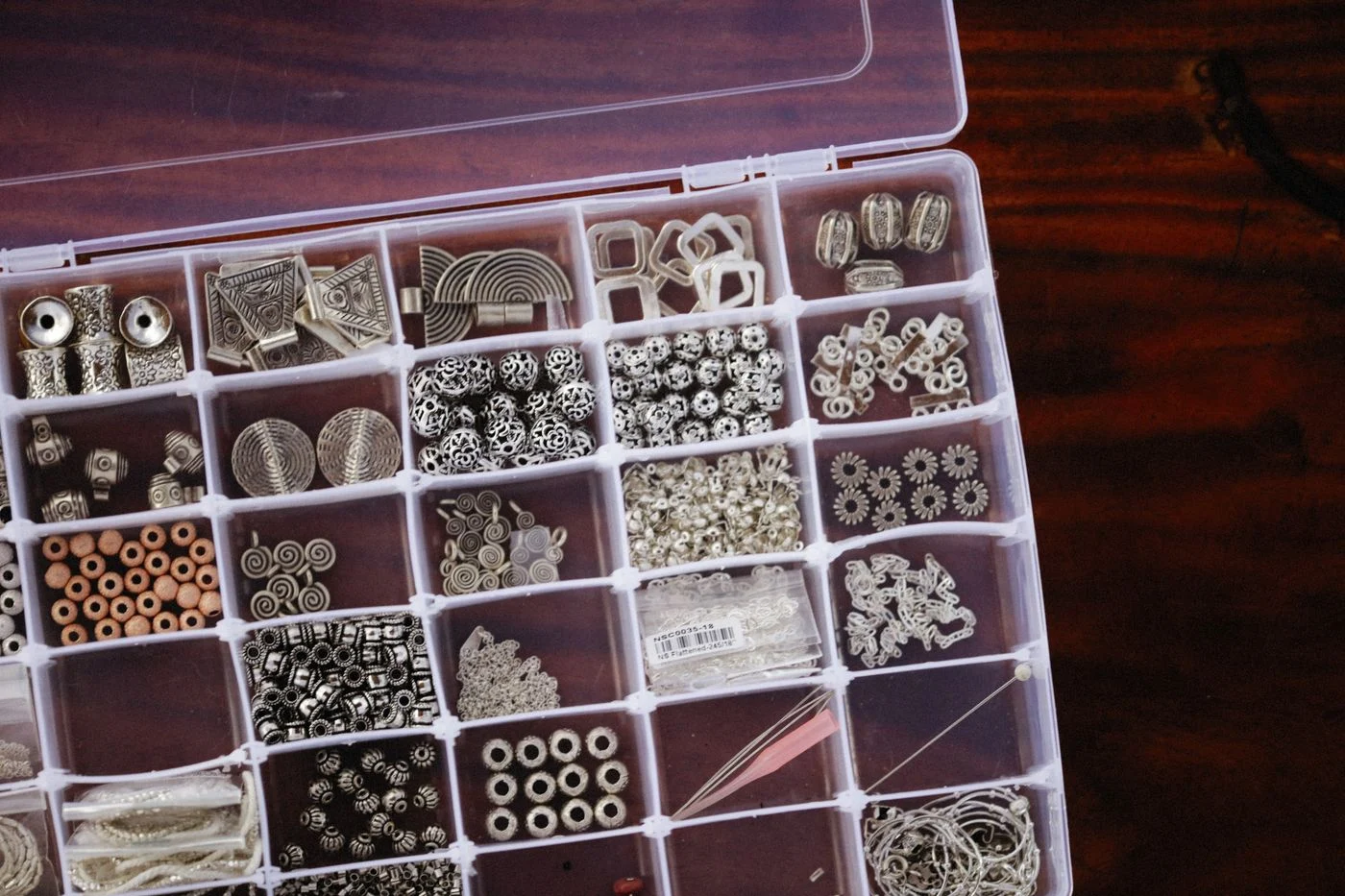
Boxes need not all be equally tall. Flat papers, textiles and bulky objects call for different shapes. Adjustable shelving can respond where the system permits that arrangement. A uniform grid may look quiet while fitting the contents poorly.
Check filled container weights and the capacity of each shelf. Several small boxes may together weigh more than one large object. Manufacturer limits and required fixing remain important. Add shelves only with suitable components and supports.
Plan retrieval immediately
Frequently used boxes belong at accessible levels. Heavy contents should not require overhead lifting. A lower position may suit them, but still needs room for withdrawal and setting down. Rehearse the complete movement.
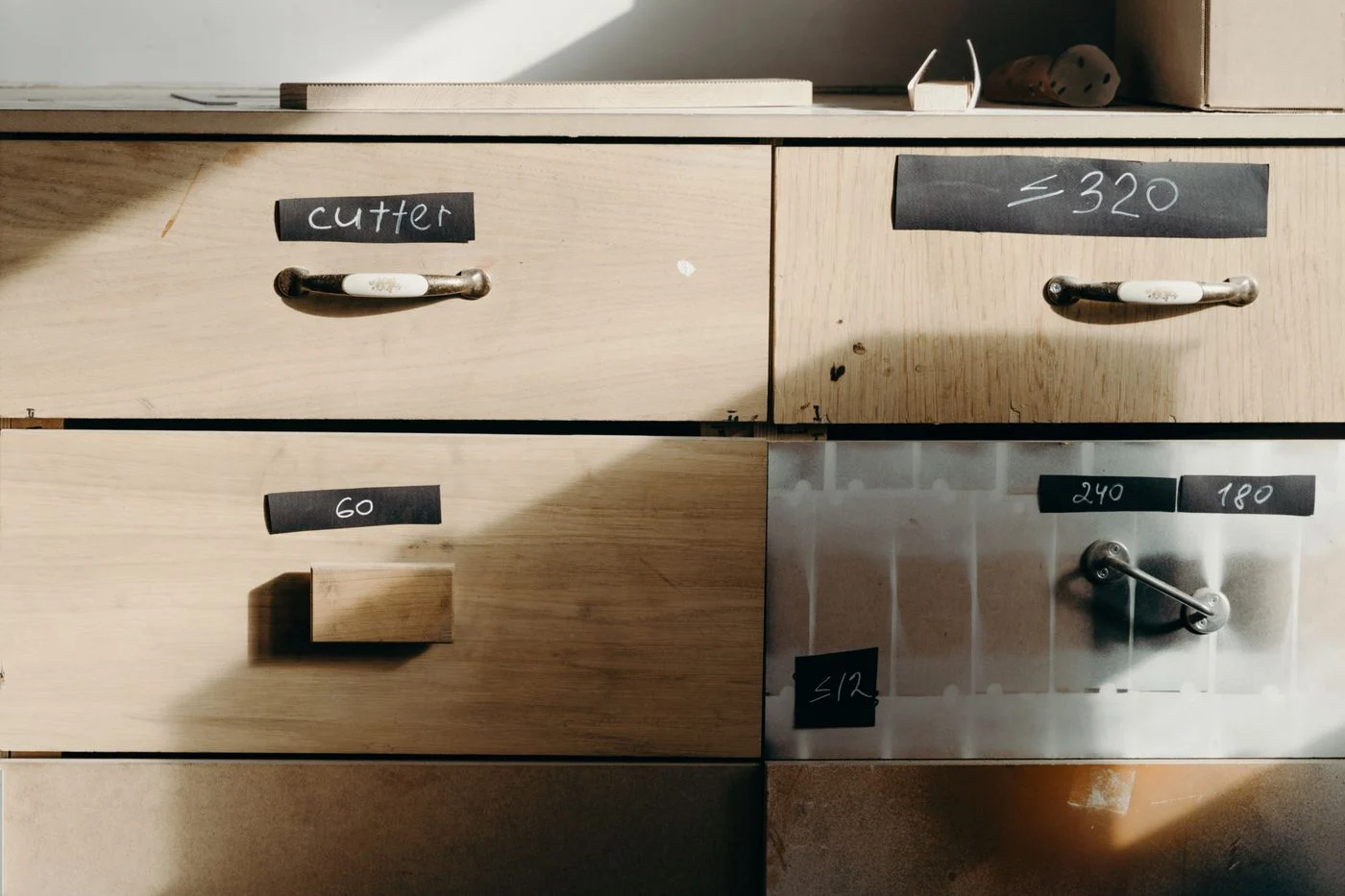
Labels should be readable from the ordinary viewing direction. A label on a lid is not helpful on a high shelf. A clear front label on a deep box can avoid having to remove it completely merely to identify its contents.
Preserve some flexibility
If replacing individual boxes later is likely, allow some tolerance. Shelving that works with only one exact container becomes harder to adapt if that range disappears. The additional room need not be large, but should be intentional.
Keep some shelf area for things that do not need a box at all. Containers are an aid rather than a compulsory format for everything. Success means contents come out and return easily, not that every opening is completely filled.
Trial a row before ordering shelving
Before ordering a complete shelf, arrange a representative group of boxes on an existing surface. Use filled containers rather than only empty ones: weight and slight distortion can change handling. Pull out the middle box and return it. If neighbouring boxes move with it, the row needs more clearance or a different arrangement.
Check whether the same box remains easy to grip at a lower level. A side handle may become inaccessible in a tightly filled compartment despite feeling convenient on an open table. A front opening solves access differently, but may not suit the contents or dust protection needed.
Record the tested combination and dimensions before transferring it into the plan. Modular shelving also includes side panels, supports and connectors. Adding box widths does not automatically produce the finished shelf's external width. A manufacturer planner may account for these components, but does not replace checking the actual room.