Plan sightlines rather than separate shopping lists
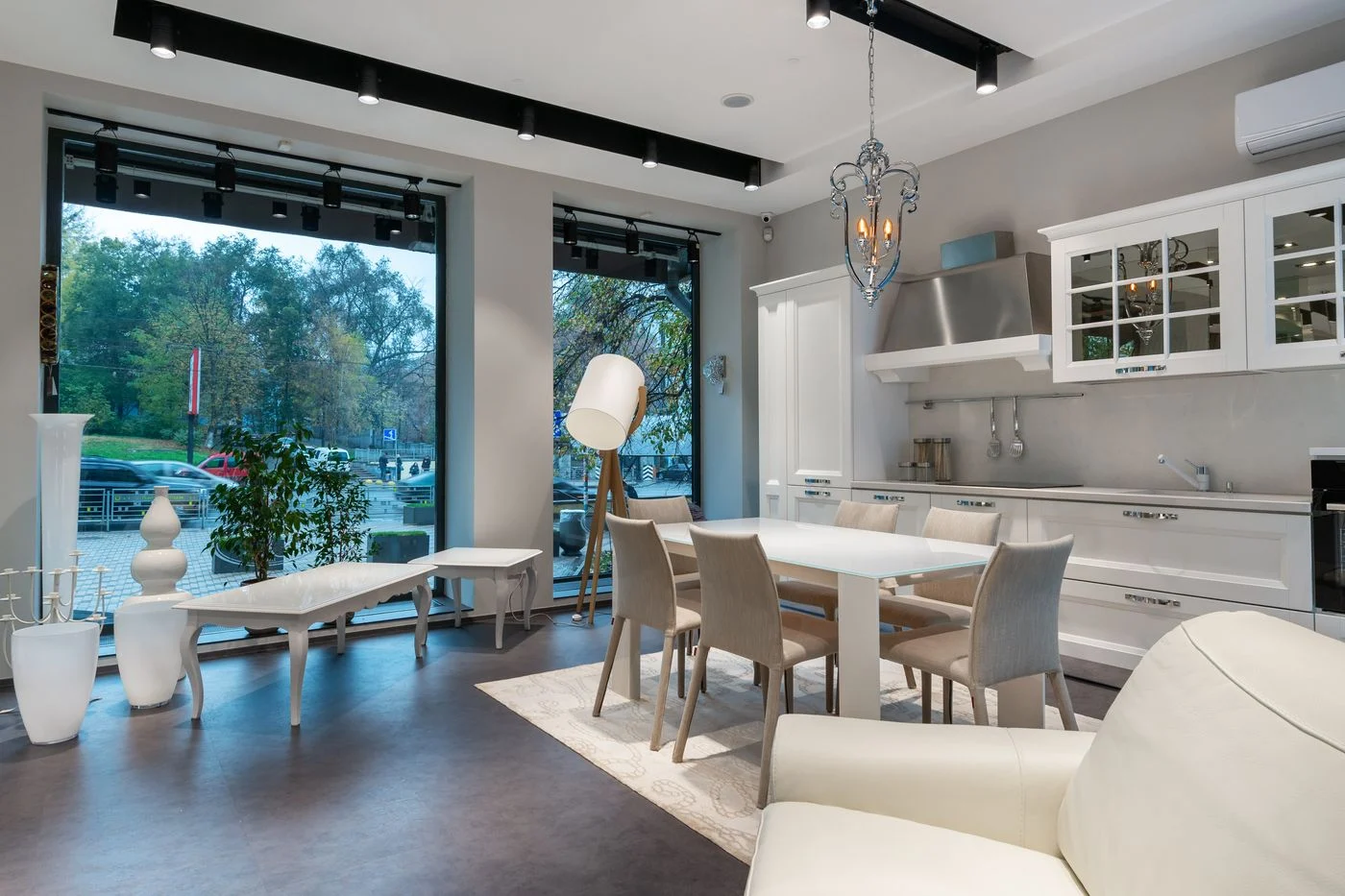
In an open-plan home, the sofa, dining table and kitchen are often visible together. Do not assess textiles for each area in isolation. Stand at the entrance and note the large fabric surfaces visible from there. A rug and curtains usually influence the overall picture more strongly than several small cushions.
Begin with the surfaces that will remain. An existing sofa colour does not need repeating everywhere. Picking up one tone in the rug and a related tone around the dining area may be enough. This creates a connection without making the whole room look like one coordinated fabric set. Different activities can still retain recognisably different areas.
Look from the kitchen area
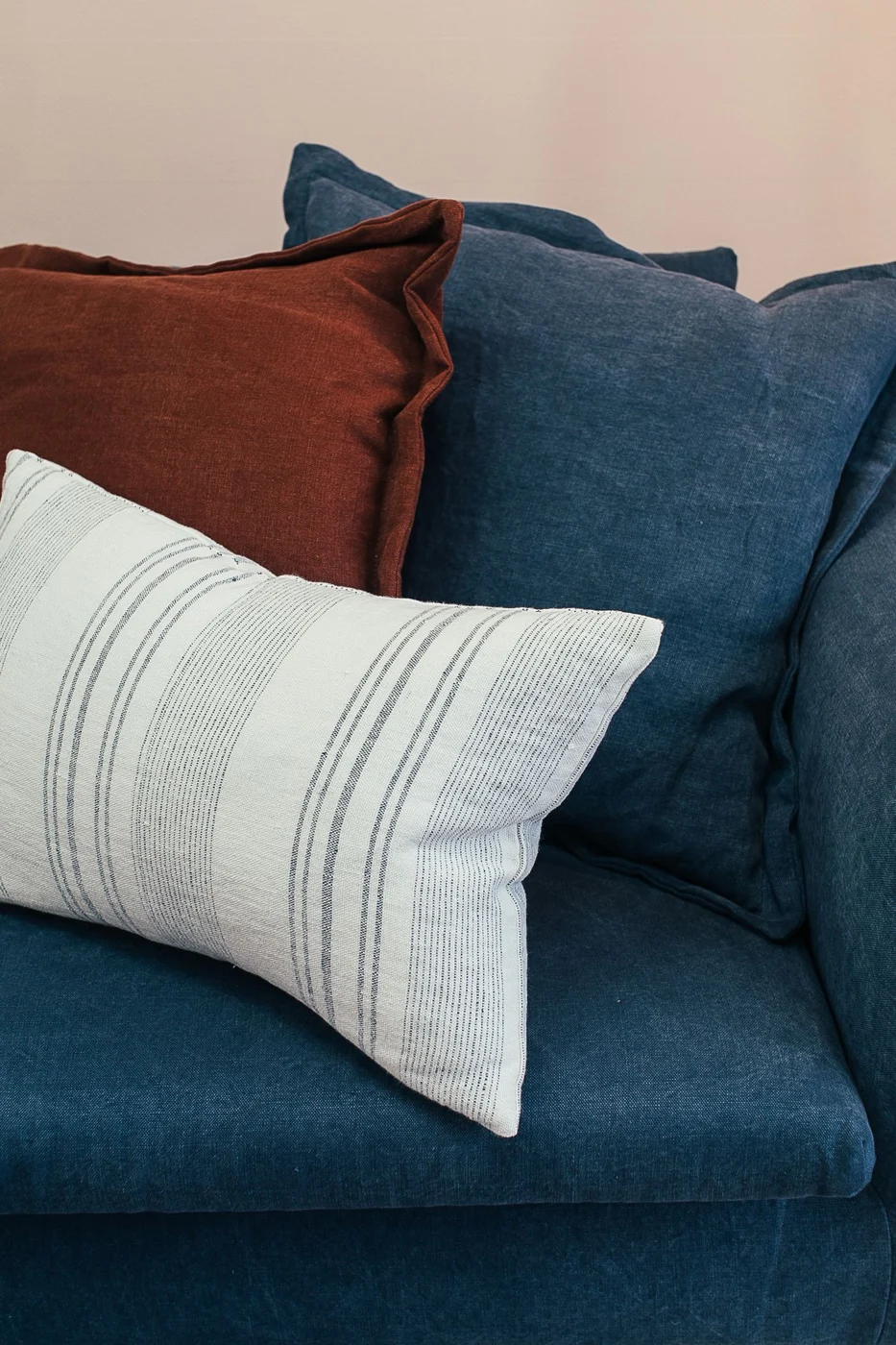
From the kitchen, the view often reaches the back of the sofa rather than its cushions. Check which connection remains visible from that direction. Curtains and rug may carry the shared colour while cushions affect only the seating group. The arrangement does not need to show identical details from every viewpoint.
Where dining sits between kitchen and sofa, its textiles can provide a quieter intermediate area. A simple runner or seat cover may be enough. Another pattern is unnecessary merely because a surface remains available. Fewer competing details can make the transition easier to read.
One shared feature may be enough
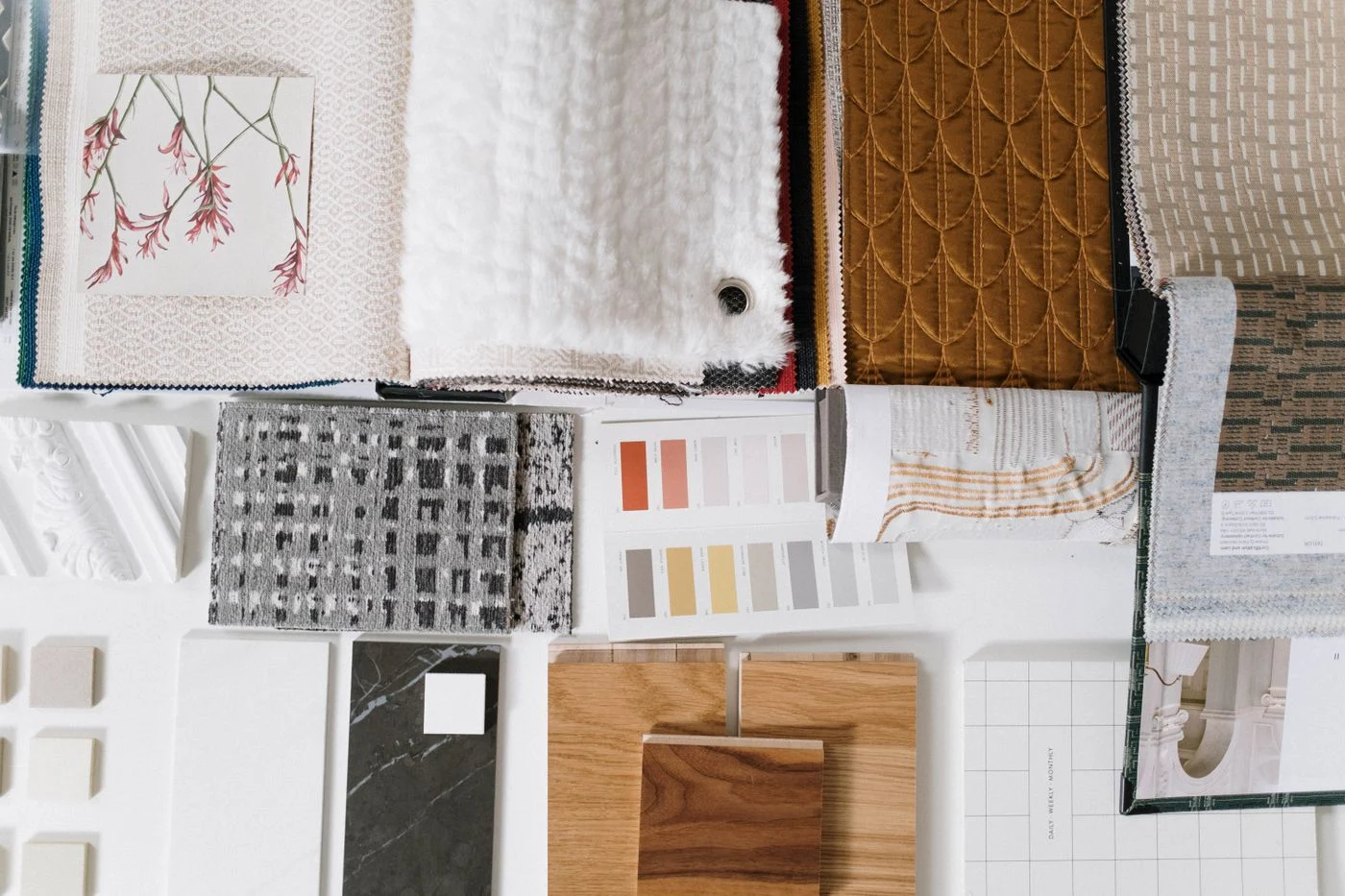
Textiles can relate through colour, texture or pattern. If the curtains already carry a large motif, a quieter rug can give the other furniture more room visually. If the large surfaces are plain, a smaller pattern can be introduced near a seat. Decide where attention should go before making every fabric equally prominent.
View patterns from the distances that actually occur in the home. A fine line may almost disappear from the dining table, while strong contrast remains visible from the kitchen. Use photographs as reminders only; colour and contrast on a display do not replace looking at the arrangement in the room itself.
Care requirements can differ
A visual connection does not mean using the same fabric everywhere. Around the dining table, washability may matter differently from a curtain that is rarely touched. Choose materials for their use and then relate them visually. A delicate cover does not become easier to live with simply because it matches the curtain exactly.
Make changes in sequence. Lay the rug or hang the curtains before ordering every smaller cover. Light falling on a large new surface can alter the whole colour impression. If that change already creates a satisfying relationship, further repetitions may be unnecessary. The open areas between textiles are part of the composition too, rather than gaps that must be filled with more coordinated material.