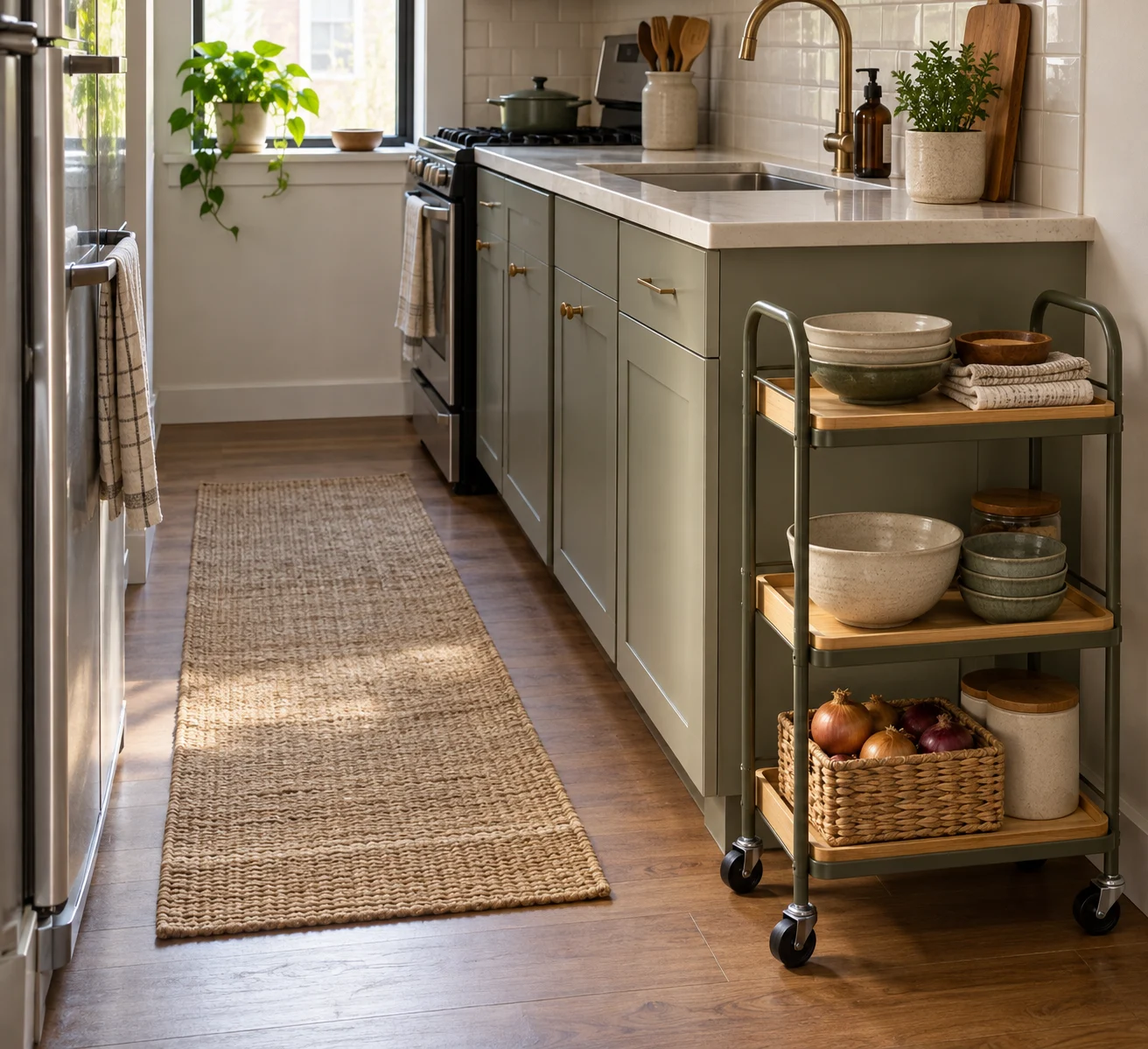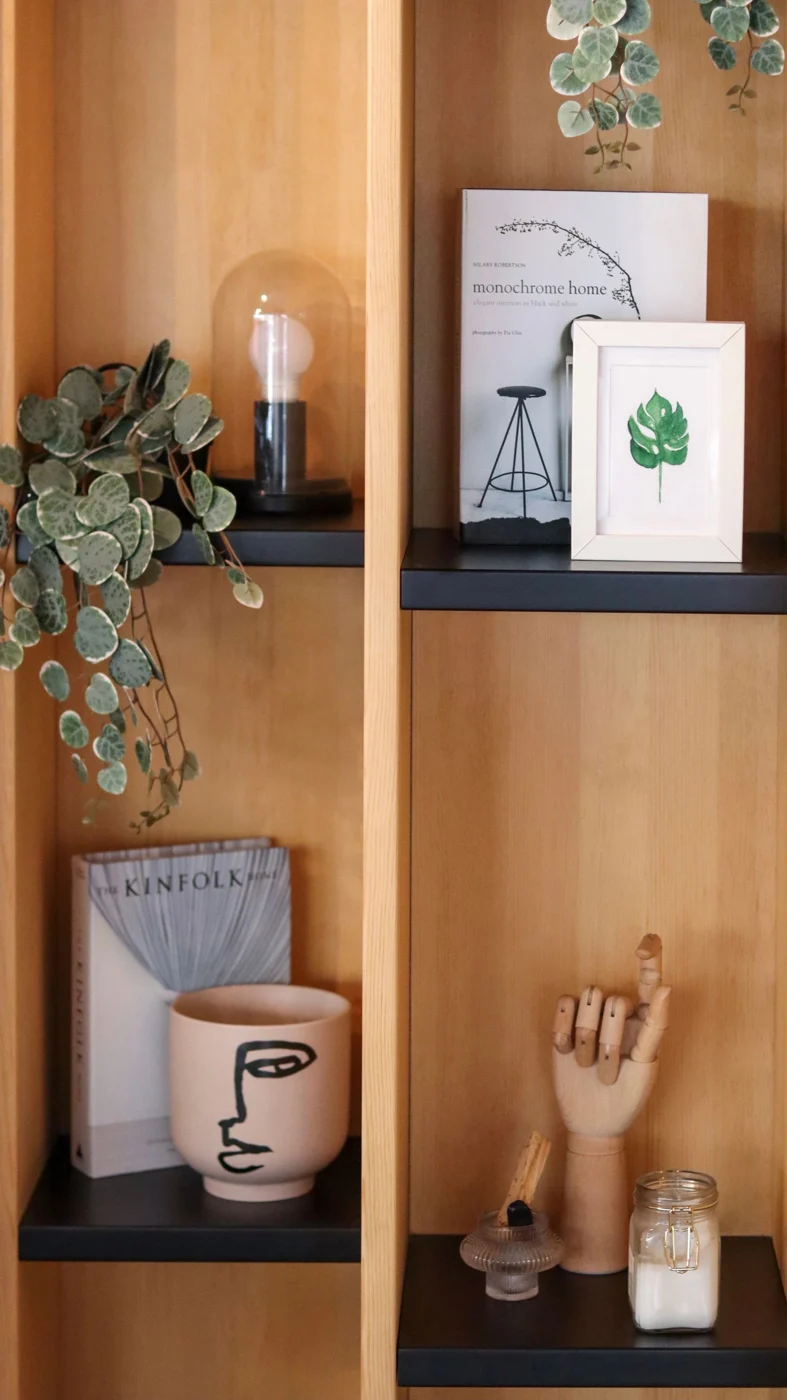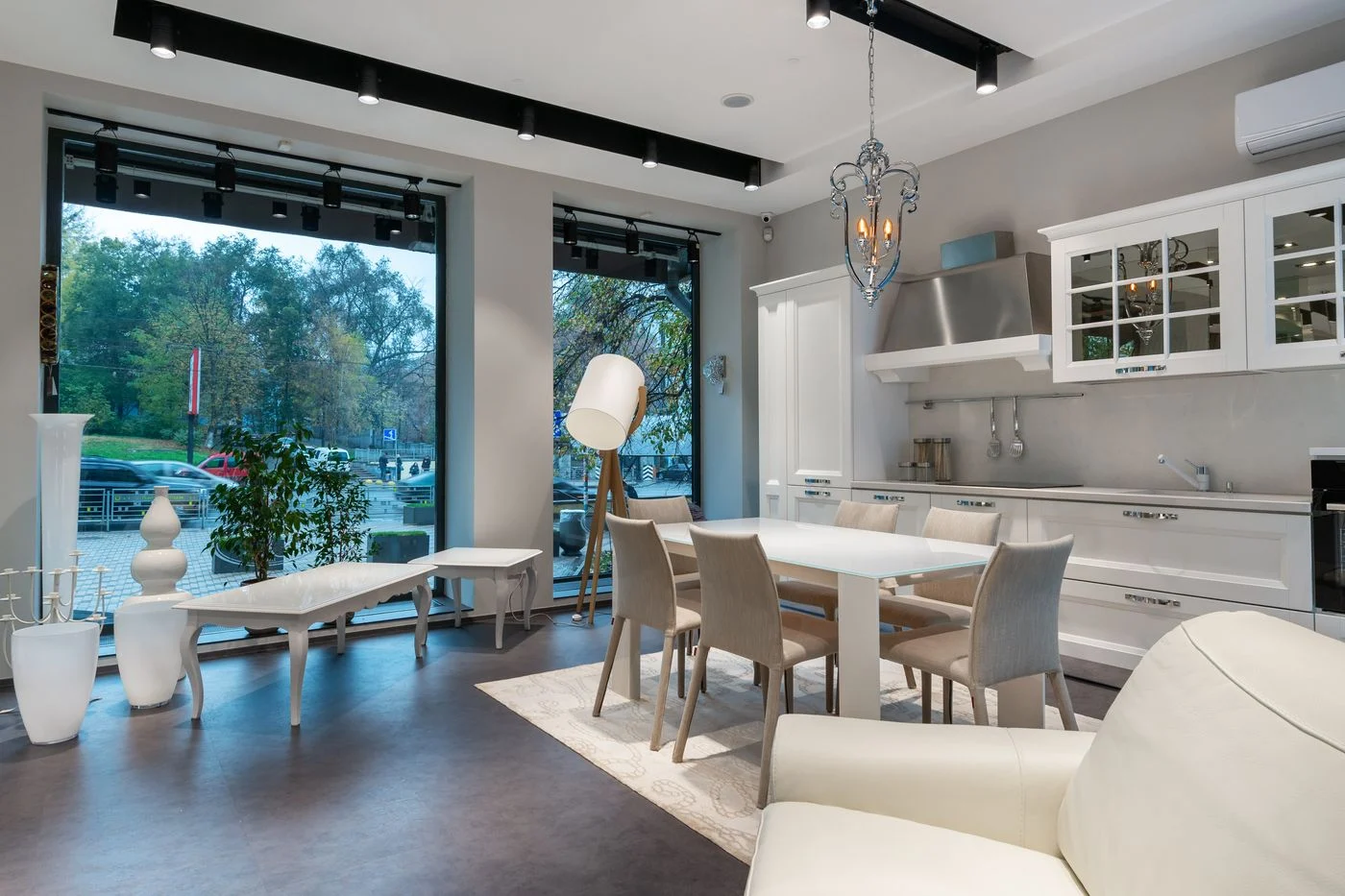
Treat the transition as a route
First consider how meals, dishes and shopping move through the room. A table between kitchen units and sofa may connect the areas, but can also occupy the only passage. Try the route carrying a tray, then repeat it with dining chairs pulled out. The transition has to work while people are using the furniture.
A rug or sideboard can identify a zone without a tall partition. Extra furniture is worthwhile only when it has a job. A sideboard for crockery needs a different convenient position from one holding books. If it serves both, separate compartments prevent living-room accessories from having to move every time the table is set.
Repeat only a few materials
Choose one or two features that occur in both areas: perhaps a wood tone on chairs and shelving, or a colour in textiles and small kitchen objects. This does not mean every surface must match. Durable kitchen fronts can sit beside a softly upholstered sofa without imitating its material.
Compare samples in the same light. Two similar whites may differ more noticeably side by side than in separate product photographs. If existing pieces use different woods, a quieter wall surface between them may help connect the arrangement. New furniture is not always necessary.
Separate visible and concealed tasks
The worktop is often in direct view from the sofa. Decide which appliances genuinely need to remain there and which can have accessible cupboard space. A completely empty kitchen is not essential. A limited number of frequently used objects, with enough remaining room to work between them, is a more useful aim.
Lighting can support the zones differently. Kitchen task lighting and a separate lamp by the sofa allow different activities without making every part equally bright. Check whether lights glare from the neighbouring area. Wiring, appliance operation and fittings still follow their respective instructions; visual coordination should not override technical requirements.
If the room remains busy despite coordinated colours, look first at the number of small objects on show. Clear places for everyday belongings often do more than another decorative item intended to tie the spaces together.