Let the chairs define the outline
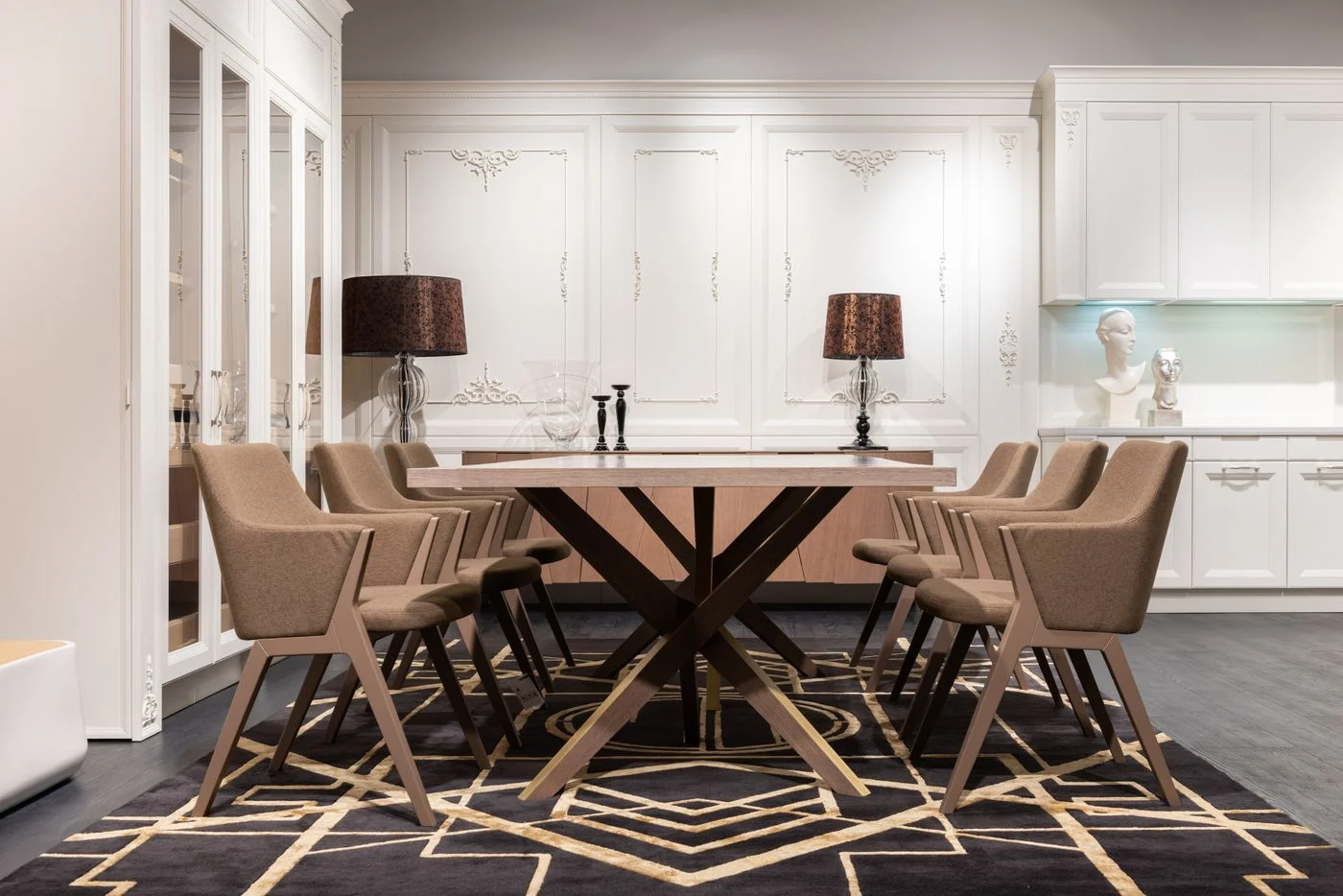
Put the table in its intended position and add the chairs. Pull each chair back as far as needed to sit down. Mark the outer points of the chair feet. This is a more useful starting area than the tabletop on its own.
If a rug extends only slightly beyond the top, the rear chair legs may reach its edge when pulled back. The chair can then sit on two levels or catch as it moves. Whether a particular allowance is enough depends on the chairs, their movement and their users. Test the actual combination instead of relying entirely on a general extra measurement.
With an extending table, decide which arrangement takes priority. A rug large enough for the longest version may occupy a great deal of floor in everyday use. A smaller one may work only when the table is closed. If extension is frequent, chair movement should remain workable in that arrangement too.
Consider the working surface
Flatwoven or short-pile surfaces may make chairs easier to move and crumbs easier to see than a deep pile. Materials and constructions still vary. Read the care instructions for the particular rug, especially if the table is also used for painting or craft projects.
Difficult cleaning may count against an otherwise appealing rug. Think about likely spills and how the whole surface can actually be cleaned. Machine washing is useful only if the size and instructions suit the available machine. A non-washable rug is not necessarily unsuitable, but it calls for a different care arrangement.
Check the backing and the floor covering underneath. Any underlay needs to be compatible with both. It should not introduce another raised edge into a passage. After laying the rug, check that its edges lie flat and that nearby doors do not scrape across it.
Relate the shape to the room
A round rug can bring together a round table and its chairs, but still has to include the chairs when they move back. A rectangular rug may organise a long dining area even where the table has a different shape. Matching outlines are not a requirement.
Look at the group from adjoining areas. A rug can distinguish dining from an open kitchen or living room without another piece of dividing furniture. However, if it covers nearly every remaining route or competes with another rug, leaving the floor bare is a reasonable option. A dining place does not always need an additional textile layer to read as a distinct area.