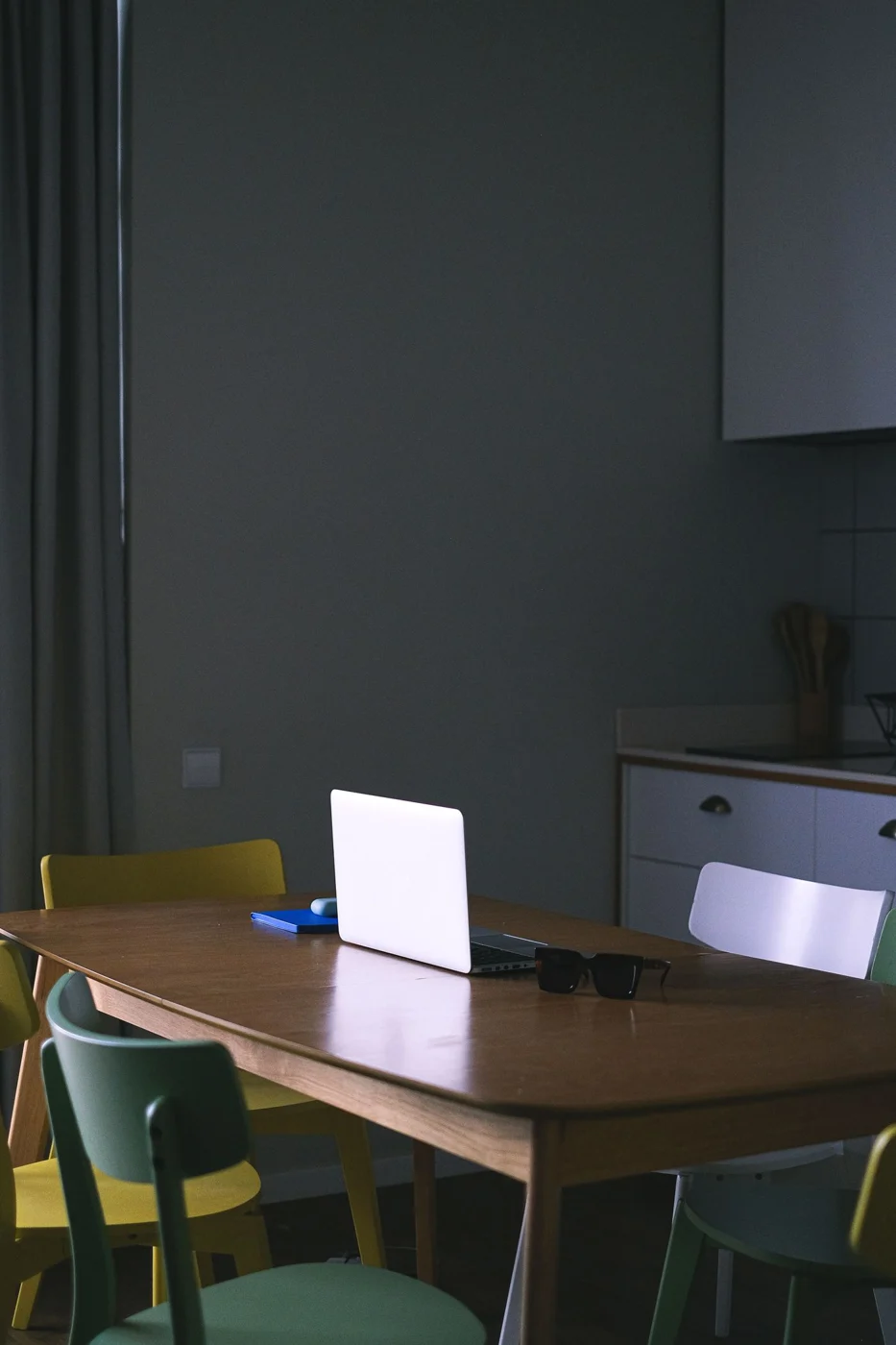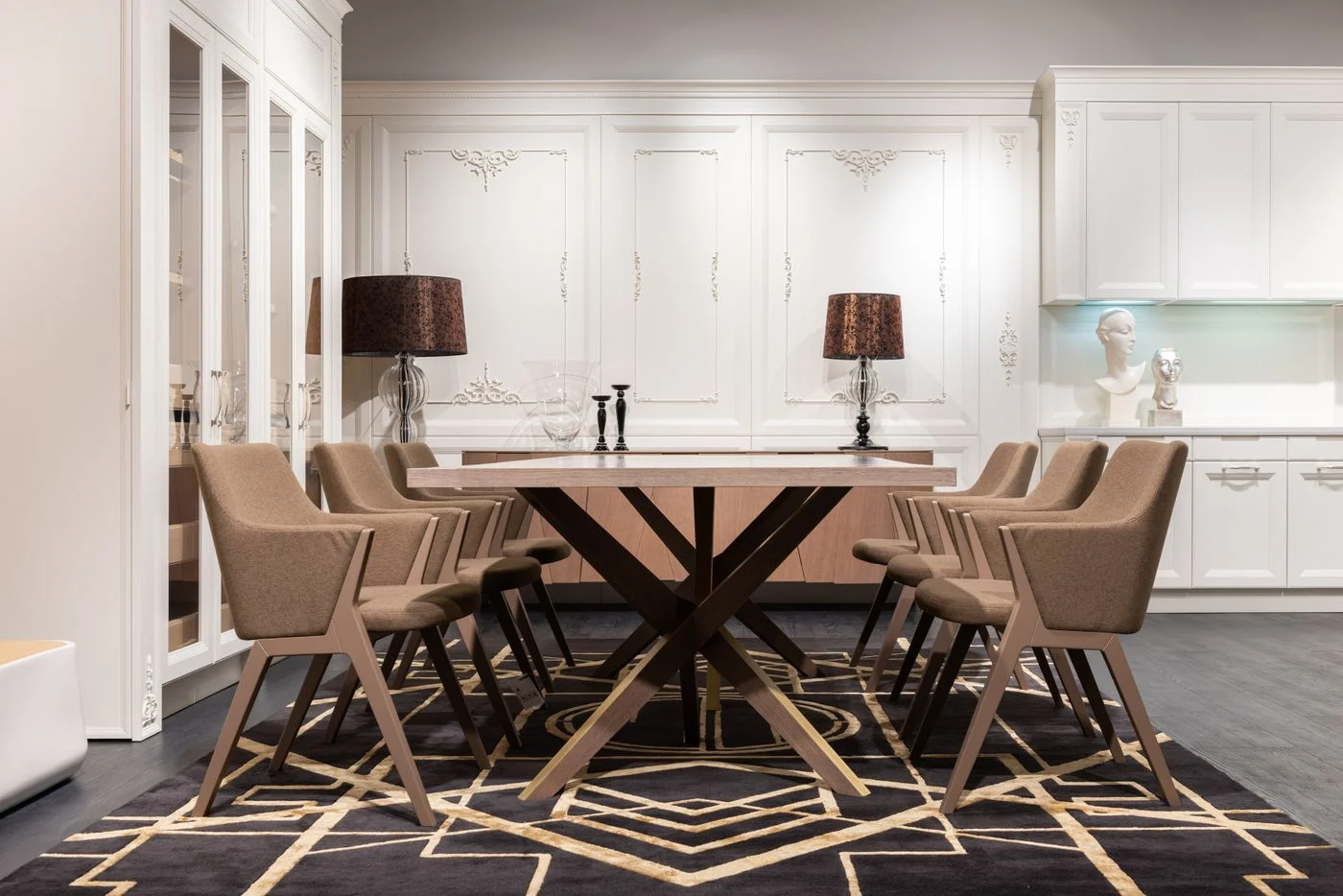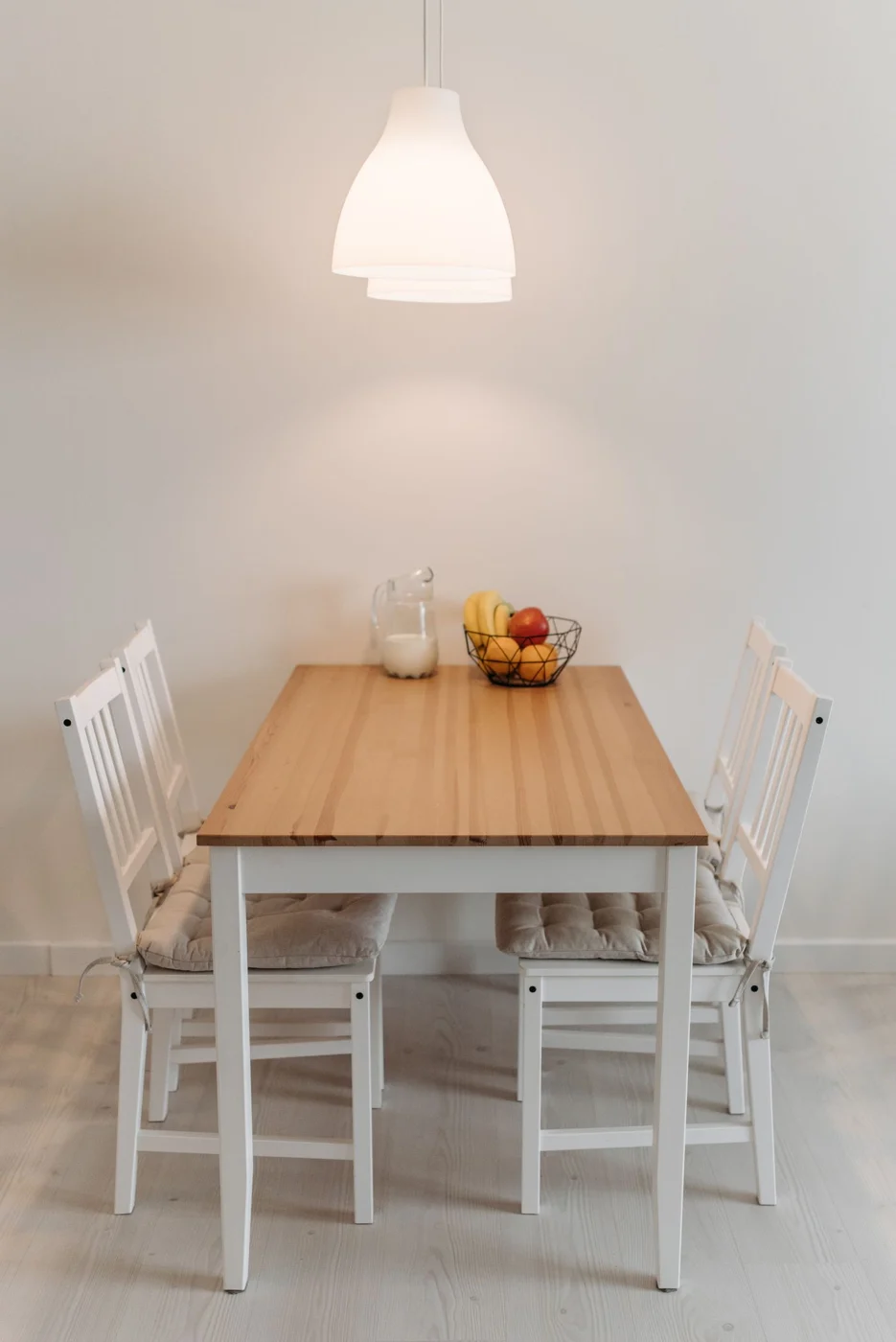
Let the table establish the reference point
A pendant over a dining table should relate to the table's real position. The centre of the room or an existing ceiling outlet is not always the right reference. Set out the table, chairs and walking routes first. A table that moves regularly needs more flexibility from its lighting than a permanent dining corner does.
Mark the proposed centre of the light with a removable marker on the tabletop. Look from the doorway to see whether the position makes sense. Over a long table, an elongated fitting or several smaller pendants will relate to the surface differently from one round shade. Consider whether the table is used only for meals or also for work, games and craft activities.
When the table is away from the outlet
Do not move the table into a worse position solely because of an existing ceiling outlet. First consider whether an appropriately planned lighting arrangement or another suitable system can serve the intended location. Fixings, wiring and the actual supporting structure belong together. A decorative cable loop in a photograph is not an installation guide for the room.
In a rented home or beneath a sensitive ceiling, establish permitted changes before mounting anything. A floor or table lamp may serve some activities, but needs a suitable position without a crossing lead. Keep the objective clear: the tabletop needs usable illumination. The answer does not necessarily have to be one pendant hanging precisely over its centre.
Test height with people rather than a rule
A general hanging-height recommendation cannot tell you whether two people will see each other across your particular table. Hold a lightweight cardboard shape of roughly the proposed shade size in position while someone sits opposite. Keep this trial safely within reach from the floor; installation requires an appropriate professional arrangement. Check both seated eye contact and the movement of standing up beside the table.
A wide shade can hang low and obstruct a view. A small open shade can hang higher but reveal its bulb. Judge shape and height together. Also look for the pendant reflected in a window, especially when the dining table faces dark glass after sunset. The reflection can be more conspicuous than it appears during daylight.
Include the extended table
With an extending table, a single pendant often remains over the original centre. That need not be a problem if the extended surface still receives enough light. Fit the extra leaves and spread plates or game materials across the full length. The end seats should not depend entirely on a small amount of light spilling from the middle.
If the table is extended only occasionally, supplementary room lighting may be the simpler solution. A complicated adjustable suspension is more useful when the arrangement changes frequently. Any moving system should operate as intended without pulling on exposed wiring. Its installation instructions determine which adjustments are permitted; appearance alone does not establish that a fitting can be repositioned.
Consider the surface and the controls
A glossy tabletop may reflect the source as a bright patch. Test with the usual tablecloth, crockery and glasses as well as the bare surface. A diffuser or different position can change the effect. Increasing output does not remove an inconvenient reflection and may make it more obvious.
For dimming, the fitting, bulb and control need to work together. Check the setting for meals and the setting needed for reading small print. A subdued evening setting is not a suitable reference for every activity. Have an existing ceiling connection adapted appropriately if the chosen position requires it. A visually suitable pendant still needs a safe installation.