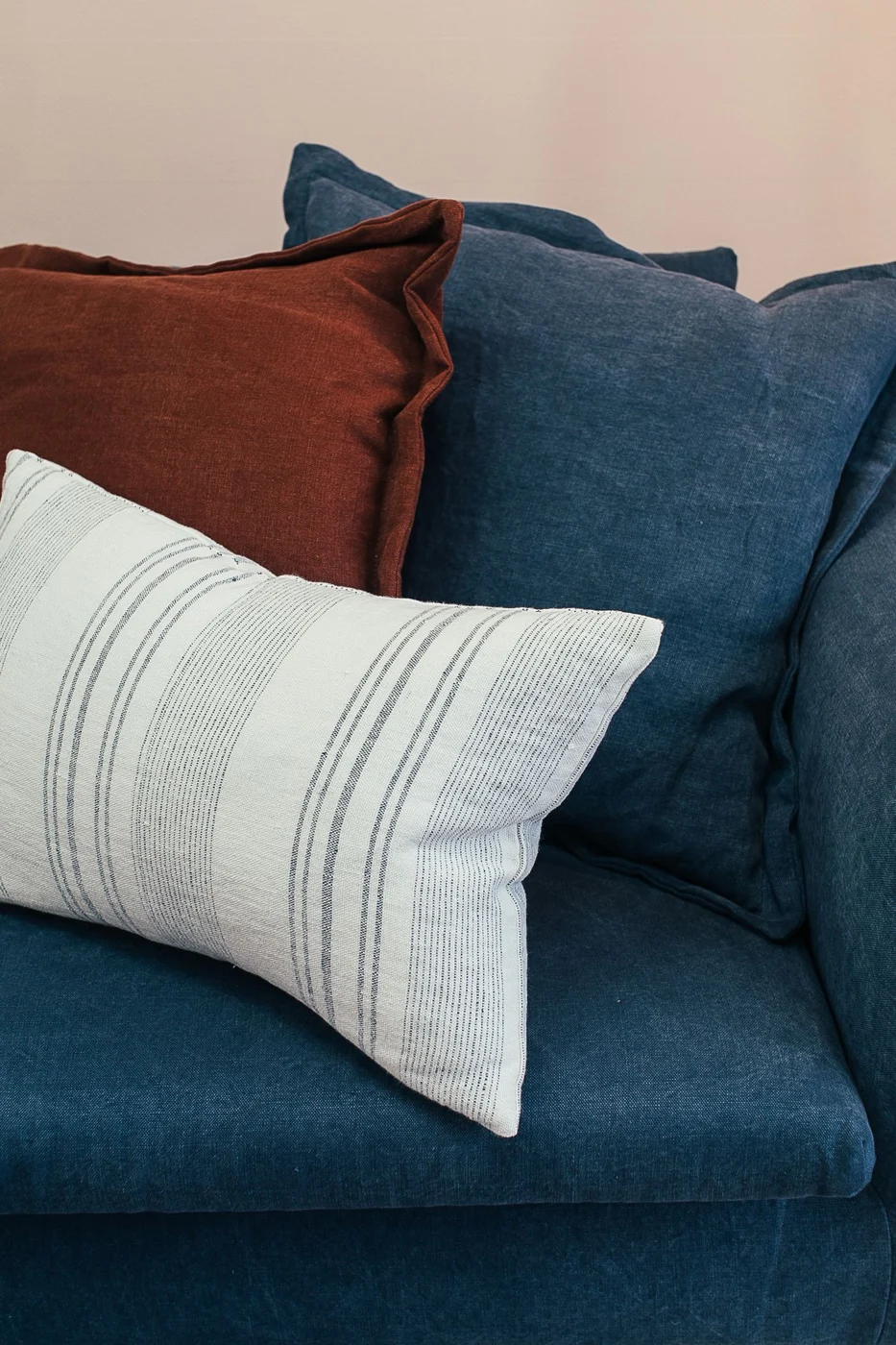
Permission comes first
Check the instructions for your particular sofa version. The same model may be offered in different textiles. A zip or an available replacement cover is not proof that washing is allowed. Look at each component: seat covers, back cushions and the large frame cover may be constructed differently. Ask the supplier before washing if information conflicts.
Have the complete care instructions ready. They concern more than the number inside a wash symbol. Mechanical action, bleaching, drying and ironing may also be restricted. The machine must suit the size and material of the approved cover. Packing a heavy cover tightly into a drum is not corrected by choosing a longer cycle.
Plan around the largest cover
A sofa may have small cushion covers that are easy to handle and a large frame cover that creates a different space problem. Experience with the cushions is therefore not enough preparation. Before removing the frame cover, check the product information for its size and weight and for washing-machine and drying requirements. Selecting the right programme cannot compensate for a cover that is unsuitable for the available machine.
Walk through the job while the sofa is still covered: where will removed pieces collect, what surface will remain clear for sorting, and where can the largest cover dry as directed? A weekend with visitors may be less convenient than an ordinary quiet day. If you intend to clean only some covers, check any instructions about treating matching pieces together. Decide the sequence beforehand; a sofa that is already partly dismantled leaves less room for a comfortable change of plan.
Document removal
Photograph the sofa from several sides, noting seams, fastenings and attachment positions. A sequence helps with a large cover: loose cushions first, then the designated fixing points, then the main fabric, following the assembly instructions. Do not use a single zip to pull the weight of the whole cover.
Inspect seams and closures for damage. An existing open seam may worsen during treatment. Remove small objects from folds and corners and clear loose dirt by the permitted method. Keep pets and dirty objects away from exposed upholstery. During the process, the sofa needs a suitable position where nobody accidentally uses its unprotected filling.
Group matching parts sensibly
When several visible covers form a set, check the manufacturer's recommendation about cleaning them together. Different treatment can lead to a different appearance. This still does not mean forcing unlimited pieces into one machine. Plan the necessary loads and preserve the matching arrangement. A photograph of the laid-out pieces can be easier than guessing later from similar shapes.
Use only suitable products in the specified amounts. Additional stain treatment is not automatically compatible with the whole fabric. Do not experiment with mixtures of household remedies after removing a large cover that is urgently needed again. Have unclear marks assessed before beginning the complete cleaning process.
Arrange drying beforehand
A large cover needs an appropriate drying space. Establish before washing whether a tumble dryer is permitted and how the textile should otherwise hang or lie. Wet heavy fabric may distort if supported at too few points. The particular instructions also determine the condition in which it should be refitted.
Do not rely on a universal number of hours. Room conditions, fabric and folds affect drying. Pay attention to thick seams and layered areas. Moisture should not become trapped unnoticed between cover and cushion. If the manufacturer describes a special refitting procedure, arrange help in advance.
Use alignment rather than force
Match each cover to its component and align seams before closing fastenings. Stop if something seems significantly too tight. Check orientation and the care result rather than pulling on a seam or forcing a zip shut. Keep your photographs and notes: they save time and avoid confusion during the next permitted wash. Record any part that was difficult to handle so the next cleaning session can be planned with enough space and assistance.