A small room does not forbid large patterns
A large motif can work in a small room when its surface is chosen deliberately. Conversely, many tiny patterns together can look busy. Do not begin with a rule that small rooms require small motifs. Consider what remains visible: curtains gather into folds, a cushion shows only a section, and furniture conceals part of a rug.
Lay out the pattern in its intended direction. Stripes running vertically at a window behave differently from stripes crossing a seat horizontally. With large motifs, consider where one motif falls after cutting, sewing or gathering. A tiny sample cannot answer that question. If necessary, ask for an image of the complete fabric width with a clear indication of scale.
Let a pattern stop
A fabric that works at the window need not also become cushions and a table runner. Repetition changes its role. One motif can read as a deliberate detail; many matching surfaces can dominate the whole room. Try one addition before ordering a complete coordinated set.
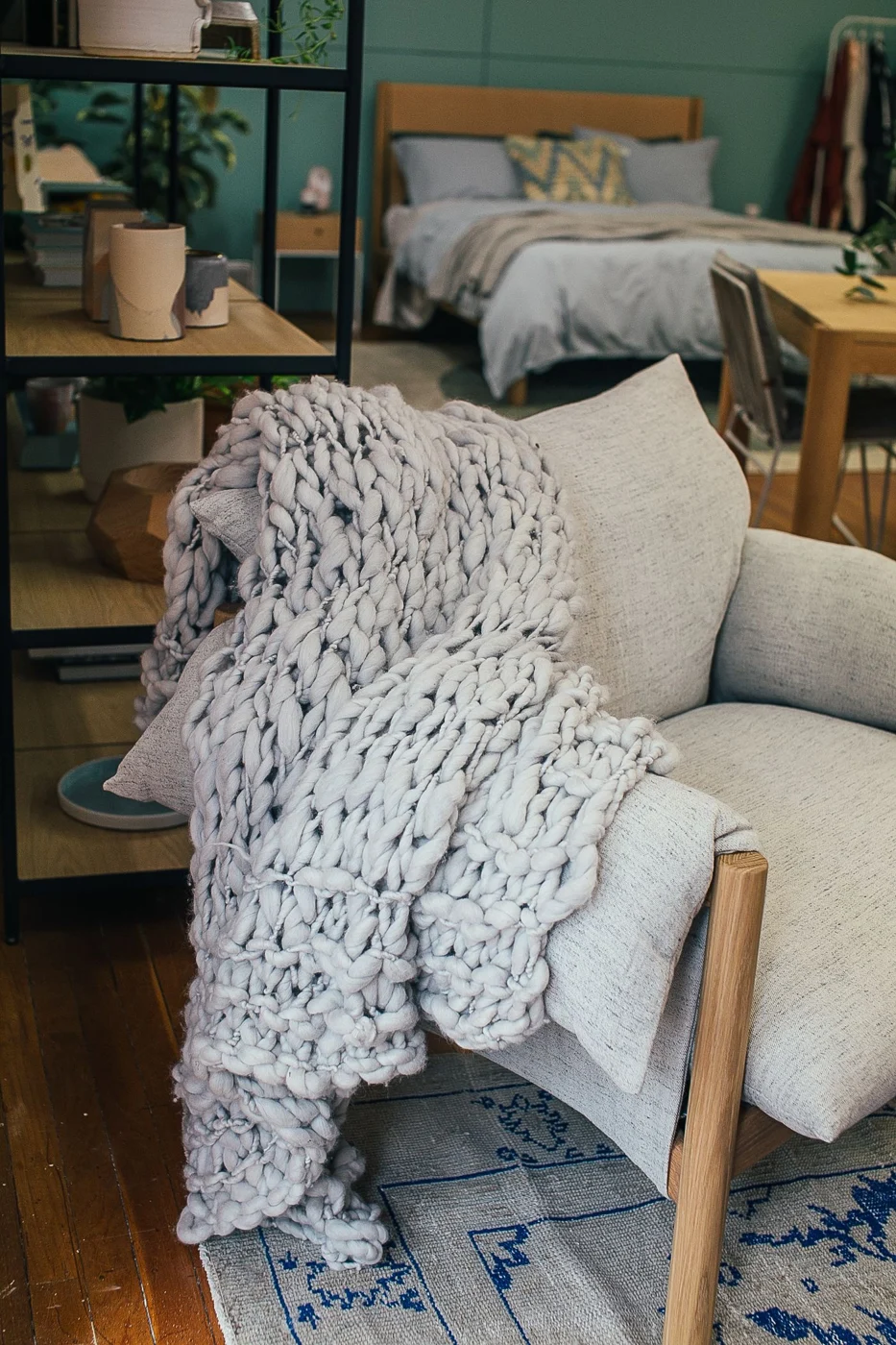
With an existing patterned rug, a connection can instead use one of its background colours. The motif then remains on the floor. This is useful where furniture conceals parts of the design and only a few colours remain obvious. The visible arrangement matters more than the complete pattern shown in the product image.
Choose the leading surface
First decide which area will carry the main pattern. If the rug is the focus, curtains and large covers can remain quieter. This does not prohibit every other pattern. The aim is to see, from the usual viewpoint, which surface leads and which supports it. Two equally assertive patterns beside each other demand more attention than two of different visual strength.
Include existing books, pictures and open shelves in the comparison. They also create lines and contrast. A room containing many visible objects may need less added pattern than an almost empty room of the same size. Temporarily cover or remove a few small objects during the trial. Sometimes a calmer shelf is more useful than another textile combination.
Test distance and evening light
Look from the entrance, from a seat and close up. A fine pattern can appear almost plain at a distance. Strong contrast remains obvious even when individual lines are small. Decide from the room's actual viewing distances rather than only from an impression formed directly beside a fabric display.
Check under the normal evening lights too. One dark tone may merge with another while a pale border becomes more prominent. If uncertain, begin with a removable cover instead of replacing every curtain. A limited trial reveals whether the effect remains enjoyable after several days. The appropriate amount of pattern is the amount that allows the room's other functions and objects to work together comfortably.