Inspect what is actually there
Look at the material, depth and support. A thin sill with little bearing is different from a solid surface designed and installed for a particular load. If the load capacity is unknown, avoid heavy collections. A normal sill should not be treated as a seat merely because it appears wide enough.
Consider the front edge as well. A tray or plant pot needs a fully supported base, not simply a diameter that seems close to the available depth. Projecting objects can interfere with curtains or people passing. A small clear area is often more useful than a crowded line of objects along the edge.
Keep the window operable
Open the window in all its usual positions before arranging anything. The sash, handles and any blind need room to move. A display that works only with the window closed creates work every time you ventilate. If clearing is unavoidable, a few items on a suitable movable tray may be easier to manage.
Think about cleaning the glass too. Tall vases can restrict access even when the window still opens. A permanent lamp with its cable crossing the opening is usually awkward. Cables should not be trapped or routed through moving window parts. Arrange the surface so the ordinary use of the window remains straightforward.
Account for moisture and light
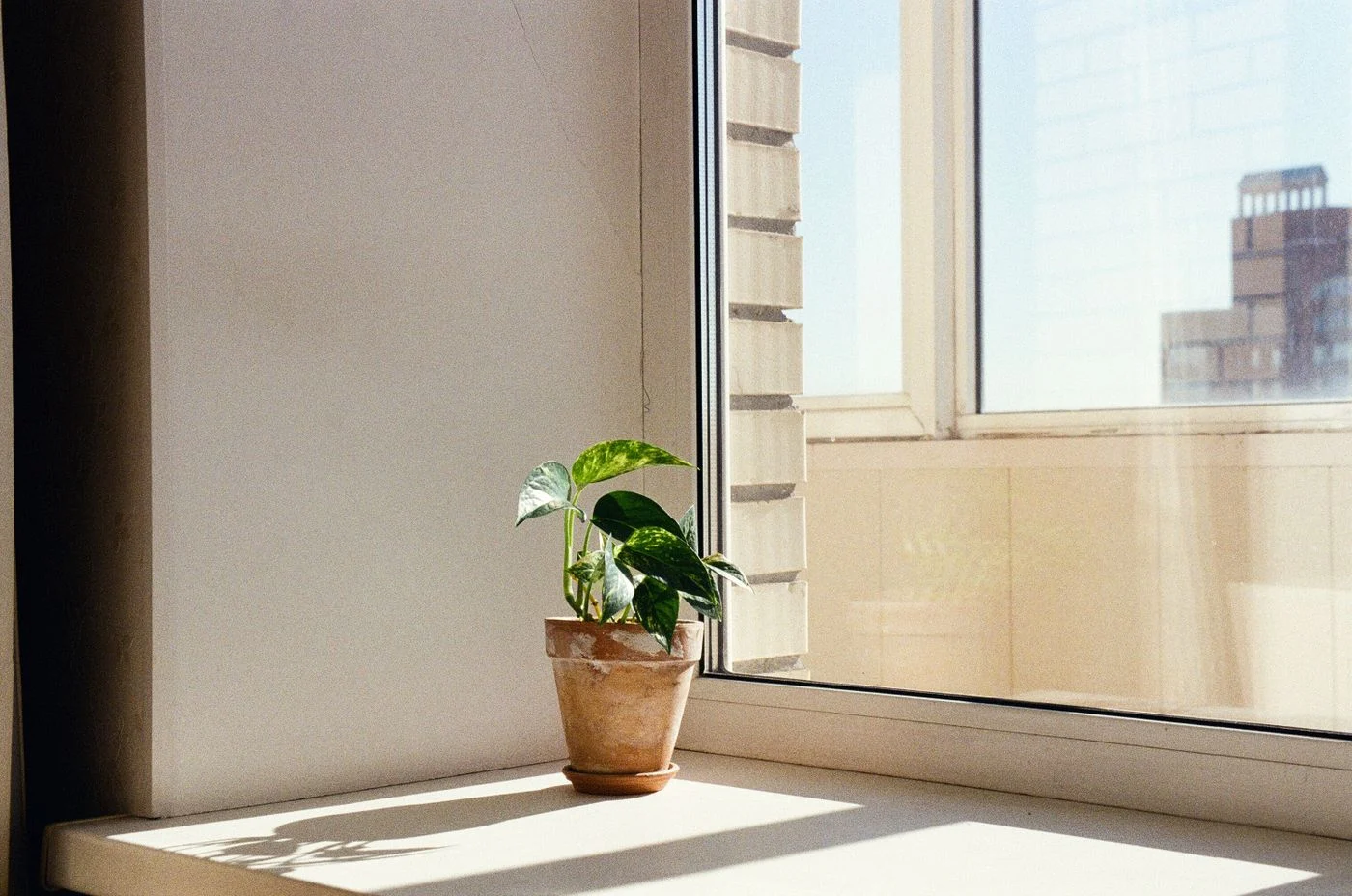
For plants, a suitable saucer helps protect the surface from water but does not replace checking for dampness. Wipe up spilled watering water promptly and follow any material-specific care instructions. Books and delicate paper objects are poorly placed where condensation collects.
Direct light and heat may be unsuitable for some belongings. Check plants' location needs and the care guidance for other materials. If a radiator sits below the sill, improvised extensions or hanging textiles should not interfere with its operation or controls. The sill adds useful space when its limited extra jobs remain compatible with the window's main functions.
Make clearing it straightforward
For a narrow sill, two small plant pots on a suitable tray may work better than a long line of separate objects. Ventilation then involves moving one limited group. Check its combined weight and put the tray on a secure surface before opening the window. A tray does not make heavy pots lighter and needs complete support itself. If even this modest arrangement interferes with daily operation, leaving the sill empty is a useful decision. The absence of a display is not wasted space when it preserves access to a frequently used window.