Hiding an experiment does not make it suitable
Identify the furniture's material and finish before testing. An unknown solvent does not become appropriate because it is tried on the back. Read both furniture and cleaning-product instructions. Seek advice first when they conflict or the surface is damaged. A test area does not replace material identification.
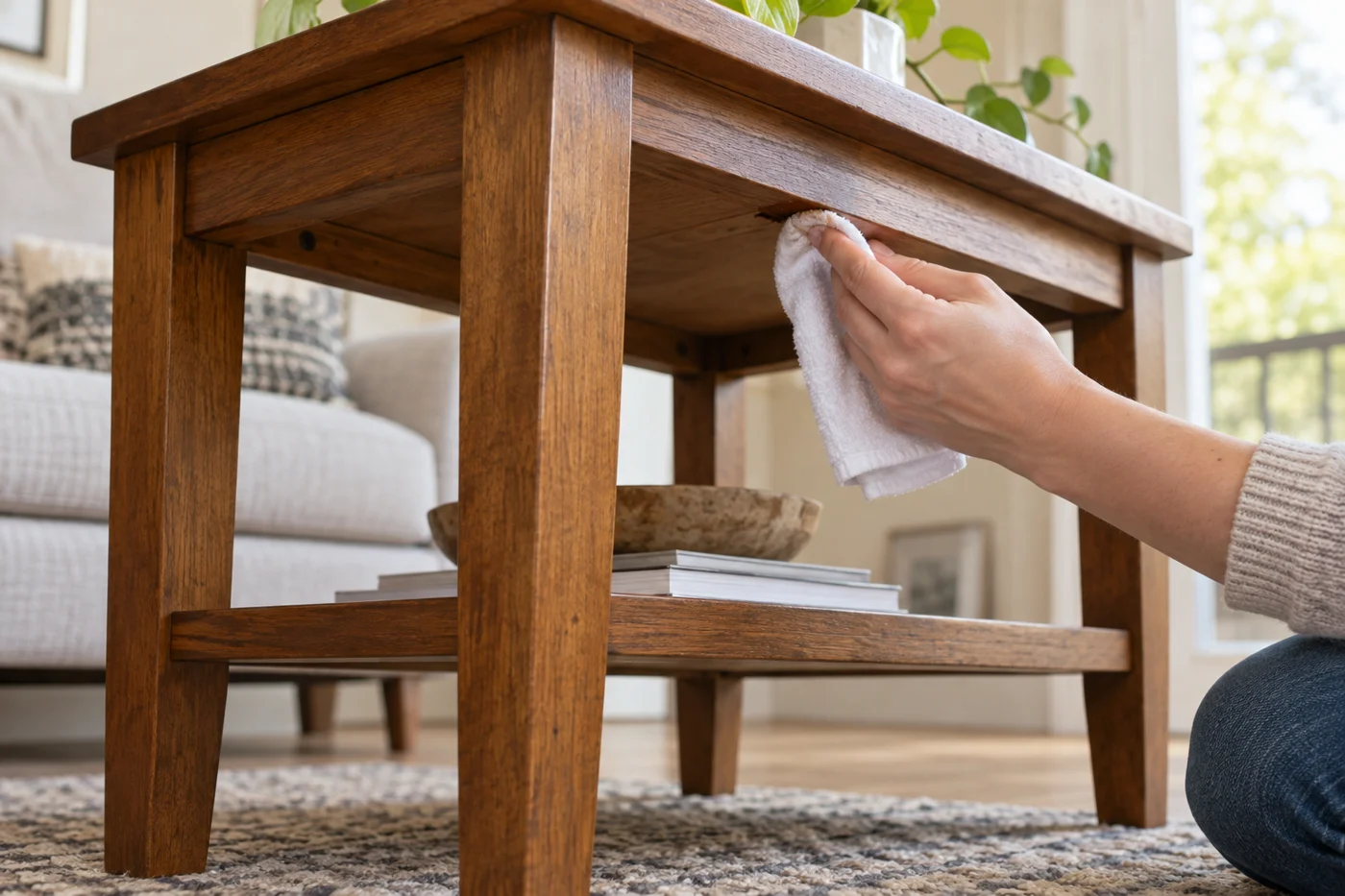
Choose an inconspicuous place with the same finish as the intended treatment area. The unfinished underside of a lacquered top is not a comparable test surface. A differently coated internal component can mislead too. Consider whether the position may become visible through use or rearrangement, and record its starting condition in suitable light.
Reproduce the intended process on a small scale
Use the permitted dilution, a suitable clean tool and specified contact time. A substantially different test method tells you little about the later treatment. Keep the area small and prevent liquid entering a joint. Do not test several products together, because any change becomes difficult to attribute.
Record the product and time. Assess the area after the instructed drying period, not just while wet. Compare colour, sheen and surface feel with the surroundings. Side light can reveal a change barely visible from the front. Avoid repeatedly rubbing a finger over an area that is not yet ready for assessment.
On a large cabinet front, a small area on a less visible side can help if it genuinely has the same coating. Note its location so you can find it after drying. Check not just colour but whether the cloth picked up colour or an edge changed. Any unexpected reaction is a reason not to extend treatment across the front. A stain briefly becoming less visible while wet is not proof of a successful result.
Understand the limits of the result
An unobtrusive result shows only what happened at that position under those conditions. It does not guarantee that a large stain, damaged edge or different component will respond identically. Stop if the surface changes and record what happened. Do not immediately try to reverse it with a second product.
If the test is satisfactory and the instructions permit use, continue in a controlled way. Check sections as you work and protect adjacent materials. Keep the note with the care records. Next time, you can establish exactly which product and method were tested rather than remembering only a similarly shaped bottle. Recheck compatibility if either the product formulation or the furniture's finish has changed since the earlier treatment.