Make the light paths visible
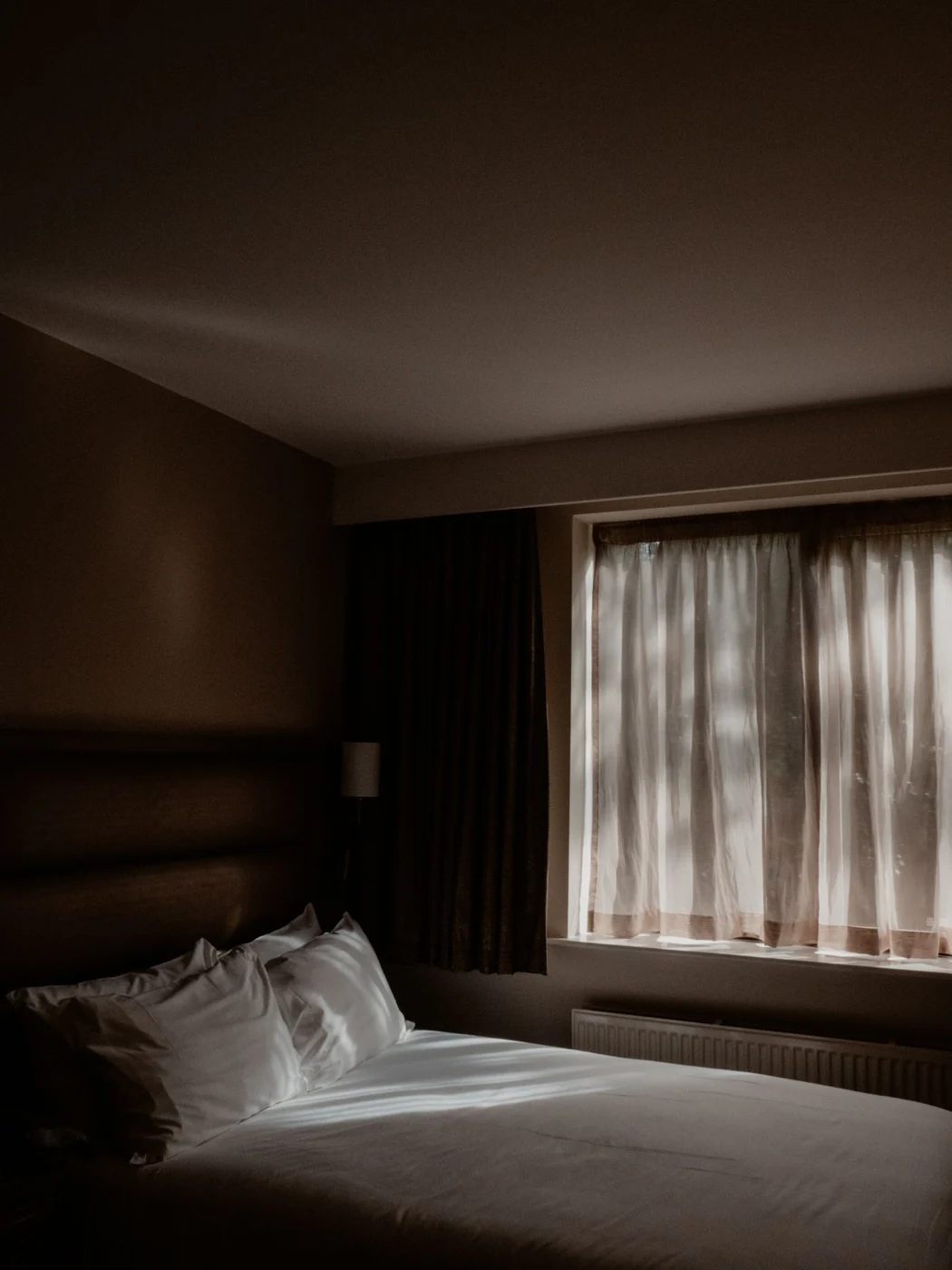
Close the existing curtains during a bright day and allow your eyes a moment to adjust. Distinguish light passing through the fabric from light entering around it. A denser fabric will do little if the brightest strip sits between the pole and wall or at the meeting point of two panels.
Record the locations separately: above the mounting, beside the window, below the fabric and along the closing edge. A photograph can document the positions, but automatic exposure does not reliably show how dark the room feels. Assess the actual result from the bed rather than only while standing immediately in front of the window.
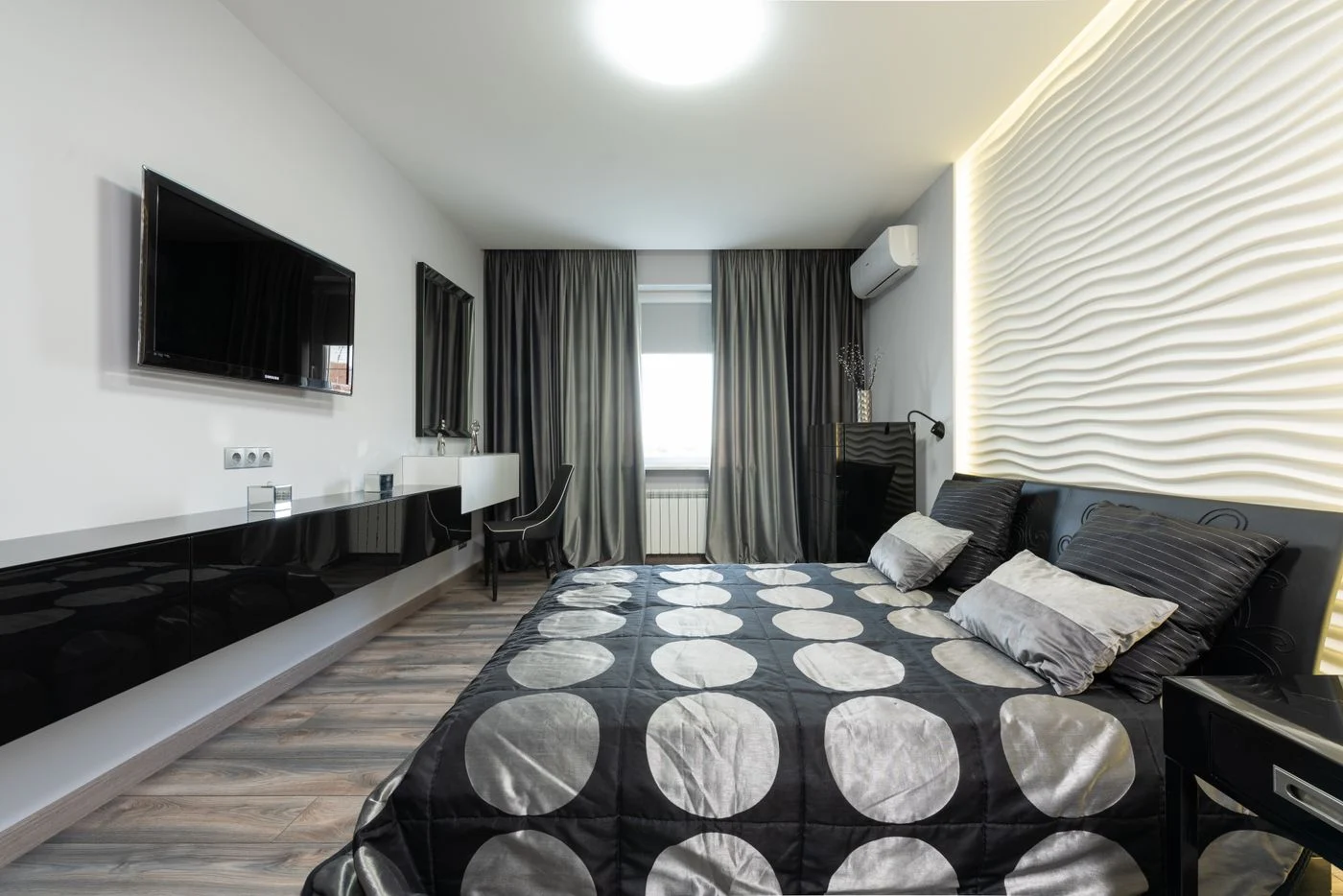
A bedroom with several incoming light sources
Sometimes a window is adequately covered after an adjustment while a bright gap at the door remains noticeable. Inspect the whole room before replacing the window covering again. Hallway light, a device indicator or a second small glazed opening may be responsible. Do not casually alter necessary ventilation or safety functions in addressing it.
For an occasional arrangement in a guest room, keep operation understandable. A short note can help if two layers need closing in a particular order. Any clips or loose pieces need a fixed storage place and must be suitable for their intended use. Many improvised components often make daily operation less reliable than an appropriately installed system.
Material is only part of the result
A blackout description may refer to the light transmission of the material. It does not automatically mean that the complete installed arrangement eliminates every gap. A curtain needs enough width and an appropriate mounting. With a blind, the side details and installation also determine where light can pass around the material.
Hold fabric samples against a bright area, but do not assume a small sample demonstrates the finished room effect. The eventual width, folds and attachment still matter. If an existing curtain already admits little light through its fabric, examining the edges is more useful than immediately purchasing another layer.
Preserve access and window operation
The arrangement should be easy to open in the morning. Overlapping panels may help, but they should not make the window handle inaccessible. Check whether the window can still open in the way needed for airing the room. Avoid improvised attachments that must be removed every time or pull fabric into the window mechanism.
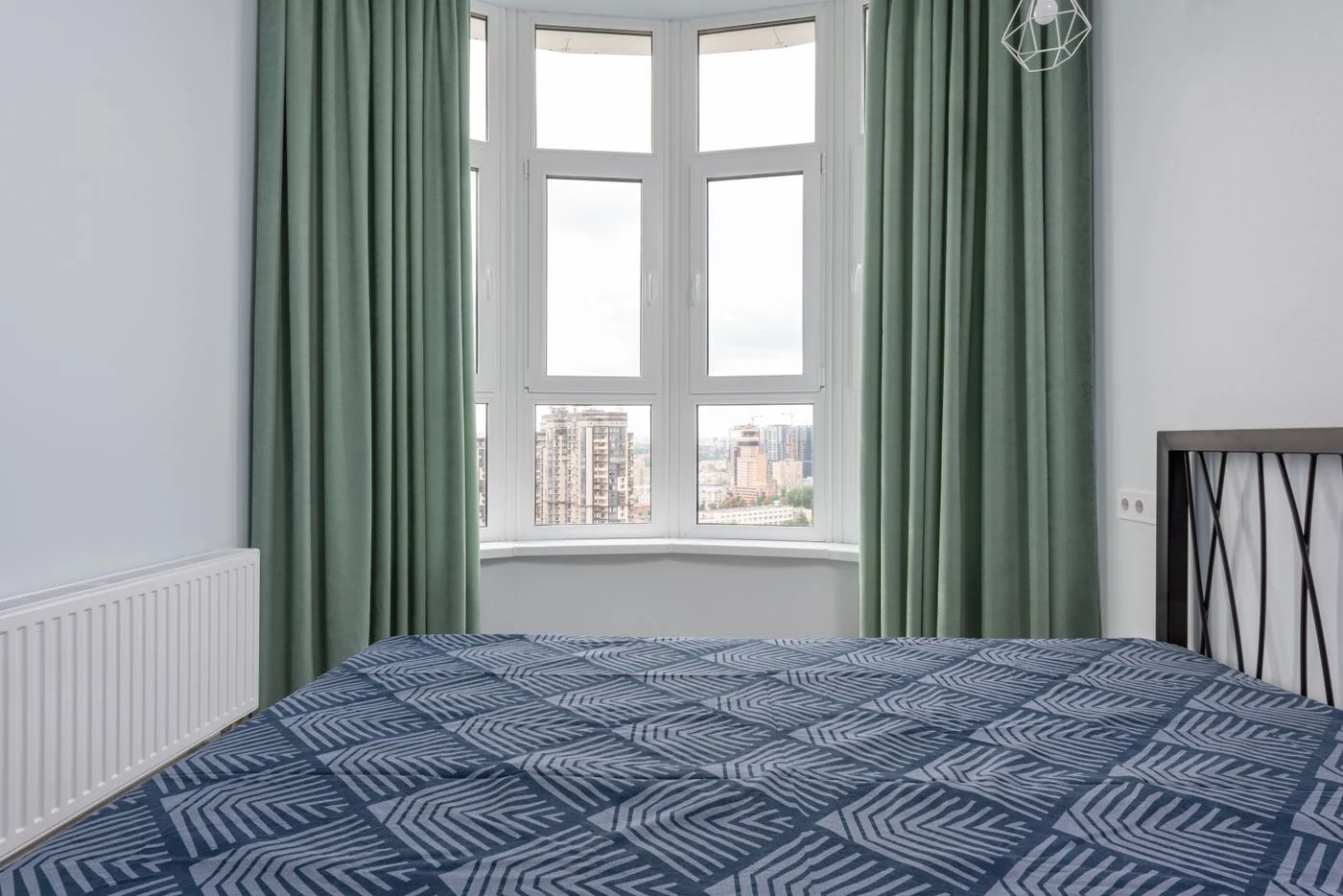
Where a radiator sits below the window, observe its clearance requirements. Longer curtains are not better simply because they extend closer to the floor. Cords or chains on a purchased system also need installation and securing according to its instructions. A darker room should not depend on an unsuitable mounting arrangement.
Test at the difficult time of day
Whenever possible, test when the unwanted light really occurs: morning at an east-facing window, for example, or evening beside a bright outdoor fitting. The direction of light can make one side gap particularly obvious. A midday test may fail to reveal that specific path and lead to an ineffective adjustment.
Improve the largest identified weakness first and test again. Adequate overlap may be enough, or a different system may be necessary. Describe the aim precisely, such as reducing light near the pillows, rather than promising complete darkness that the room cannot achieve because of its doors and other light sources.