Observe the daily sequence
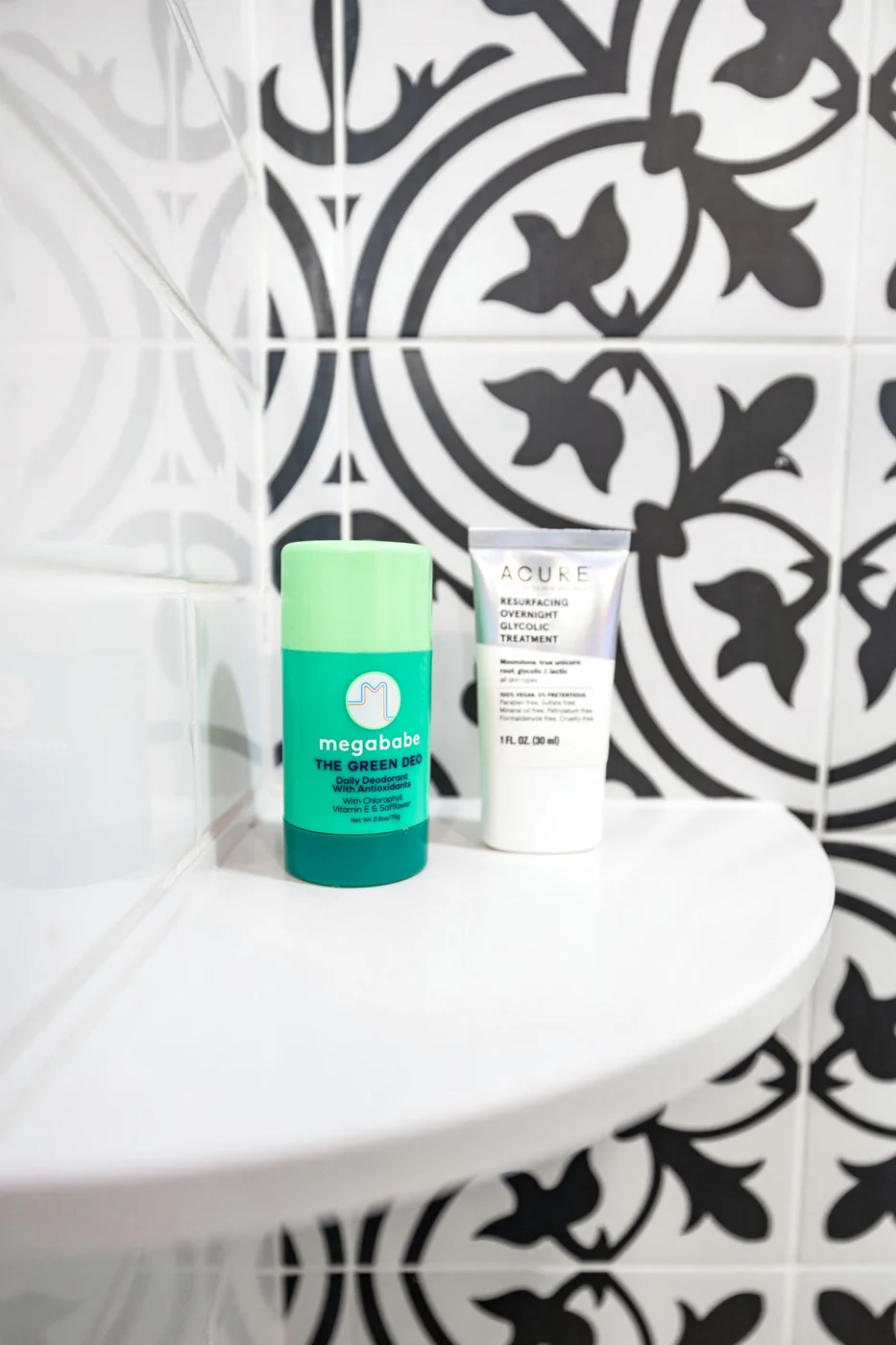
Gather only the products used in an ordinary morning or evening routine. Group them by that sequence or by person. A small removable tray may make cleaning underneath easier. Do not fill it so tightly that lifting one bottle pulls the next along with it.
Check clearance below the next shelf. Pump bottles need room for operation, not just their closed height. If a bottle must be threaded out at an angle every time, the shelf does not suit the task. Small tubes may stand in a low container provided their identities remain visible.
Store reserves separately
Unopened replacements can live in another suitable place if that makes the shelf easier to use. Read storage directions; a bathroom is not appropriate for every product. Medicines should not be placed among cosmetics merely because the packages are similar in size. Their own storage instructions apply.
Preserve product names, directions and relevant shelf-life information. Decanting into matching containers can lose those details. A visually quiet row is not sufficient reason to do so. If transfer is appropriate and intended, the product's identity must remain clear.
Make cleaning manageable
Limit permanently exposed small objects. Hair clips, jewellery and cotton pads need different containers from tall bottles. A small closed compartment can prevent them disappearing among larger products. Containers should suit moisture and cleaning in the room.
Dry visible water and check bottle bases before returning them to a delicate surface. Care depends on both shelf and containers. A tray does not automatically protect every surface beneath it from prolonged damp.
Review the shelf periodically, particularly when new products arrive. An old product no longer used should not permanently retain the best position. A small shelf works through a clear selection rather than the greatest possible number of additional tiers.
Allocate shared shelf space
With several users, a small group for each person may shorten the morning search. Shared products can have their own recognisable area. Keep this flexible: someone using only two items does not need a large matching container. Check that each group can be reached without moving the others. If one person repeatedly clears the front row, their allocation may sit too far back. Adjust the arrangement from that observation rather than insisting on equal-sized spaces. Fair access is not necessarily the same as identical containers.