Inspect the fixed services first
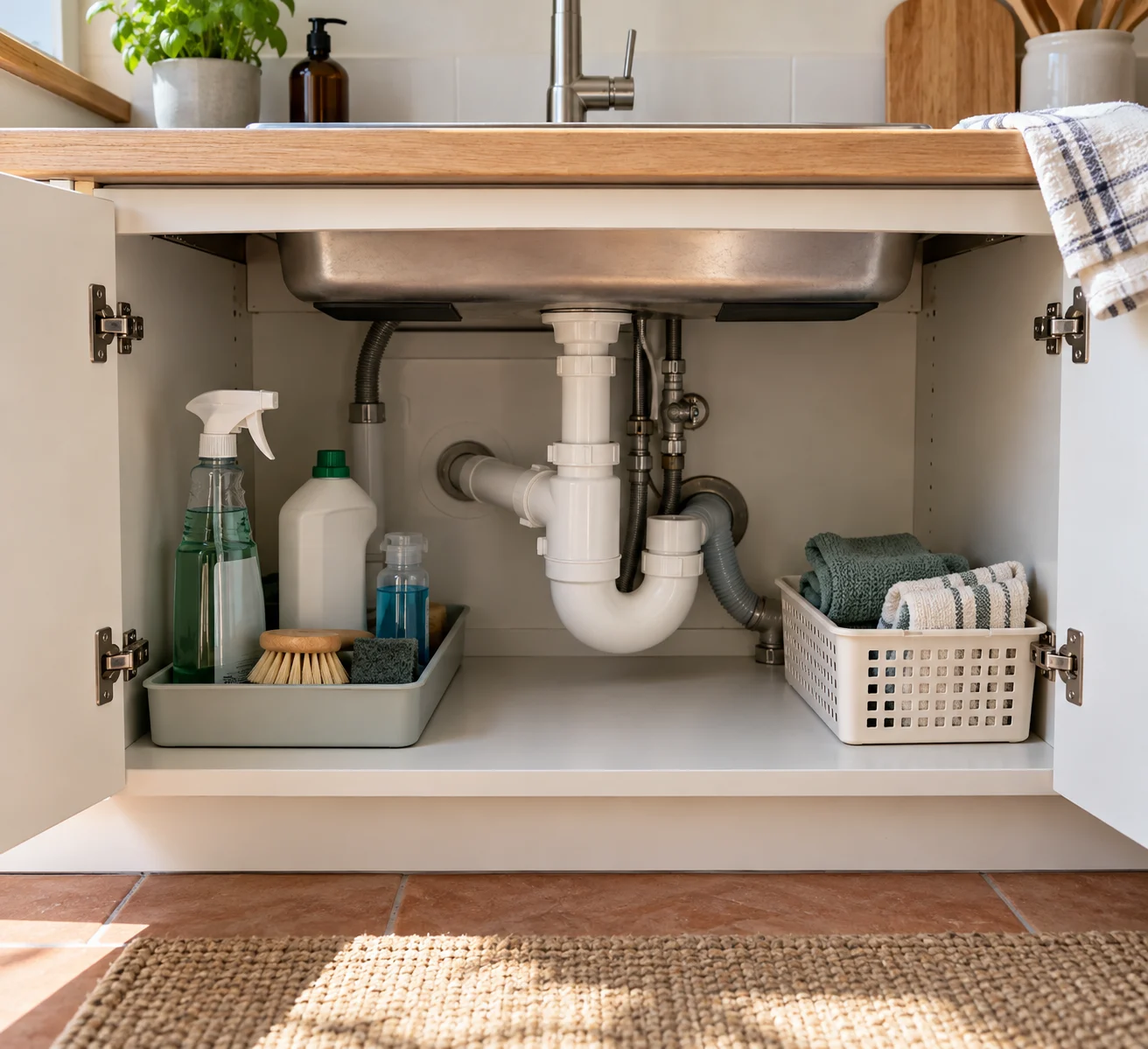
Empty the cupboard and identify the trap, pipes and shut-off access. Tightly wedged baskets should not make these areas unreachable. Measure the actual clear sections rather than the cupboard's overall width. A rectangular organiser may not fit around the installed pipework.
Look for visible damp or damage. An organiser does not repair a leak. Resolve the cause of a problem before refilling the space. A wipeable liner may simplify cleaning, but should not conceal important areas or make inspection harder.
Follow product storage directions
Keep cleaning products in their intended, identifiable packaging. Observe storage and hazard instructions and keep them appropriately away from children or other vulnerable people. A low cupboard is not automatically a secure location merely because it has a closed door. The household may require a different secured storage arrangement.
Do not keep food alongside cleaning chemicals. Unidentified remnants or products in damaged packaging should not be transferred into anonymous bottles. Follow product and local guidance for disposal. The cupboard does not need to preserve every rarely used cleaner indefinitely.
Use manageable removable groups
A suitable container for things used together can make retrieval easier. It should remain manageable when filled and should not pull against pipes. Tall spray heads need clearance below the sink. Check that doors and hinges do not trap anything when closed.
Sponges, cloths and other damp tools need appropriate drying before being packed closely. A closed box does not solve persistent wetness. Separate clean supplies from used implements.
Leave part of the base visible so that changes can be noticed. If every gap is filled up to the pipes, checking the cupboard becomes difficult. A smaller, clearly allocated selection makes both cleaning and access to services simpler.
Rehearse access to the trap
Remove the front group and check whether the service area becomes clearly visible. If several stacked containers must first be dismantled, the arrangement is too dense. A simple sketch of usable sections can help when selecting organisers. Leave irregular leftover gaps empty rather than placing a small bottle in every one. This makes later inspection easier and prevents products disappearing behind pipes. The aim is a cupboard whose contents can be moved quickly when access is required, not one whose entire volume appears occupied.