Look beyond the outline
A pale fabric shade may allow light through its sides, while an opaque metal shade sends more of it through the openings. Two lamps of similar size can consequently perform quite different tasks. Compare the side material, top opening and lower rim. Think about which parts will be visible from the seats in the room, rather than judging only the silhouette.
A shade that looks effective on a tall sideboard may reveal the bulb when placed on a low table. Try a comparable lamp at the intended height. Sit down, stand up and look into the room from the doorway. The screening needs to suit these actual viewing angles. A catalogue photograph usually represents only one viewpoint and may not show the light switched on.
A shade in a confined position
Beside a sofa against a wall, only a narrow strip may remain for the lamp. Measure the shade at its widest point, not just the base. A tapered shade may look compact at the top while its lower edge touches the wall or curtain. Preserve required clearances and access to controls. Do not move the lamp so far behind the sofa that its switch becomes unreachable.
When replacing a shade, seams and pattern direction may matter too. Turn it towards the eventual viewing direction and check that the fitting permits that orientation. Useful light distribution matters more than concealing a seam, but a small position change may achieve both.
Use the wall to reveal the light
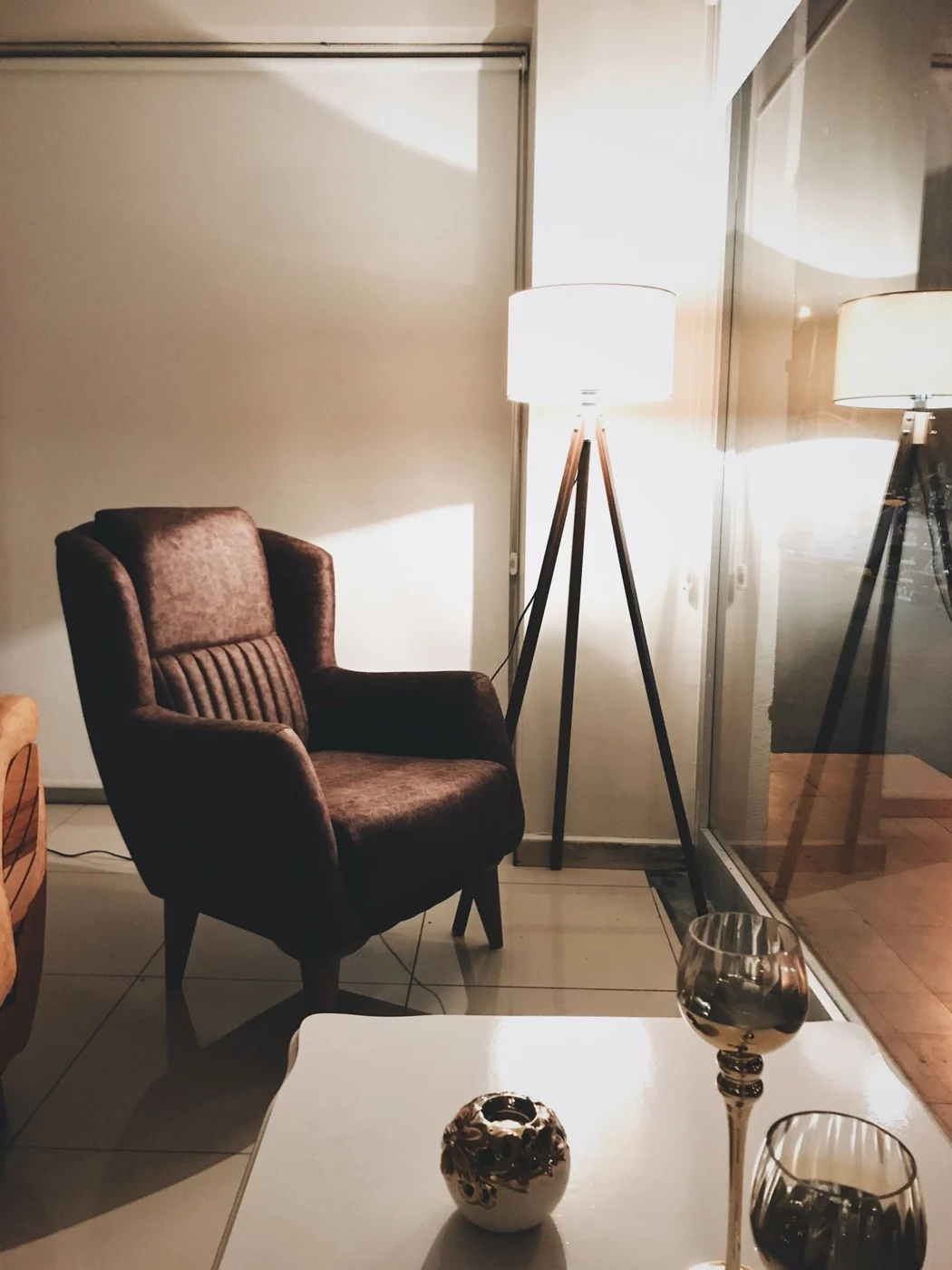
Move the lamp carefully towards a clear wall and observe the pattern. A sharply defined cone outlines an opening, while a translucent shade also becomes a glowing surface. Either result may be appropriate. Opposite a glossy cabinet or near a television, however, that glowing surface can appear as a reflection. Check the arrangement with the screen dark as well as with a picture displayed.
Look at the colour inside the shade too. Gold-coloured and white linings are more than decorative alternatives: they change the appearance of reflected light. If the lamp is intended for reading, test a printed page underneath it. For an accent on a sideboard, the more relevant test is how the nearby objects and wall appear.
Match the attachment when replacing a shade
A replacement needs to fit the lamp's intended mounting. Do not compare outer diameter alone. The location of the fitting determines how low the shade sits and whether it conceals the bulb. Follow the manufacturer's requirements for size, material and permitted light source. An improvised spacer is not a substitute for a compatible attachment.
After changing the shade, leave the lamp in its normal setting for a trial. If the room now feels too dark, a stronger bulb is not automatically the best solution. The new material may have blocked exactly the sideways light that previously served as background illumination. Another shade, or another role for that lamp, may suit the room better.