Inspect the actual foot
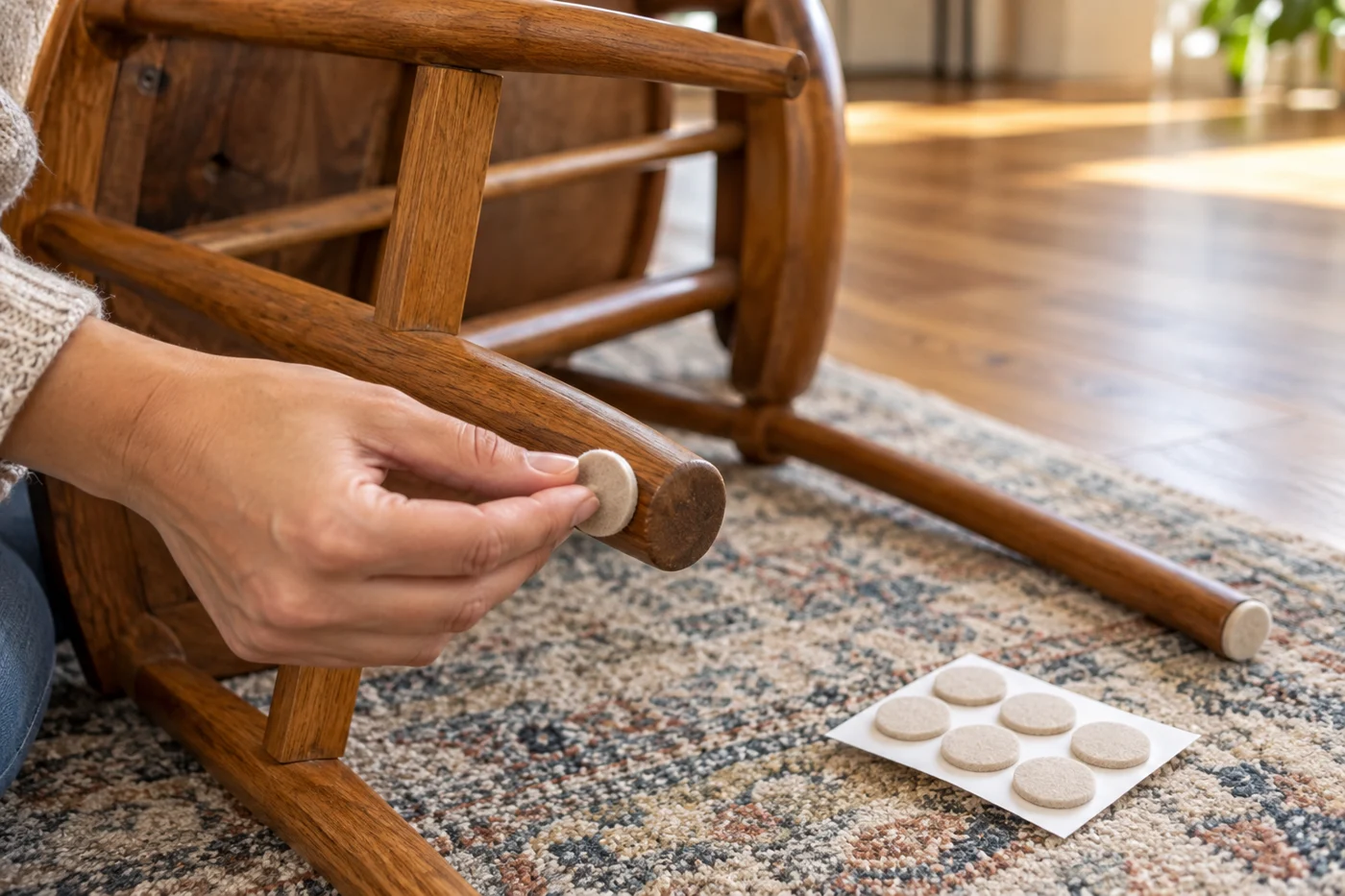
Tilt or move furniture only when it can be done safely, getting help with heavy pieces. Examine the surface that actually touches the floor. It may be smaller, angled or differently shaped from the visible leg section. An overhanging pad can peel at the edge; an undersized pad may not support the contact area as intended.
Some furniture has factory inserts or specialised attachments. Look for matching replacement parts first. Do not remove an existing system hastily to place a universal adhesive pad over it. On a chair with angled legs, the solution must fit its normal standing position. Also check whether the manufacturer specifies a particular glide for your floor.
A dining chair may be pulled back several times each day, whereas a chest rarely moves. Secure attachment during repeated movement is therefore especially relevant to the chair. The chest needs a solution suited to its weight and standing position. Do not simply use the remainder of one packet on unrelated furniture. Compare hard and textile floor surfaces too: felt intended for a particular smooth floor behaves differently on carpet. Manufacturer guidance is more useful than assuming the softest material is always correct.
Prepare the contact area
Remove dirt and old residue only by a method suitable for the foot. Prepare the surface for the chosen attachment. With self-adhesive products, follow instructions about dryness and pressure. Do not drill or nail into thin, hollow or unidentified components without approval. An unsuitable fixing can damage the furniture.
Replace pads so the piece stands evenly afterwards. Different thicknesses can make a previously stable chair rock. Felt does not repair a loose leg or failed joint. If the furniture was unstable before the change, investigate that separately.
Check after initial use
Try the piece carefully in its intended position. Watch for pad movement and confirm that the sliding action suits the floor. Regularly inspect beneath it for embedded particles. A soft pad containing grit can still leave marks. Clean or replace worn components when needed.
Keep a small supply of matching replacements with the model details. The next change will then not become another sizing puzzle. If the same pad repeatedly detaches, do not simply add more adhesive. Reconsider shape, load and attachment type. A specifically matched insert may be the lasting solution rather than another layer on top of old felt. Check all feet together after replacement so one overlooked worn pad does not undermine the work.