Add a seat with a clear purpose
Start with who will use the extra place. A chair intended for reading needs to support a different posture from a compact occasional seat on the edge of a conversation. Sit in the candidate for more than a brief moment. Check whether your feet rest comfortably, your arms find support and getting up feels straightforward.
A small outer footprint does not necessarily mean an uncomfortable seat, while broad arms do not necessarily mean a generous sitting area. Compare seat dimensions separately from overall dimensions. If one person will use the chair most of the time, a suitable sitting position matters more than matching every detail of the sofa's upholstery.
Decide which way the seat faces
Use an existing chair to test the proposed position. Angling it towards the sofa can create an individual place without turning its occupant away from a conversation. A directly opposite position can feel remote if both pieces are pushed against the farthest walls. Bring the group a little closer where this does not obstruct circulation.
A swivel chair offers several viewing directions but also needs room to turn. A footstool adds another area in front of the seat. Mark both spaces as well as the chair itself. Otherwise, the furniture fits on paper while someone's legs end up occupying the main route through the room.
Complete the immediate surroundings
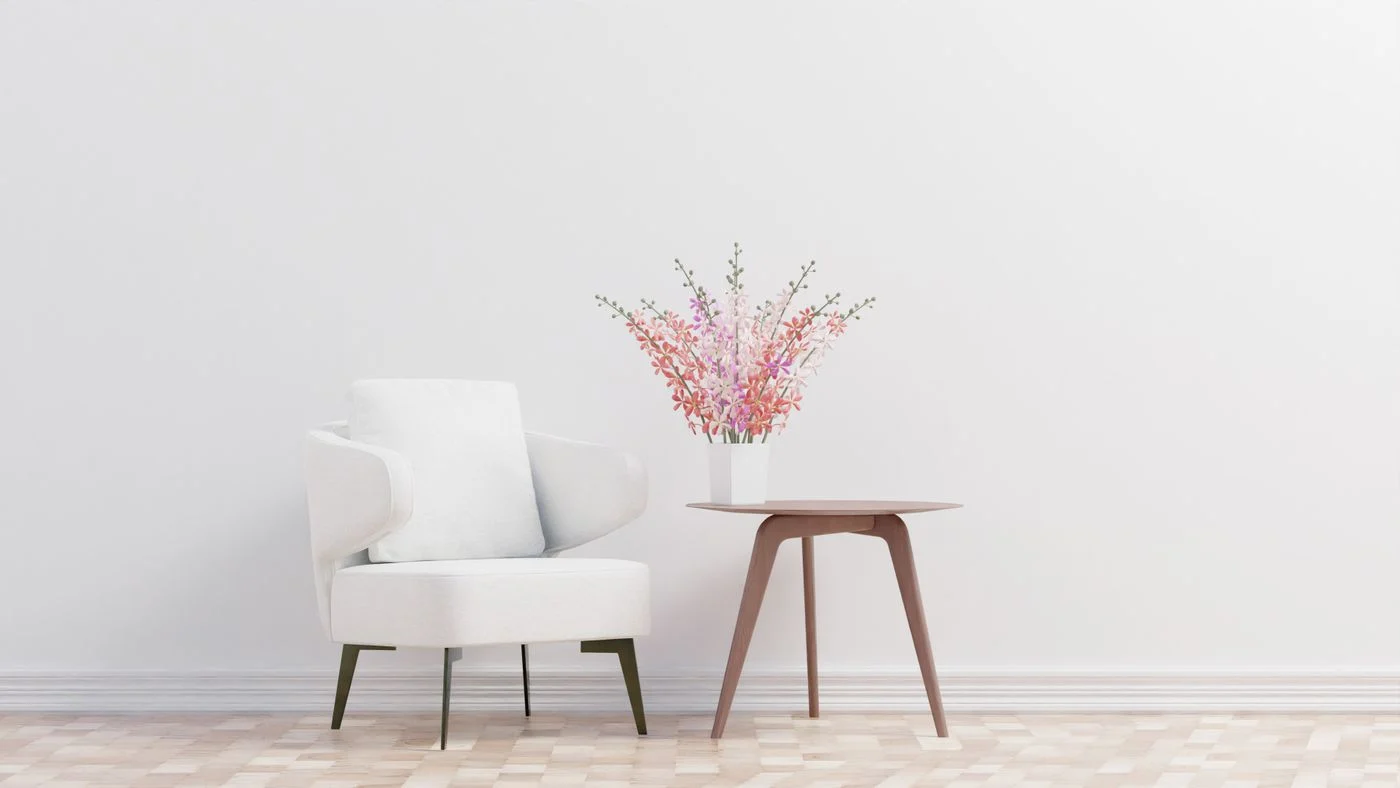
A reading chair needs somewhere reachable for a book or drink and light suited to the task. A narrow side table may do the job without adding a large pair of tables. Place the lamp so that its base does not occupy the spot where someone steps while sitting down or standing up.
If the chair will sometimes move for visitors, consider its weight, safe lifting points and protection for the floor. Avoid dragging it by delicate upholstery or parts not intended as handles. A less mobile chair may still work if its permanent position supports all the intended activities. Its advantage over a second sofa then comes from a deliberate location, rather than simply having fewer cushions.