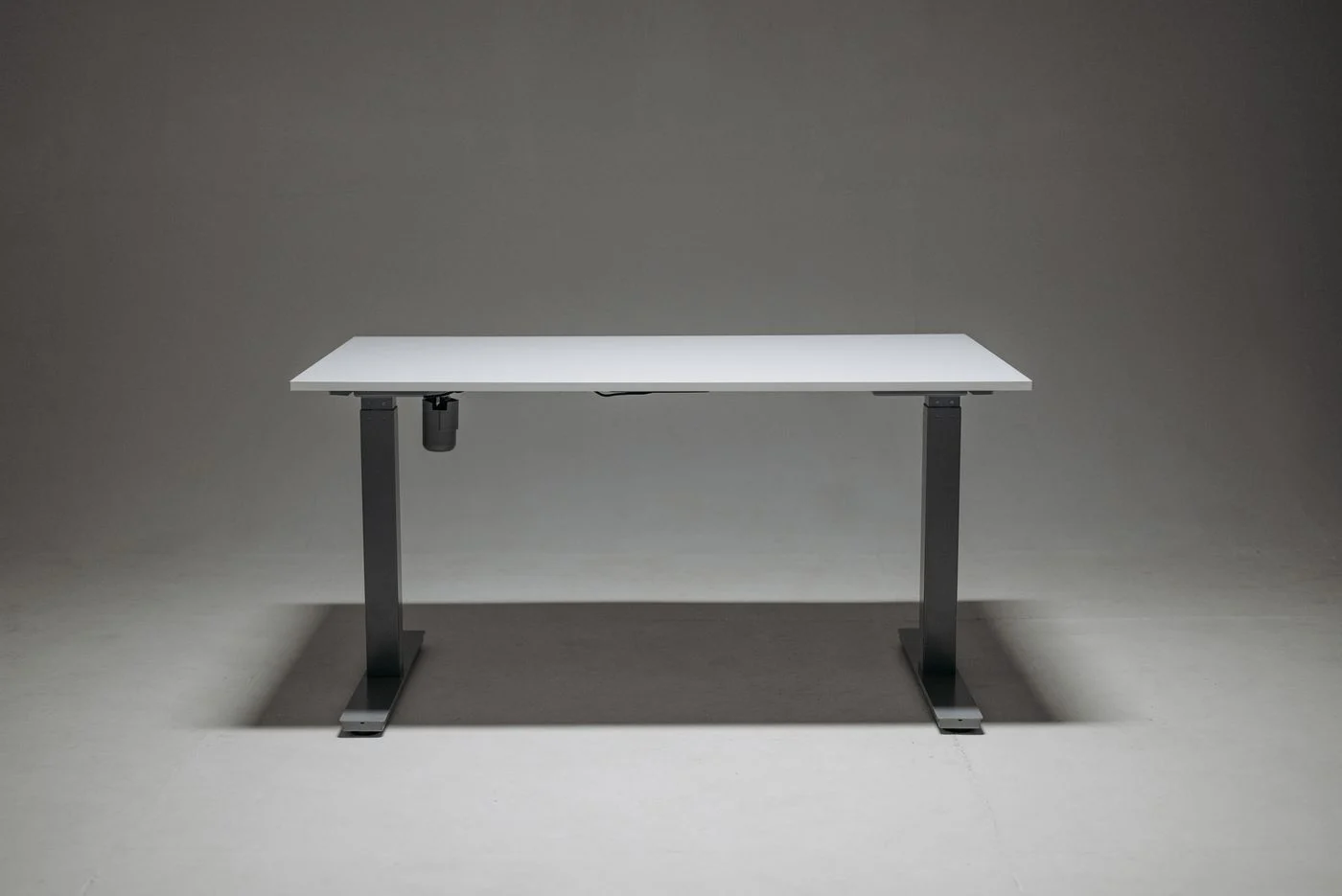
Space beneath the desk is not automatically spare
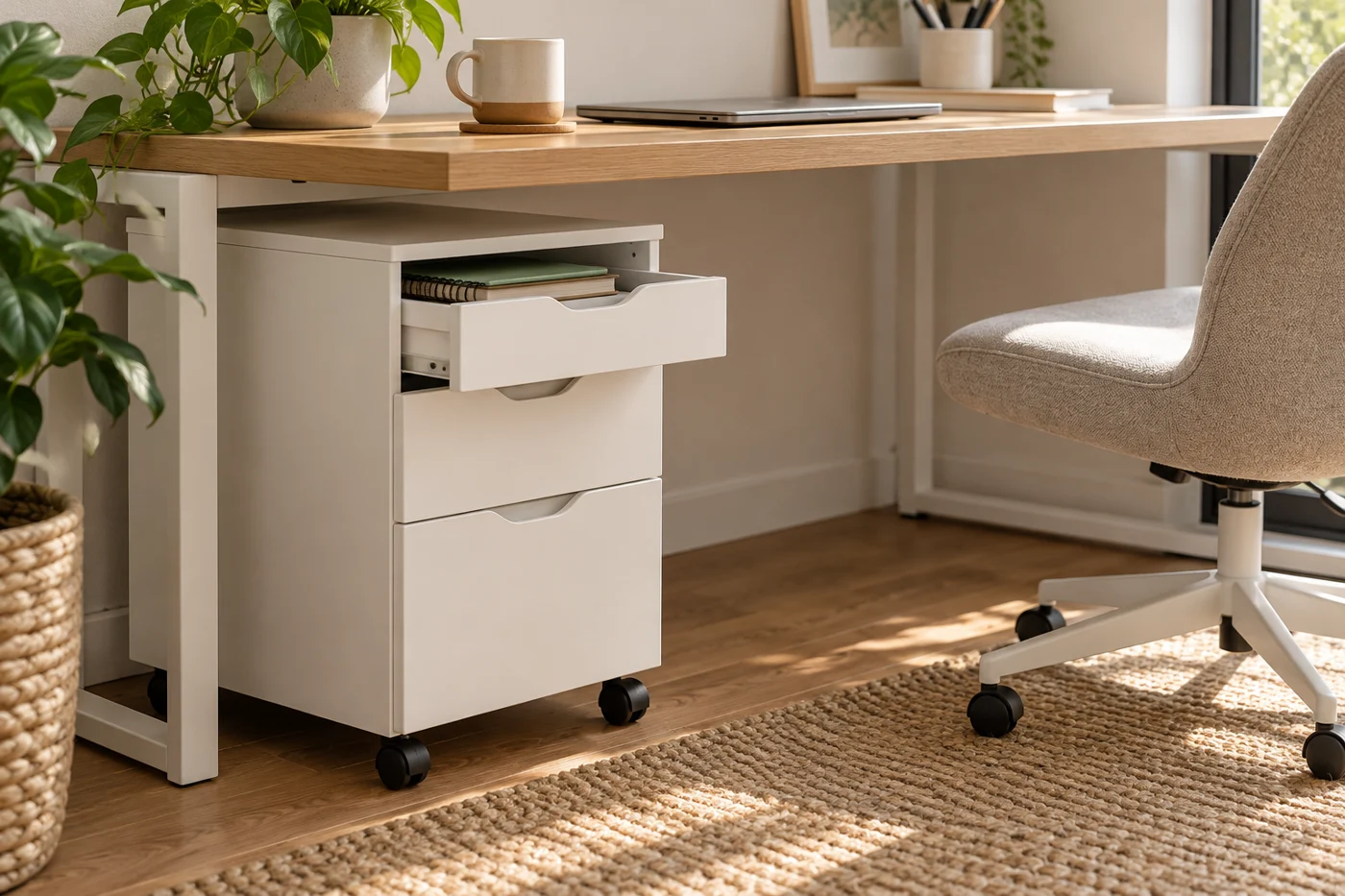
A mobile pedestal is often chosen from the apparent width beneath the desktop. Also check how much legroom remains. Sit at the desk, move your legs and turn the chair. The pedestal should not force you to sit permanently to one side of the working surface.
Mark the external dimensions, including handles. Allow the drawers to open fully in the trial. A narrow unit can extend far into the movement area when a deep drawer opens. If the chair must be rolled out of the room each time, the position is poorly suited to everyday use.
Mobility needs a route
Decide when the unit will actually move. Will it stand beside the desk during work and return underneath afterwards? Both positions and the route between them need to remain clear. A rug edge or threshold can complicate that change. Check that the castors suit the flooring and that the unit stays in place controllably.
The top quickly becomes another shelf. If it must be cleared before every move, some of the benefit disappears. Keep only objects that can travel safely with it or have an easy alternative destination. An open drink does not belong among the items moved around with the unit.
Arrange contents by access
Frequently used small supplies belong in an accessible drawer. Less-used stock can sit lower, provided weight and stability follow the manufacturer's instructions. Do not overload the unit and observe any guidance about opening drawers. A mobile cabinet is not a substitute for shelving with unlimited capacity.
Check internal measurements against actual objects. A file or document folder may fail to fit despite generous external width. Add only as many dividers as make retrieval easier. After several days, see whether the pedestal has genuinely cleared the desk or merely created another surface for unsorted objects. Adjust its contents before placing additional storage beside it. The useful capacity is the amount that can be accessed and moved without disrupting the workspace.