Separate checking from watering
Looking at the plants every Sunday is a useful habit. Giving every pot the same amount of water each Sunday is not a suitable rule for every plant. Pot size, growing medium, position and growth affect how quickly water is used. A calendar can remind you to inspect without deciding the result in advance.
Begin with the particular species. Some tolerate drier intervals while others need more consistent moisture. Keep the label or record the name. Without that identification, a general watering rule easily becomes guesswork. Two plants of similar size do not necessarily share the same needs.
Someone else caring while you are away
When another person takes over care, provide more than a universal watering day. Show how moisture is checked in each pot and where excess water is removed. Identify plants needing different treatment. A brief note for each group may be clearer than one long general instruction.
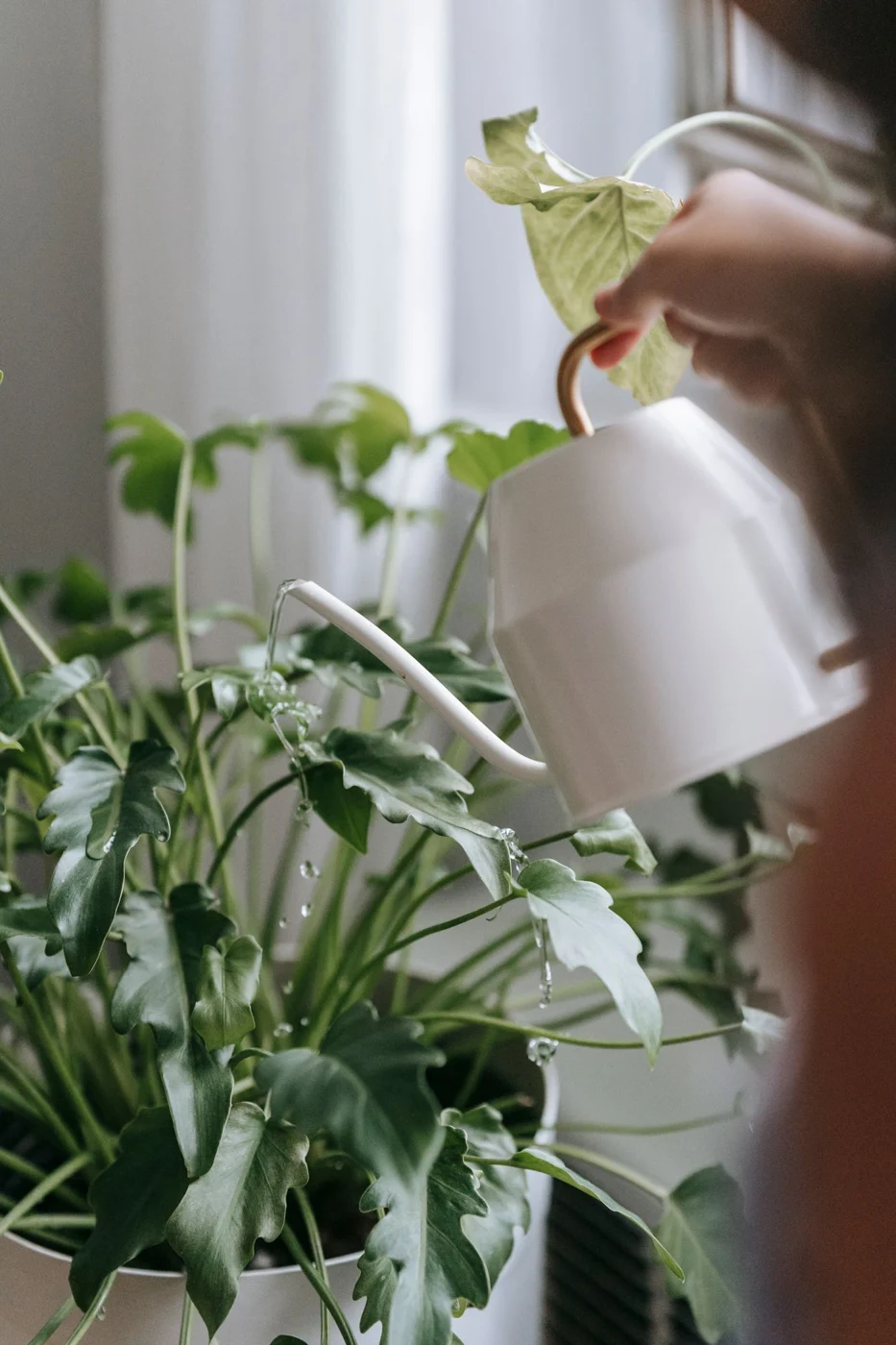
Leave a suitable watering can available and make every pot safely reachable. The helper should not need to lift heavy containers from unfamiliar supports. Where some plants can be cared for more easily in a protected but still suitable place, adjust the arrangement temporarily.
Record the last actual watering before departure and ask that further watering is noted. On return, this avoids watering again merely because the normal weekday has arrived. Keep the record short and describe actions rather than guesses. If something changes visibly, a photograph and question are more useful than a large extra watering on suspicion.
Combine several observations
Check moisture in the accessible upper part of the medium and notice pot weight where it can be lifted safely. The surface alone may mislead: it can look dry while substantial moisture remains below. Learn that difference in the actual container instead of responding to every dry-looking surface with more water.
Observe leaves and growth too, without assigning one symptom a single cause. Drooping leaves can have several explanations. Review the medium, location and any standing water in the cachepot first. More water is not automatically the appropriate response to a plant that looks unhappy.
Allow for changed conditions
Moving towards a window or starting the heating season can alter the environment. A newly repotted container also behaves differently from the previous one. Check more closely for a while and adapt the inspection routine. The old schedule represents experience, not a permanent property of the plant.
Brief notes help when several pots look similar. Record when each was checked and when it was actually watered. Skipping water then remains a conscious decision rather than something another person accidentally corrects. Agree who is responsible where care is shared. Simple coordination prevents duplicate watering more effectively than a complicated chart nobody consults. The aim is to make observation repeatable, not to force every plant into an identical weekly appointment.