Start with the furniture
List the materials and finishes actually present at home. These may include lacquered fronts, oiled timber, glass and different textiles. Check the existing care guidance for each. Do not buy several specialist products before establishing whether they are needed and approved. Some routine tasks need only the specified simple method without an additional cleaner.
Match existing products to the list. Similar product names do not prove identical suitability. Read labels and instructions, including restrictions. Do not identify an unknown bottle by smelling it or experimenting on furniture. Establish appropriate disposal from the product information and local guidance.
A simple matching list can have three columns: furniture, finish and permitted method. Write the particular chest and its lacquered front rather than merely “living room”. This prevents habitually using the nearby oiled table’s product on it too. Include a reference to the complete instructions. The list should make selection easier, not invent a new care rule. If one suitable product covers several tasks, each row does not need another bottle.
Keep original packaging
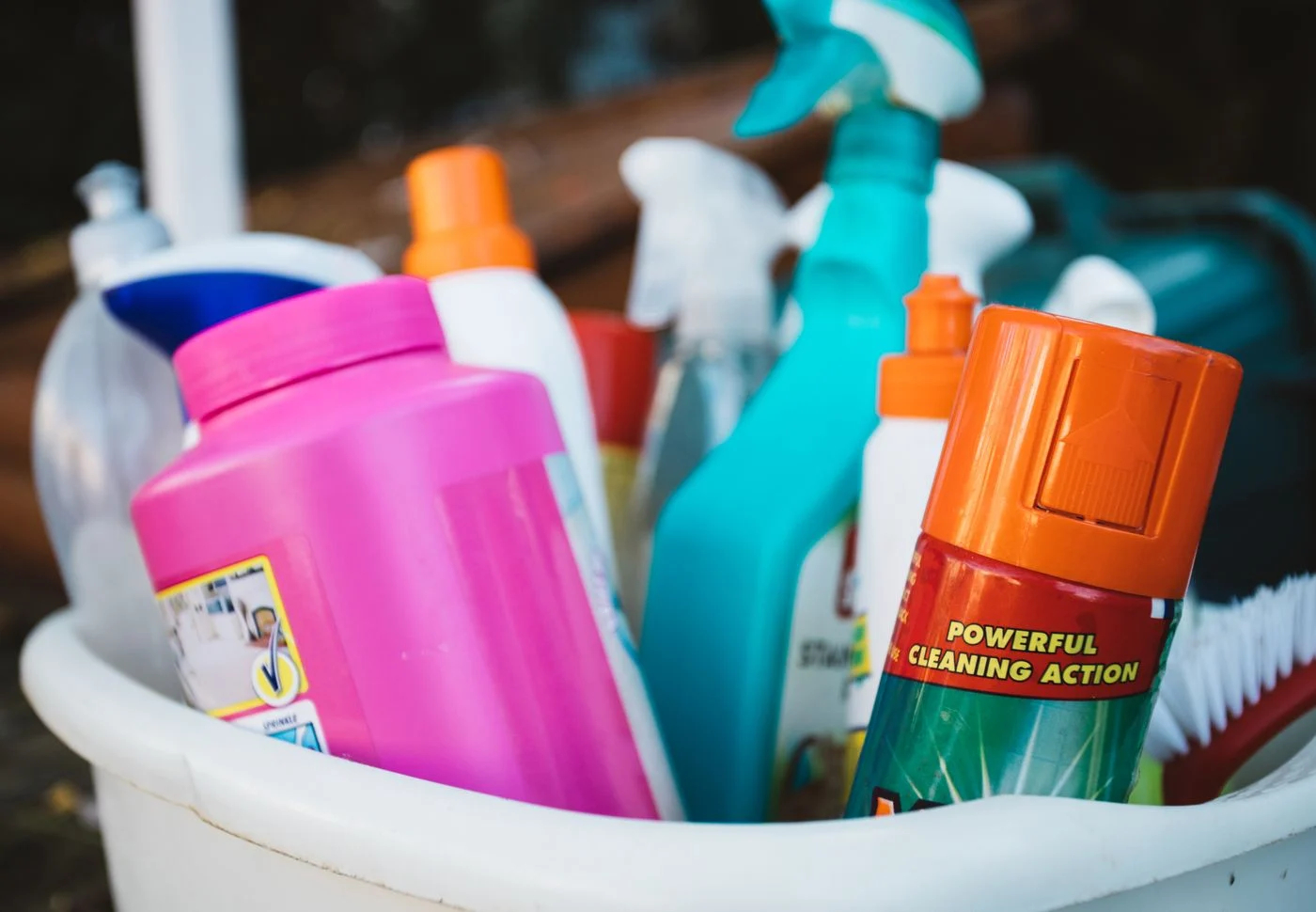
Retain cleaners in their labelled original containers. This preserves dosage, safety information and identity. A decorative unlabelled dispenser makes distinctions harder. Never transfer products into food or drinks containers. Store them as instructed and prevent inappropriate access by children or other vulnerable people.
Stand bottles on a suitable surface that can catch residue and be inspected. Do not place them directly on delicate furniture finishes. A cupboard beneath a sink is suitable only when its temperature, moisture and access conditions match the products. Convenience does not replace that assessment.
Assign tools as well
Separate cloths for sensitive surfaces from tools used for coarse dirt. Clear marking by purpose can prevent mix-ups. Clean and dry reusable cloths according to their guidance before putting them back. A suitable cleaner on a dirty cloth does not produce controlled care.
Do not mix cleaners or move randomly between products on a difficult mark. First establish what the surface permits and what has already been used. Record that information if professional advice becomes necessary. Dispose of unusable or unwanted products appropriately rather than permanently hiding them behind the regularly used bottles. An accessible, limited collection makes correct everyday selection easier. Review it when new furniture arrives so the old care routine is not automatically applied to a different finish.