Draw the routes used at night
Start with the route from the bed to the door and, where relevant, the bathroom. It should work without moving furniture. Think about where clothes are put down and where a small light can be reached. A sleeping place does not necessarily need a separate room, but its arrangement should remain understandable in low light.
If two people share the bed, discuss access for both. Placing a long side against the wall releases space elsewhere but means one person must enter from the foot or pass the other occupant. Judge that trade-off by everyday habits rather than by the appearance of the floor plan alone.
Consider the view from the entrance
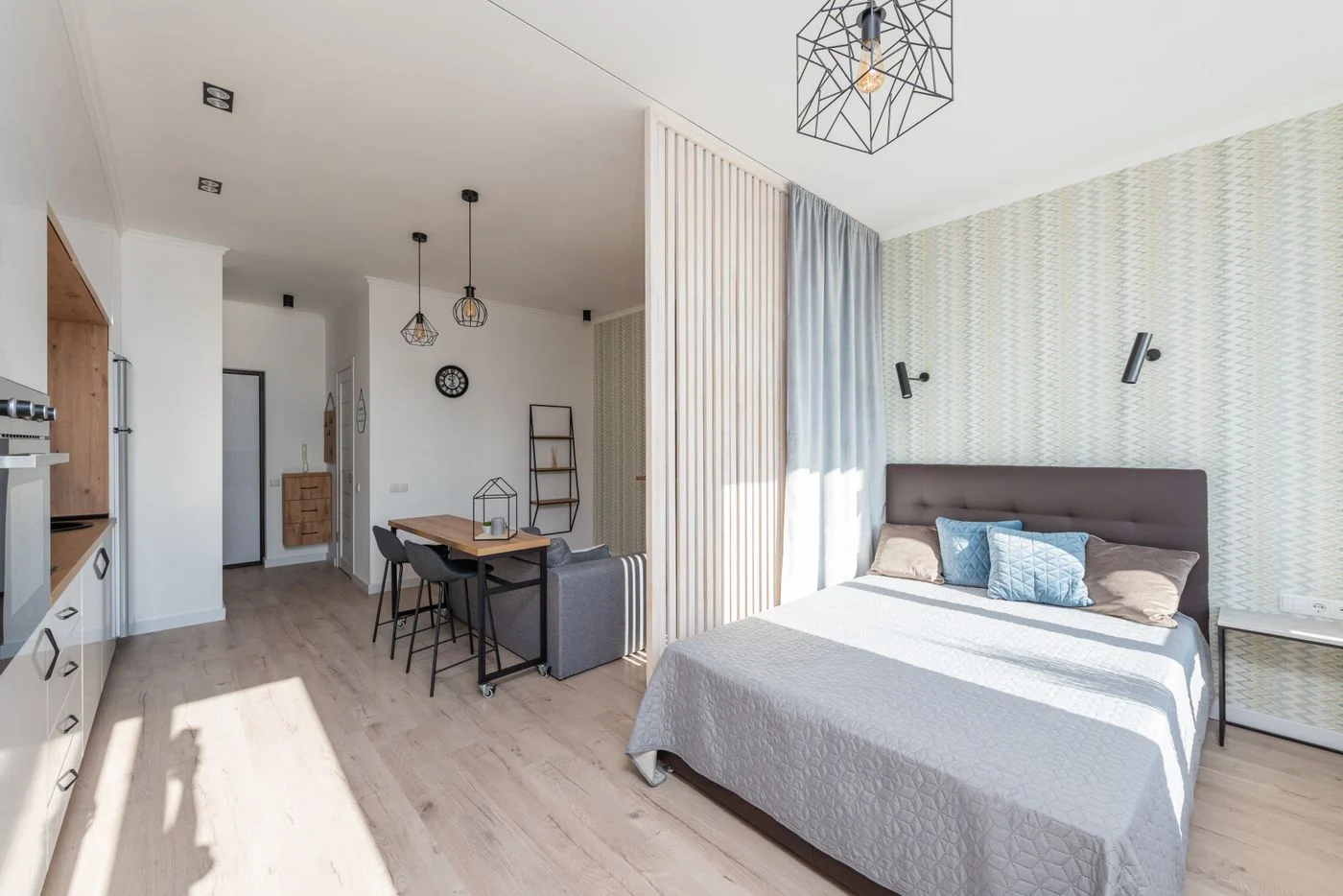
If you would rather not see the bed immediately, try changing its orientation first. A headboard on a side wall or a position behind an existing projection may provide enough separation. A curtain or suitable room divider can then be considered as an additional measure. Neither should make ventilation or reaching the window difficult.
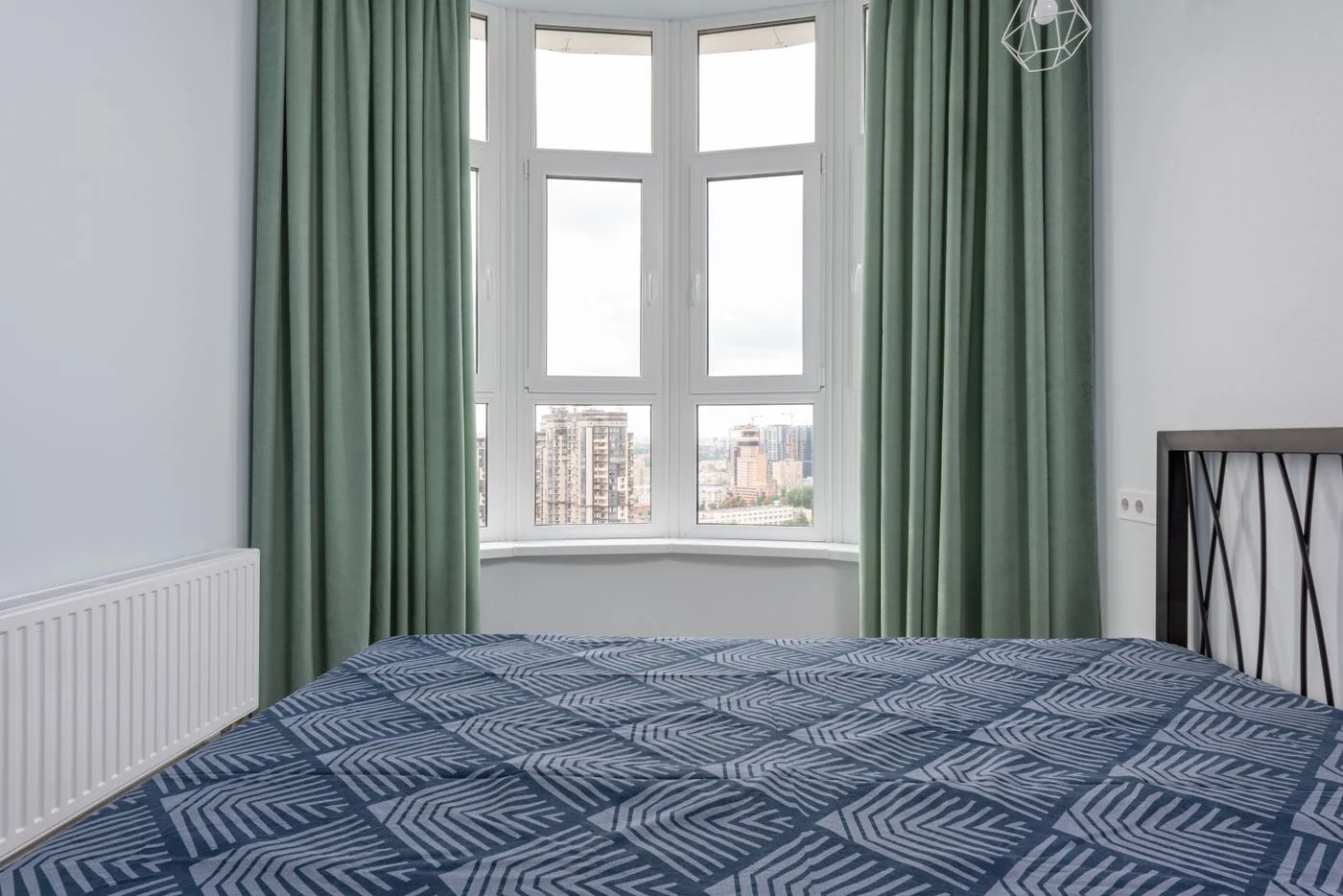
A curtain needs space when open as well as when closed: the gathered fabric has to go somewhere, and its fixing must suit the supporting surface. A tall cabinet used as a divider takes more depth and needs an approved securing arrangement. It may also cut the brightest part of the room off from the remaining living area.
Allow for the daytime arrangement
A bedspread and a few cushions can make the sleeping area look quieter during the day. Those textiles need a home overnight. Otherwise, decorative cushions simply become a pile on the floor every evening. If the bed also serves as seating, that use should suit both its construction and the comfort of the people using it.
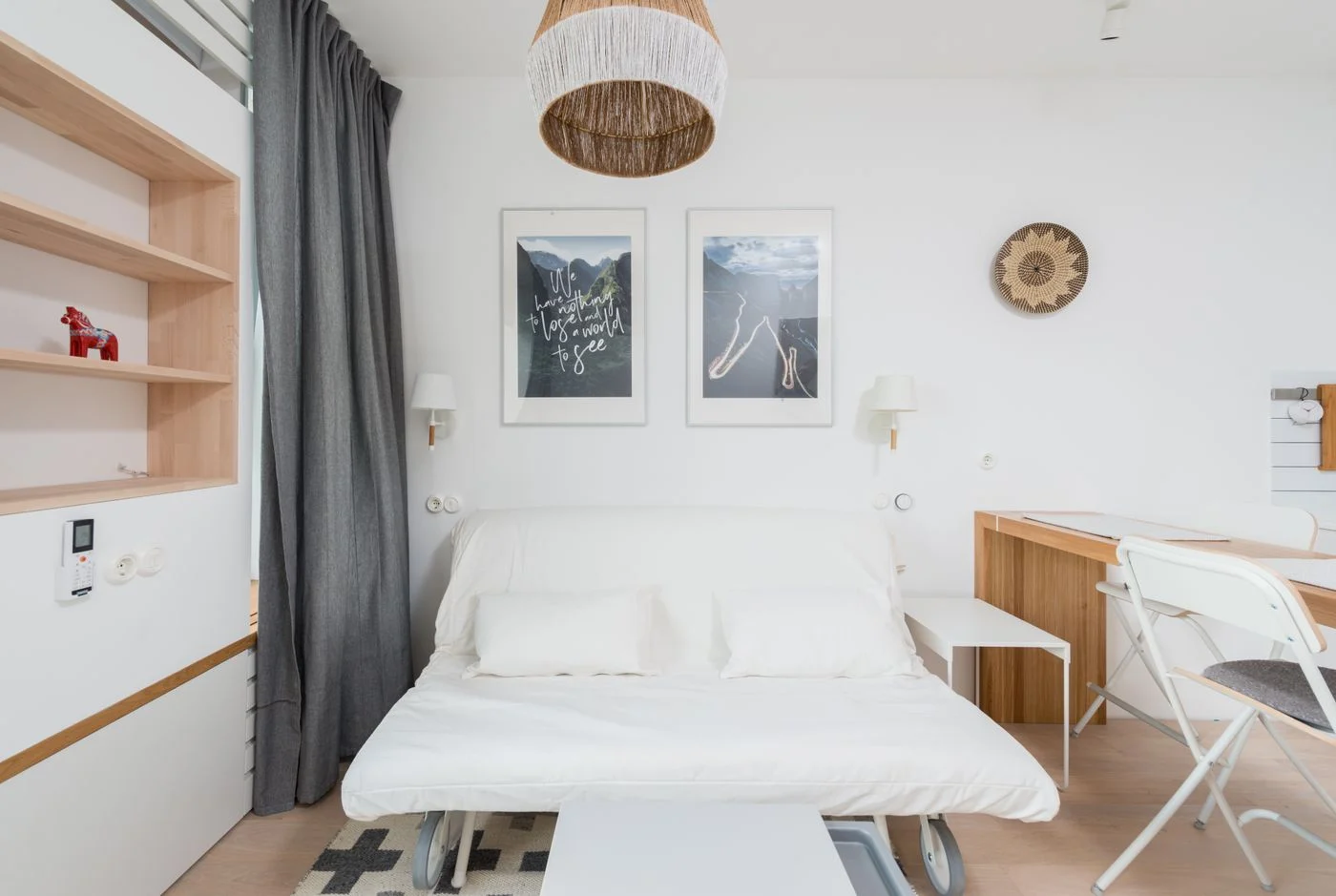
Compare a permanent bed with a convertible option using more than the closed footprint. A sofa bed needs operating space and somewhere for bedding, while a fixed bed avoids daily conversion but occupies its full area continuously. The choice depends on which activity takes priority in the studio and how much rearranging you are realistically willing to do every day.