Identify the actual finish
Find the table's documentation first. Timber species and finish are separate details: an oak table may be oiled or lacquered, for example. Coloured oils and combined finishes also need compatible products. A natural-looking matt table is not automatically suitable for any wood oil. With second-hand furniture, ask about previous treatment before applying anything yourself.
Photograph the product label and care instructions and keep them together. If the manufacturer offers several finishes, the instructions must match your version. Advice for a similar-looking table may differ. Record any product already used; that information helps if marks or sticky areas need to be assessed later.
Reset the table after use
Do not leave damp glasses, used placemats and flower vases until the next morning. Pay particular attention to their undersides, where water can collect. Suitable coasters should be clean and dry so they do not bring moisture or crumbs onto the top themselves. Hot objects need an appropriate protective support compatible with the finish.
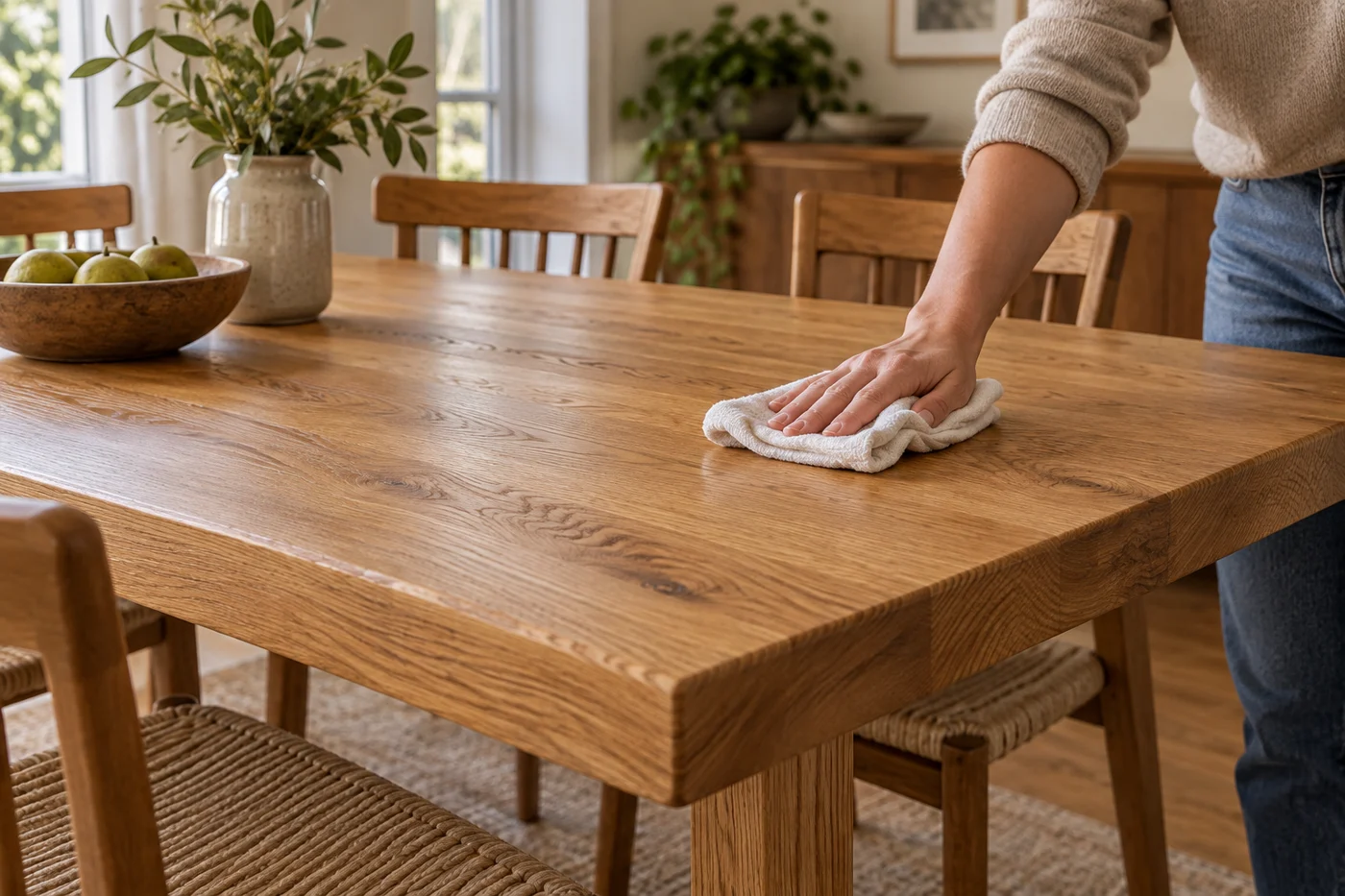
Remove loose crumbs before wiping. Use a soft cloth and the cleaning method recommended for the table. Scrubbing one small area can increase the visible difference. A water mark is not a reason to sand the entire top immediately. Establish whether it is fresh moisture, a surface deposit or a change in the finish first.
When the dining table is also a desk
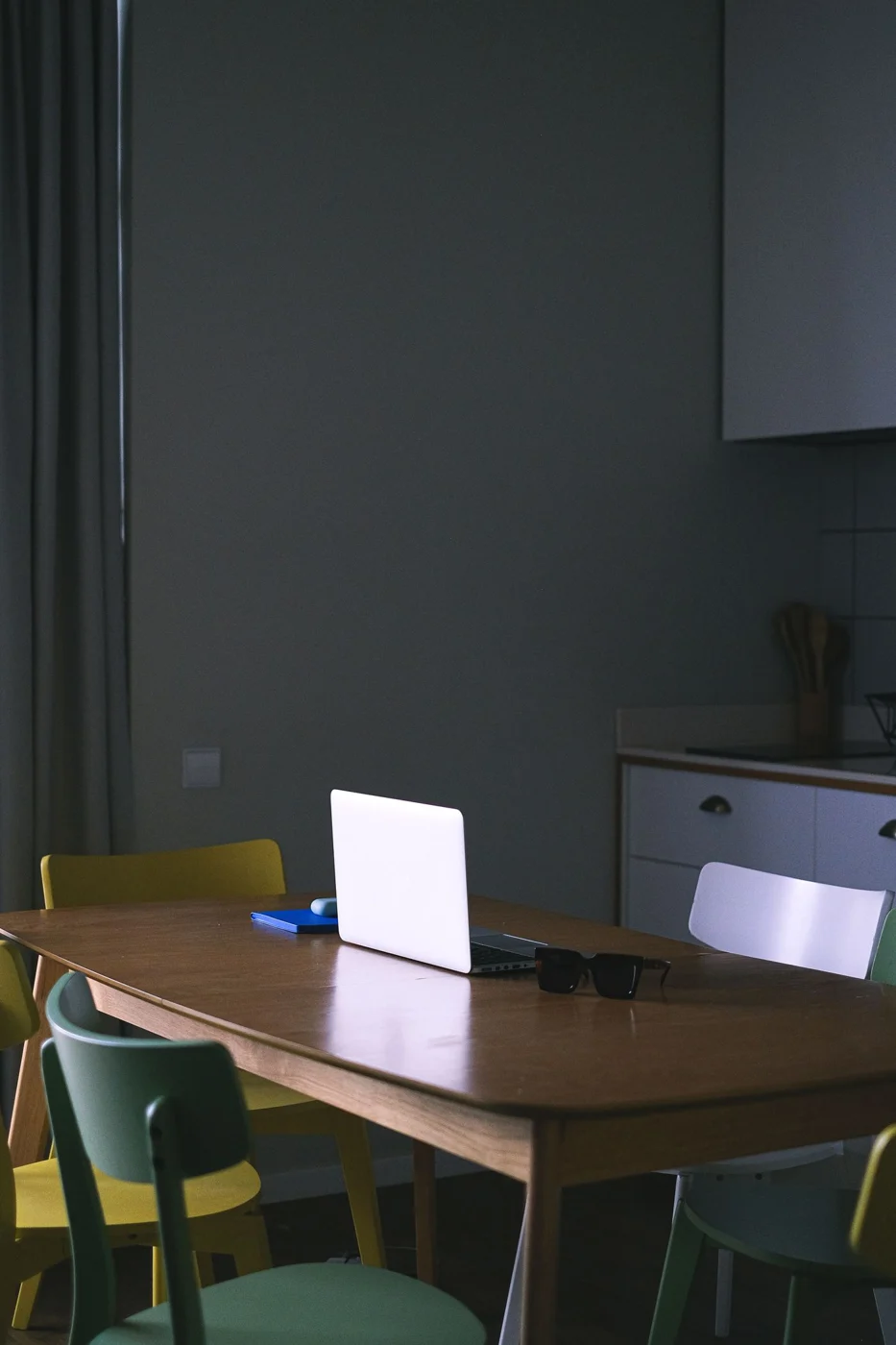
On a table with several roles, marks often begin beneath things that stay in place. Picture the change from working hours to dinner: the laptop, charger and papers move away, but a damp coaster remains beneath a water glass. Clear more than the visible middle. Lift objects around the edges and check underneath them too. A removable tray for office supplies makes this easier than a collection of separate containers that must each be moved.
Schedule a maintenance treatment for a period when you can actually do without the table. Applying a product in the evening is inconvenient if you need the surface the next morning and its instructions require longer. Decide beforehand where meals or work will happen and where the usual objects will go. This avoids pressure to cover a surface that is not ready with a tablecloth, or return it to use before the specified process is complete.
Re-oiling is a separate task
Plan treatment when the table can remain out of use for long enough. Application, removal of surplus and drying depend on the particular system. Adding a layer just before dinner is not a useful shortcut. Do not cover the treated table prematurely with an impermeable mat; follow the specified conditions.
Have the approved product, appropriate tools and instructions ready. Do not assume cooking oil can replace furniture care oil. Some products alter colour and sheen, which makes compatibility important. Sanding is not an automatic part of every maintenance session either: whether it is required, and with what, belongs in the matching instructions. An uncertain finish or deeper damage deserves a competent assessment rather than experiments with progressively stronger products.
Plan for the used cloths
Oil-soaked cloths can present a fire hazard depending on the product. Follow the oil's safety and disposal instructions immediately after the work. Do not leave these cloths crumpled among ordinary cleaning rags. Handling tools and residues correctly is part of the treatment, not something to deal with at an unspecified later time.
Follow the use pattern
A table beside a bright window, a busy dining surface and a rarely used side table experience different conditions. Use the manufacturer's guidance and observed condition rather than assigning the same rigid interval to every piece. Record treatments and dates. Reconsider the routine when the table moves or its use changes. This produces an understandable care history instead of a collection of contradictory household remedies. Keep the care product with its original label so another household member can identify exactly what was used.