Lay out the contents first
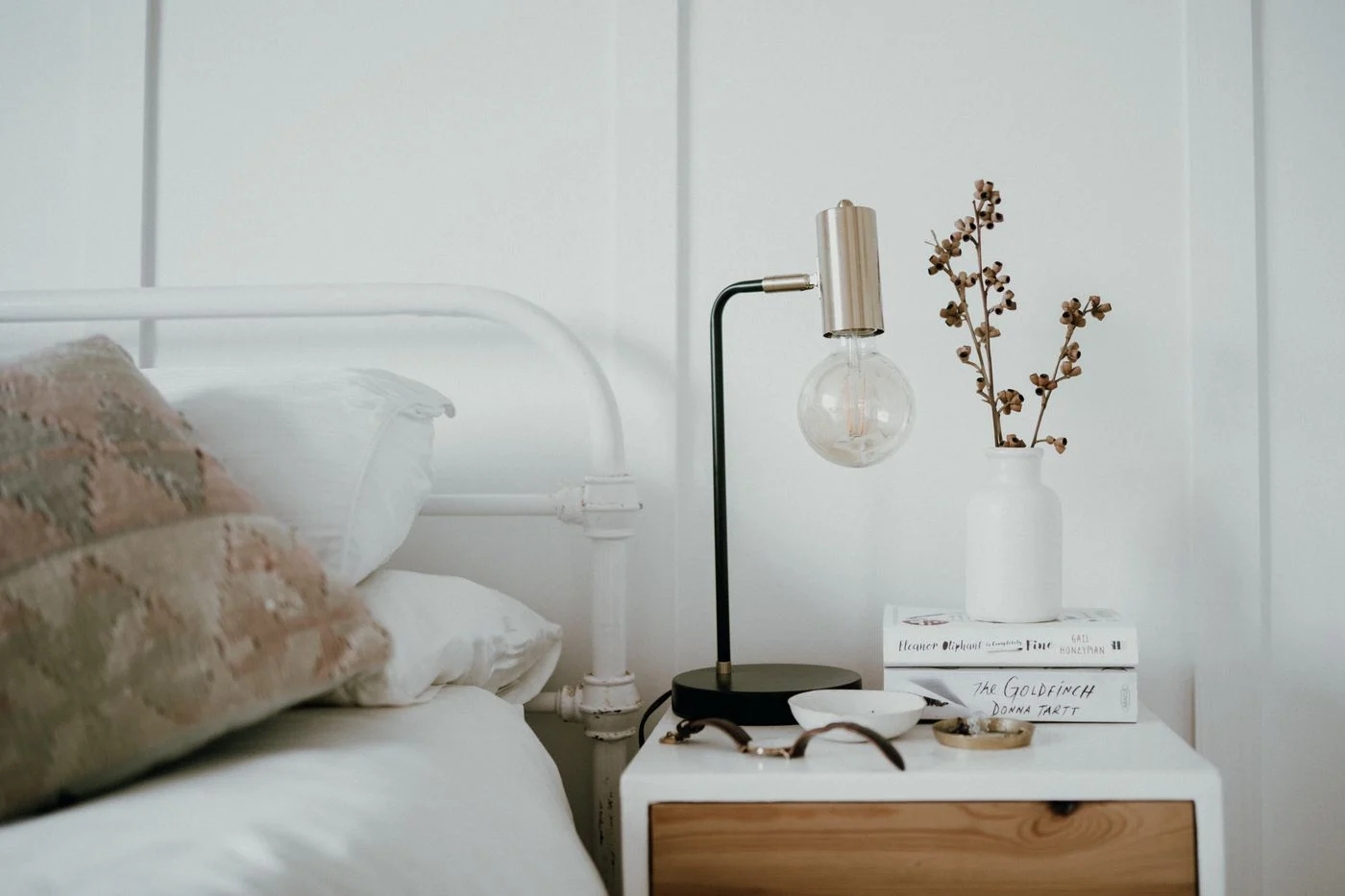
Put your phone, glasses, book and perhaps a water bottle on an existing surface. Add the base of a table lamp if you intend to use one. This makes it easier to judge whether a proposed top is large enough. A decorative table can offer surprisingly little useful space once a raised edge or a broad lamp base is included.
Separate things needed overnight from spare supplies. Several books, chargers for rarely used devices and a collection of toiletries do not all need to stand beside the bed. You should be able to reach a frequently used object without pushing something else off the edge.
Choose height and support carefully
Check the surface height from your actual lying position. A very low stool may look suitable in a shop yet be awkward beside a tall bed. For a wall shelf, decide the final position once the frame and mattress are in place. Its fixings must suit the wall material and intended load.
A narrow surface without legs may make floor cleaning easier. It does not make the wall stronger, however, and should not be treated as a support for getting out of bed unless it is specifically designed for that use. A freestanding table needs a stable position even when a cable runs behind it.
Open shelf or drawer?
An open surface makes its contents visible but can fill up quickly. A drawer collects small objects out of sight, though it must open without catching on the bedding or frame. With very little space at the side, another opening arrangement may work better. Access from the normal position matters more than matching a conventional bedside-table shape.
Route charging cables away from the path used at night. Keep the charger accessible and use it according to its instructions. The two sides of a double bed need not have identical furniture. One person may want a book and lamp while the other needs only a tiny surface. An unequal but accessible pair can work better in a narrow room than two matching pieces.