Test the intended reflection
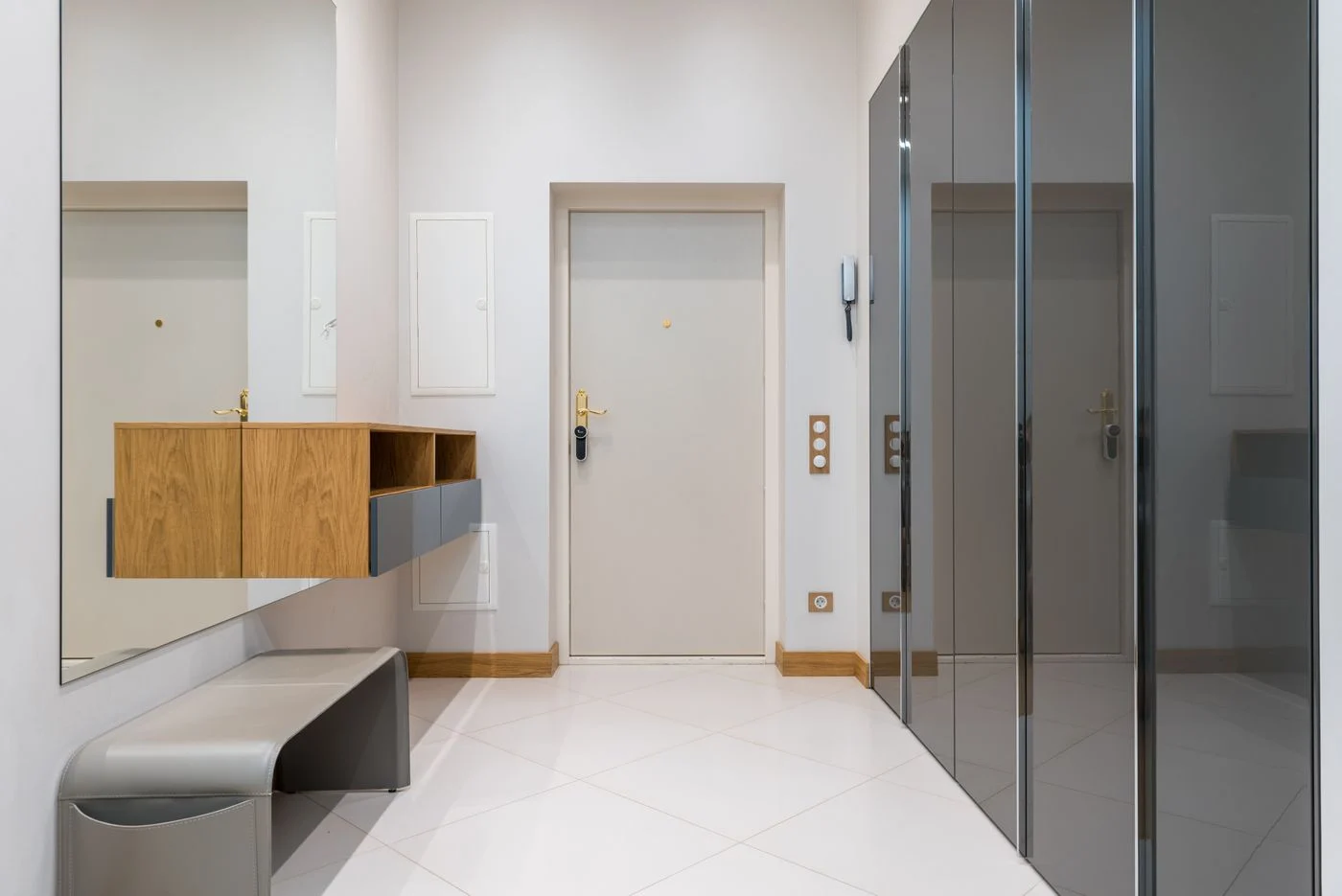
Mark different formats on the wall with paper. Stand where you will actually use the mirror. A full-length view depends on viewing distance as well as mirror height. An empty wall is therefore not automatically a suitable location if a bench or shoe cabinet occupies the space directly in front.
Where several people share the mirror, test different heights. Check that the relevant parts of the reflection are visible without stretching upwards or bending awkwardly. The mounting height follows from the mirror and its users rather than a universal centre-point measurement.
Notice everything else it reflects
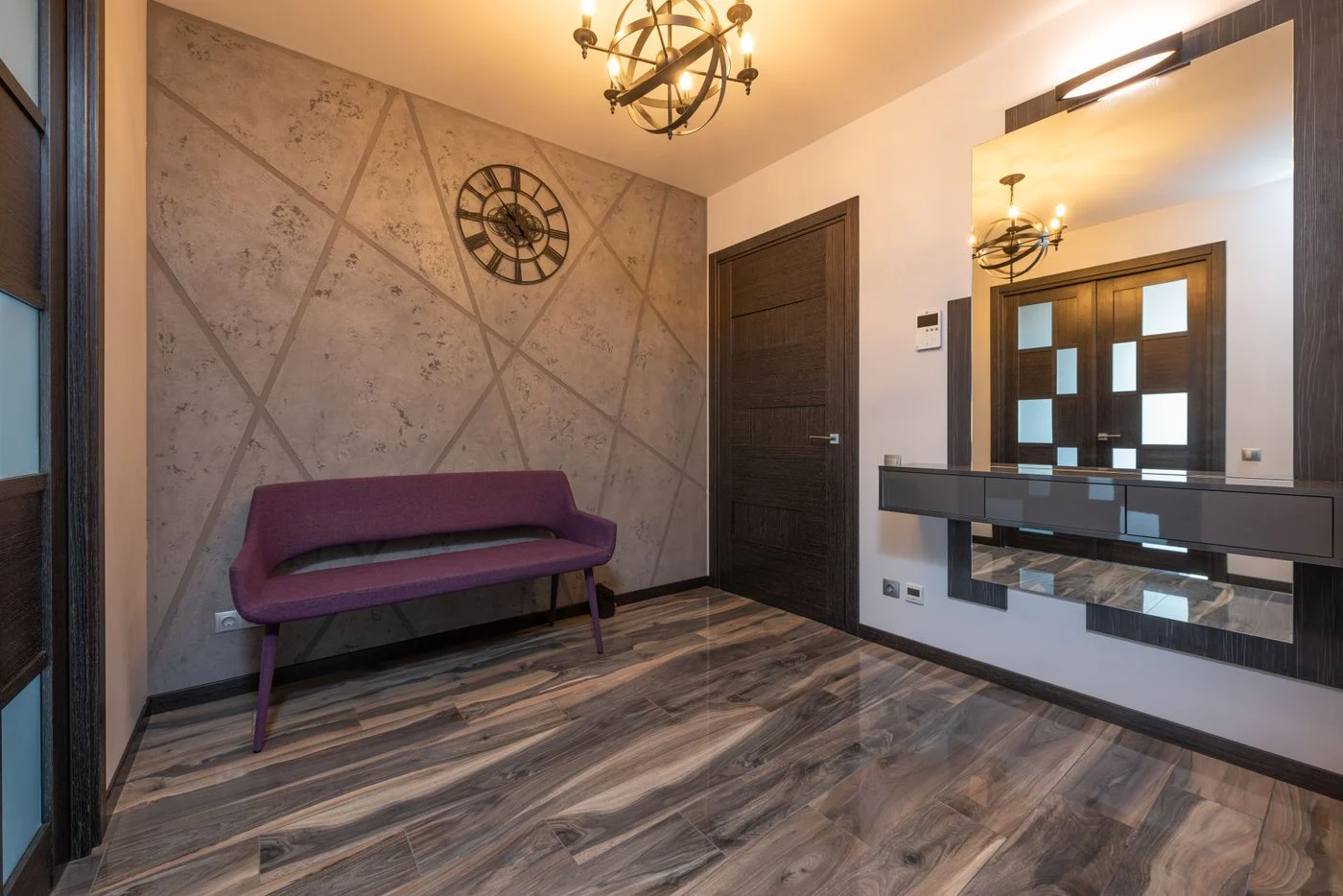
Look at the opposite wall and the view towards the entrance. A mirror also visually repeats a crowded coat rack or untidy drop zone. A quieter opposite surface can therefore matter more than an elaborate frame. Reflecting a window is not a requirement for a useful mirror.
Check the effect with the lights on. A lamp visible in reflection may appear uncomfortably bright. Try changing the proposed mirror position or the existing lamp before committing to a frame. A mirror does not generate daylight in a windowless hall; it changes how existing views and brightness are perceived.
Install it appropriately
Use the manufacturer's intended mounting method and fixings suitable for the supporting surface. A mirror intended for hanging should not simply be left leaning loose. Even a model designed to stand may require restraint. Consider nearby doors and the movement of bags, coats or children.
The lower edge should not be vulnerable every time the floor is cleaned. Keep a position from which the glass can be reached. Avoid carelessly spraying cleaner into frame joints and follow the product's care instructions.
If wall space is limited, choose the smallest format that reliably fulfils the viewing task. A larger mirror is an improvement only when its additional view is useful and the location and installation suit it.